AI’s Next Infrastructure Bottleneck May Be Materials, Not Just Chips
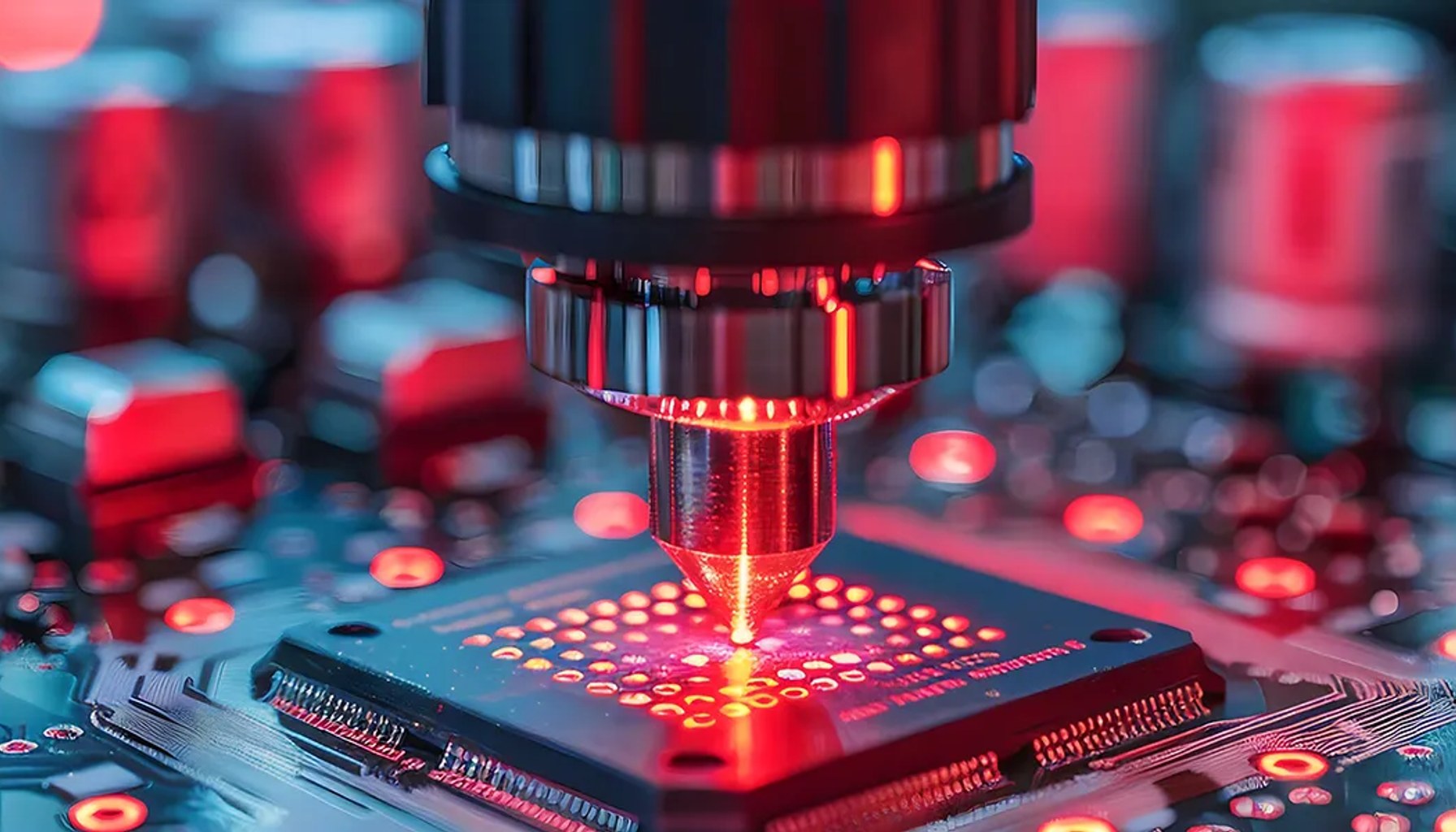
Image / technologyreview.com
Syensqo argues that purity, thermal resilience, cooling fluids, and power-system materials will increasingly determine how far AI computing can scale.
The AI infrastructure buildout is putting advanced materials closer to the center of the market conversation, as Syensqo makes the case that the next gains in chips and data centers will depend on chemistry and engineering as much as chip design and computing capacity.
In a Technology Review company perspective published July 21, Syensqo argued that AI’s rising requirements for processing power, memory, energy efficiency, and reliability are pushing semiconductor and data-center equipment toward harsher physical limits. The company’s message is straightforward: the industry cannot keep scaling AI hardware without materials that tolerate more heat, more power, more demanding manufacturing processes, and greater operating stress.
That matters because the popular AI investment narrative still centers on chipmakers, cloud operators, semiconductor fabrication plants, and data-center construction. Syensqo is pointing to a less visible layer of the stack: the specialty polymers, elastomers, fluids, and electronic-component materials that enable those systems to be manufactured and run reliably.
Semiconductor production requires thousands of tightly controlled process steps, Syensqo said. Small changes in temperature or chemical stability can create defects, reduce yields, and raise manufacturing costs. As chip generations advance, manufacturers need materials with higher purity, stronger resistance to chemicals and plasma, and more stable performance under demanding conditions.
The same pressure is building in data centers. Higher computing density is increasing demands on thermal management, power architectures, storage systems, and data transmission equipment. Syensqo said the shift toward higher voltages and greater power density resembles challenges already familiar in electric vehicles, particularly around fluid circulation and cooling.
That crossover is important for robotics and automation markets. AI systems increasingly sit behind robot perception, industrial optimization, autonomous operations, and machine-vision workloads. If data-center capacity and advanced compute are constrained by heat, energy delivery, or component reliability, those limitations eventually flow downstream to the software and automation systems relying on them.
For materials suppliers, the opportunity is not to replace chip designers or data-center operators. It is to become a more strategic part of their roadmap. Better cooling materials, more durable connectors and capacitors, chemically resilient semiconductor-process materials, and components capable of handling higher electrical loads could all become more valuable as infrastructure operators try to extract more compute from every rack and every watt.
The uncertainty is commercial rather than technical. Syensqo is presenting its own expertise in electrical and electronic components and drawing links between its work in semiconductor, automotive, and cooling applications. The published perspective does not establish which specific AI infrastructure contracts, deployments, or customer relationships may result. It also does not detail the commercial relationship, if any, behind Technology Review’s publication of the company perspective.
Still, the broader signal is worth watching. The AI boom has already turned advanced packaging, power availability, cooling, and grid access into strategic issues. Materials are now emerging as another potential choke point and enabler.
The takeaway for investors and operators is clear: following AI infrastructure means looking beyond GPUs and hyperscalers. The companies supplying the materials that keep high-density computing stable, manufacturable, and cool may gain importance as AI hardware moves deeper into the physical limits of scale.
- Advancing next-gen AI with materials science innovationtechnologyreview.com / Mainstream / Published JUL 21, 2026 / Accessed JUL 22, 2026