NASA’s Roman Telescope Could Launch as Early as Next Month With an Active Coronagraph
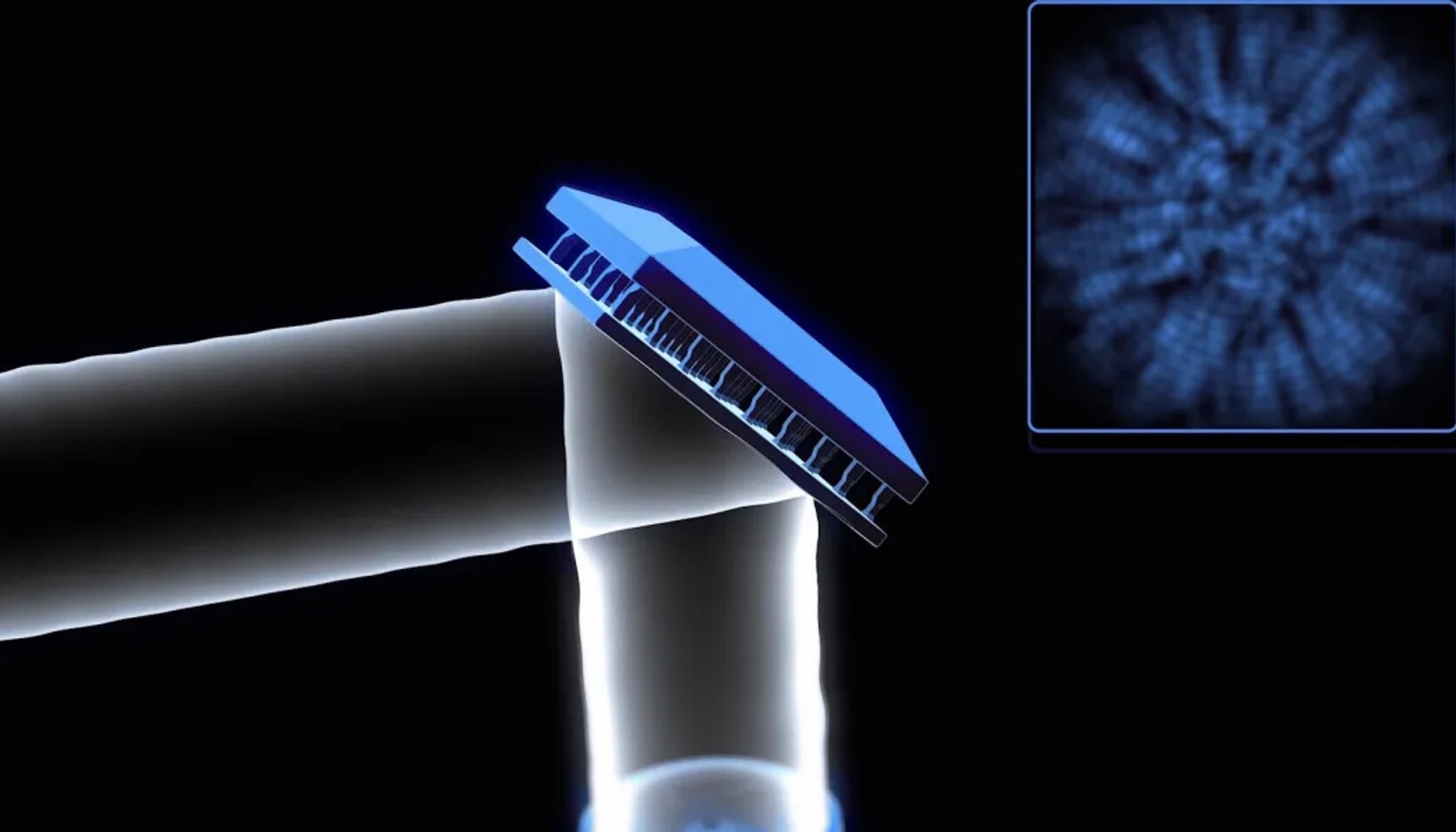
Image / technologyreview.com
The mission combines a roughly 300-megapixel survey camera with a space-based active coronagraph intended to suppress starlight and improve views of planets around other stars.
NASA’s Nancy Grace Roman Space Telescope could launch as early as the end of next month carrying what the agency describes as the first space-bound active coronagraph.
The Coronagraph Instrument is designed to block most of a star’s light while observing a single stellar system, helping astronomers study the faint space around stars where planets can otherwise be difficult to detect. Its active optical system is intended to reduce remaining starlight and enable views of smaller, dimmer planets.
“It’s giving us the ability to see planets that we haven’t been able to physically see before,” Brandon Creager, the instrument’s lead mechanical engineer at NASA’s Jet Propulsion Laboratory, said.
Roman’s broader mission will also rely on a roughly 300-megapixel wide-field camera capable of capturing images about 100 times larger than Hubble Space Telescope’s widest exposures at similar resolution. The survey capability is intended to support research into dark matter and dark energy.
The telescope is also expected to detect around 100,000 exoplanets through the way planets distort the light of more distant stars.
The coronagraph’s role is primarily a technology demonstration. If it performs as intended, it could help inform future missions designed to directly image Earth-like worlds. Creager said he hopes it will be remembered as a “critical stepping stone” toward finding “Earth 2.0.”
- Shape-shifting mirrors on NASA’s new space telescope could unveil Jupiters like our owntechnologyreview.com / Mainstream / Published JUL 22, 2026 / Accessed JUL 23, 2026