Genesis AI Unveils Eno, Its First General-Purpose Humanoid
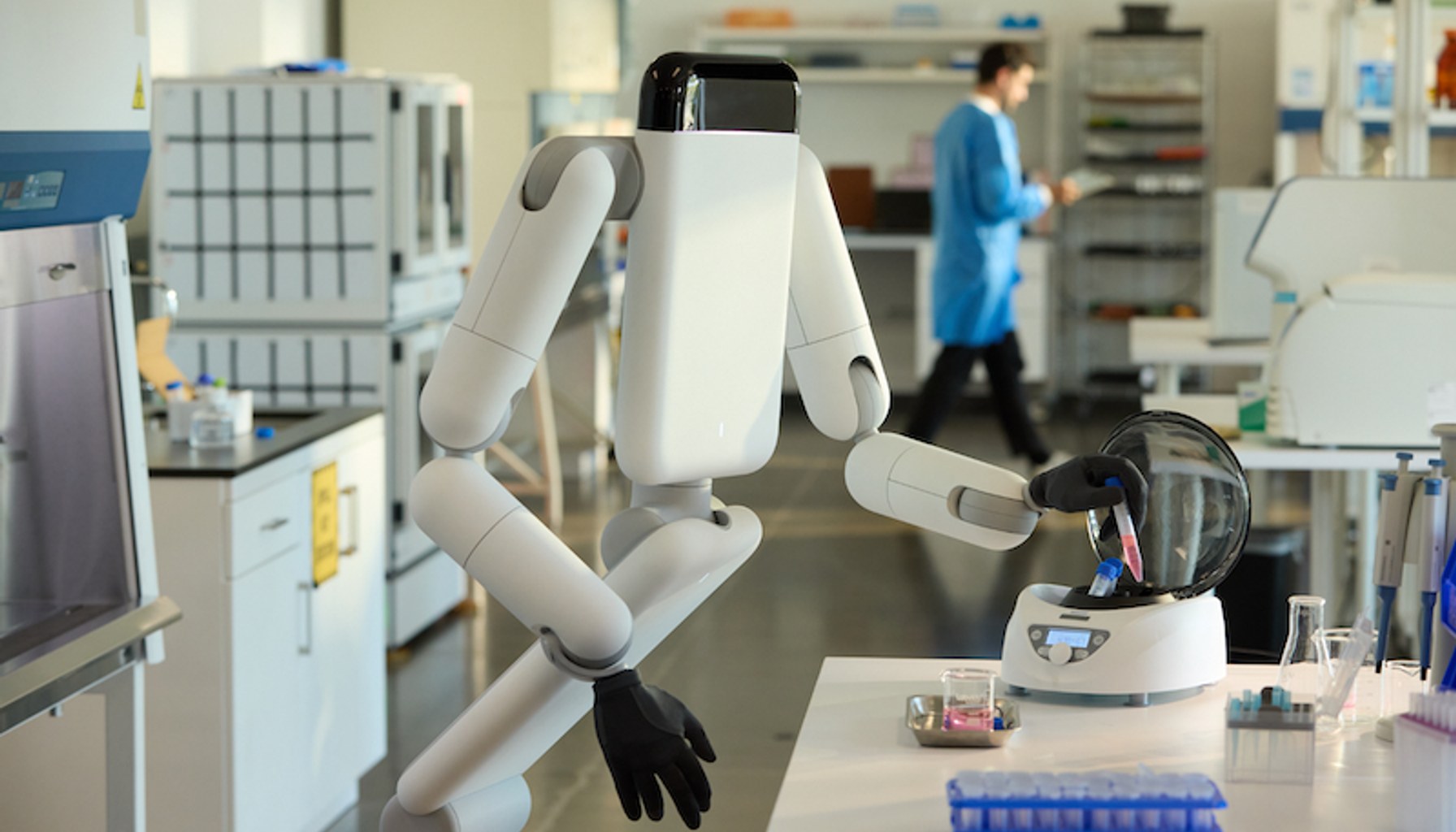
Image / Robotics & Automation News
Eno runs on Genesis AI's GENE foundation model, a brain meant to turn a robot into a true physical agent.
Genesis AI, billing itself as a global full-stack robotics company, unveiled Eno as its first general-purpose humanoid, describing it as a next-generation robot that breaks free from traditional form factors through its minimalist design. Documentation indicates GENE will operate Eno as a true physical agent: reasoning, perception, and action, all coordinated from a single AI core rather than a patchwork of isolated subsystems. The claim is not purely rhetorical. The company asserts that a unified cognitive core can enable Eno to switch between tasks with less reconfiguration and faster response.
In practice, the move signals a shift from modular, task-specific robots to platforms that are designed to learn and adapt on the job. Testing shows that the emphasis on a general-purpose brain is meant to let Eno tackle a wider range of activities without bespoke software for each new task. Yet the real test remains hardware-software integration: perception must reliably translate into deliberate motion, and planning must stay within the limits of on-board compute, latency budgets, and energy use. The company reports that Eno is designed around a minimalist chassis, with the brain handling high-level reasoning while on-board sensors feed it continuous context about its environment. What "general-purpose" means in the field still hinges on how well the system can translate a wide array of inputs into predictable, repeatable action.
From a practitioner standpoint, two front-of-mind considerations emerge. First, the engineering tradeoff between breadth and depth: a single AI brain can simplify orchestration across mobility, manipulation, and sensing, but it also concentrates risk. If perception misreads a scene or a planning module misjudges a force or velocity, the fault lies with the same core system, making robust safety nets essential. Second, data quality and real-time constraints will dominate early performance. A foundation-model-driven robot relies on extensive, representative data and careful calibration to generalize to new settings; the margin for error shrinks when perception and control must operate at real-time clock speeds on energy-limited hardware. Documentation indicates Eno’s architecture aims to minimize recalibration when tasks shift, yet the practical reliability envelope for unpredictable environments remains to be proven outside controlled tests.
Beyond the technology, industry watchers will watch for how Genesis AI prices, supports, and scales Eno. If the platform can truly execute a broad set of tasks with a single decision-making core, maintenance becomes a software gravity well: updates, safety patches, and new capabilities could arrive like app updates for a phone rather than re-engineered hardware. Operators will want to see clear failure modes, graceful degradation, and predictable recovery paths when the system encounters unfamiliar contexts. Investors, meanwhile, will weigh whether a generalized humanoid brain translates into a durable business model or simply another high-profile pilot in a crowded robotics arena.
As Genesis AI positions Eno as the next step in practical humanoid robotics, the coming quarters will reveal whether the promise of a single, capable brain translates into consistent performance across real-world tasks and environments.
- Genesis AI launches first general-purpose humanoid robotRobotics & Automation News / Trade / Published JUN 17, 2026 / Accessed JUN 18, 2026