Boosters and BESS Transform Plant Uptime
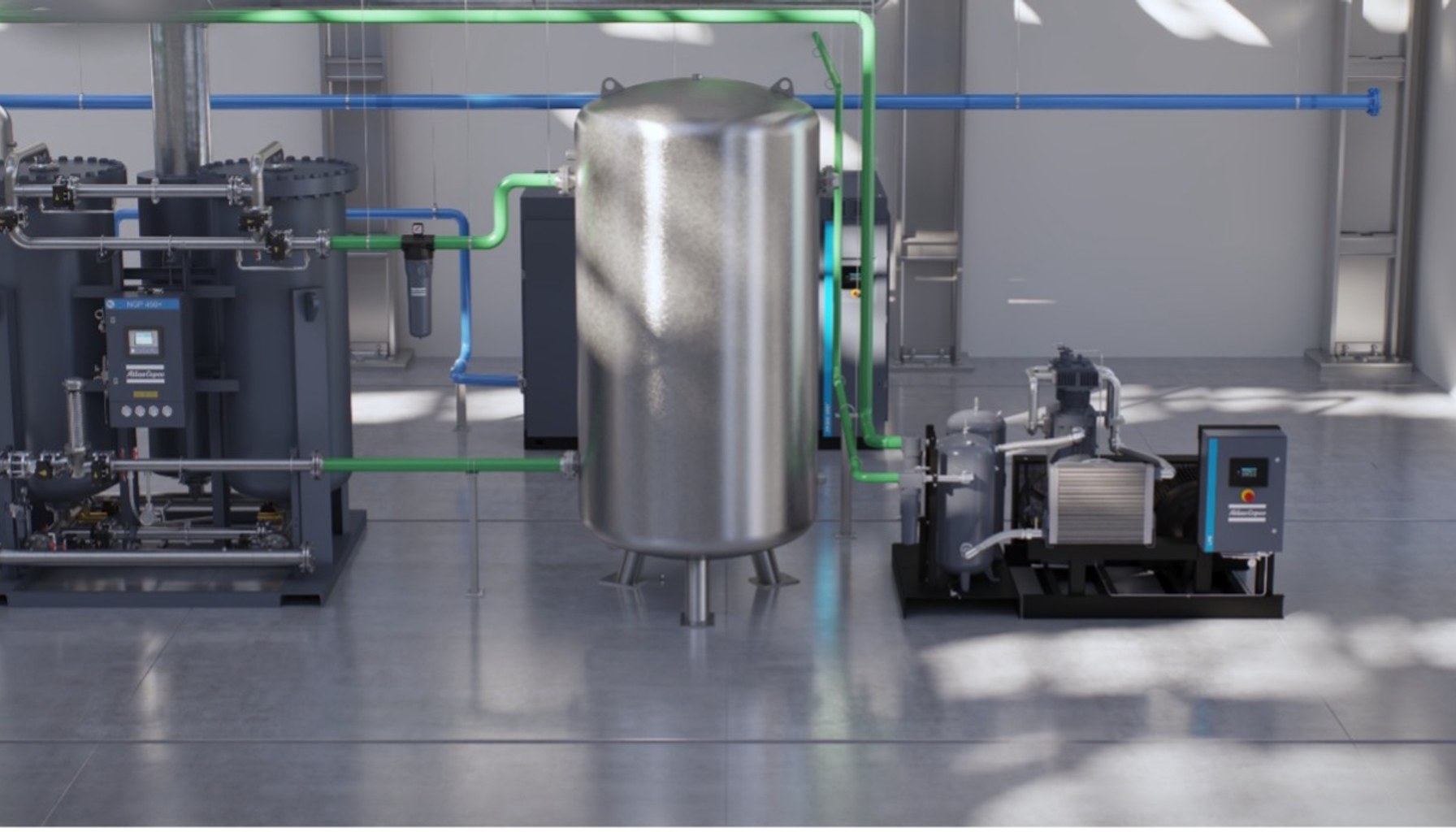
Uptime jumped after a plant paired air boosters with a BESS.
A manufacturing facility facing growing demand for higher pressure and tougher power quality decided to deploy two power-automation levers at once. First, it installed oil-free high‑pressure air boosters to elevate already compressed air to 300 to 5000 psig, enabling critical high‑pressure applications without building a new fleet of large high‑pressure compressors. The approach lets the plant keep standard plant air below and then boost only where needed, either at the central plant or near the point of use. Deployment data shows that this pressure amplifier approach can close the gap between normal operation and specialized tasks such as PET bottle production, aerospace component validation, leak testing, and exacting food-packaging lines. The gains are not just higher pressure capability; they also reduce the footprint, energy waste, and maintenance burden tied to oversized compressor suites.
At the same time the plant added a Battery Energy Storage System, a move many facilities are embracing as grid reliability erodes. The BESS functions as an instant backup and a microgrid stabilizer, delivering sub‑cycle response to voltage and frequency perturbations and supporting right‑sized energy management for demanding automation loads. The system also supports peak shaving, regenerative energy capture, and predictive maintenance strategies, giving operators a clearer picture of power quality and asset health. The case study reports that BESS is increasingly treated as a core asset rather than a sporadic sustainability add‑on, with the backing of AI‑driven analytics that anticipate cell degradation and optimize operation.
The integration story is as important as the hardware. Both technologies require careful coordination with the plant’s controls architecture, electrical switching schemes, and safety interlocks. Near‑term benefits hinge on aligning the booster control with existing PLC logic and ensuring that BESS charging, discharging, and safety protocols mesh with motor drives and automated testing equipment. Integration considerations include ensuring proper venting and filtration for high‑pressure airflow and implementing fire suppression and battery safety plans for energy storage. The case study notes these steps as essential to avoiding unintended interactions between pressure systems and the plant’s electrical backbone.
Two to four practitioner insights stand out for operators considering a similar path. First, ROI hinges on application mix and duty cycles. If a facility uses high‑pressure testing or specialized packaging sporadically, boosters can deliver the needed capability without a full‑time high‑pressure compressor fleet. Second, the integration envelope matters. Operators must plan controls and electrical modifications early to prevent control conflicts between air systems and power management. Third, watch for failure modes and maintenance burden. Oil‑free boosters reduce some maintenance concerns, but filtration, moisture control, and regular inspection remain critical; batteries demand monitoring for temperature, state of charge, and cell health. Fourth, expect a staged path. A combined air and energy storage upgrade often yields the fastest gains in uptime and power quality when the two systems are designed to operate in a coordinated manner, with operators trained to adjust pressure setpoints and energy use in concert.
The story is a concrete reminder that automation is not a miracle cure but a carefully engineered operation. By treating boosters as pressure amplifiers and BESS as a microgrid backbone, plants can push throughput and reliability higher while maintaining control over energy costs and risk. As the industry continues to press for faster cycle times and steadier throughput, the pairing of air boosters and storage-backed power stability looks increasingly like a repeatable blueprint for resilient manufacturing.
- Advancing efficiency and performance with compressed air boosters in modern plantsPlant Engineering / Independent source / Published JUN 17, 2026 / Accessed JUN 17, 2026
- Back to basics: A technical guide to BESS implementationPlant Engineering / Independent source / Published JUN 16, 2026 / Accessed JUN 17, 2026