Google Funds AI Training for 40,000 Workers
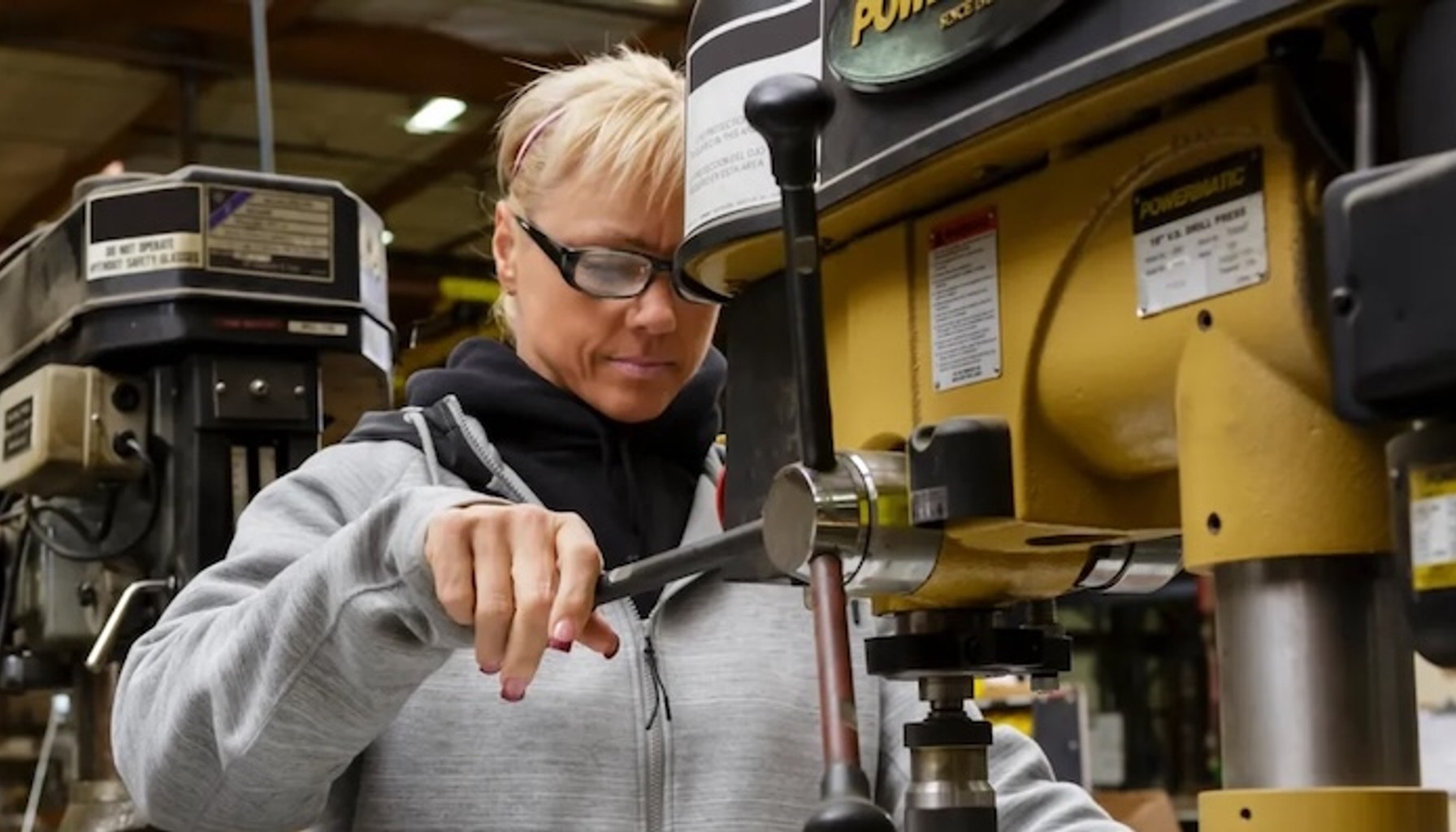
Google just wired $10 million to teach AI to 40,000 US factory workers. That’s a budget line you rarely see in the same sentence as “shop floor.”
The money, disclosed as part of Google.org’s commitment, flows through the Manufacturing Institute (MI) to create new AI-focused training programs and expand apprenticeship opportunities across the country. It’s a funding bet on the people who actually keep lines running: data readers, human–robot collaboration operators, and technicians who translate software decisions into tangible throughput on the plant floor. In an era where digital twins, predictive maintenance, and autonomous material handling are increasingly table stakes, the grant is as much about workforce readiness as it is about AI literacy.
What makes this noteworthy isn’t just the scale—the target is 40,000 current and future workers—it’s the timing. After years of lofty AI demos that promised swift payoffs but delivered uncertain on-site value, manufacturers want proof that people can actually operate, tune, and improve AI systems in real, live production environments. MI’s role is crucial here: they will design curricula and broaden apprenticeships so that today’s technicians become tomorrow’s machine-learning-aware operators, not just software users.
From a practitioner’s lens, the potential payoff hinges on deployment discipline as much as training depth. Training without on-the-floor application is a classic sunk-cost risk. If participants emerge with theoretical know-how but no real projects to anchor it, the ROI matters remain speculative and the adoption curve stalls. The MI program’s success will be judged not by classroom hours but by how many of those hours translate into active AI-enabled improvements in cycle times, defect rates, and uptime across diverse manufacturing environments.
Two to four concrete practitioner insights emerge from the strategic path this funding signals.
First, value compounds when training is paired with live automation projects. On-shift teams need a pipeline that turns AI literacy into hands-on capability: data labeling for quality control, tuning anomaly-detection thresholds in automation loops, and interpreting AI outputs for maintenance decisions. Without immediate, tangible use cases, even well-designed curricula risk becoming optional add-ons rather than core competencies.
Second, programs must strike a balance between breadth and depth. A broad AI literacy track helps build a common language across engineering, operations, and maintenance, but plants also require domain-specific depth—robotics integration, PLC-aware data pipelines, and condition-monitoring workflows that tie directly to their equipment. The MI’s apprenticeship expansion will help, but plant leaders should expect and plan for layered onboarding: general AI foundations, followed by targeted, role-based skill tracks.
Third, integration economics matter. Training is a sunk cost unless you align it with deployment targets, budgets for hardware and software, and a clear change-management plan. Expect a surge in demand for pilot projects designed to prove ROI in months, not quarters, ahead of broader scale. If these pilots fail to spark transferable improvements, the training initiative risks becoming a marketing story rather than a performance driver.
Fourth, rollout requires a disciplined cadence and governance. Students in a nationwide program need access across states, industries, and plant sizes. That means scheduling flexibility for shifts, ensuring access to hands-on labs, and a transparent mechanism to funnel trained workers into open automation roles. Floor supervisors and plant managers will be crucial validators of progress, ensuring that fresh AI skills translate into measurable gains.
Looking ahead, what to watch next is straightforward: enrollment and completion rates, the distribution of apprentices across manufacturing sectors, and, most importantly, early deployment outcomes where AI-enabled processes touch the line. If this scale-up demonstrates steady improvements in uptime, defect reduction, or throughput tied to trained operators, CFOs will finally see the kind of evidence that turns a big funding line into sustained capital deployment.
This is a cautious yet ambitious bet: empower the workforce to design, tune, and sustain AI-driven improvements, and the productivity lift becomes a collective, repeatable capability rather than a one-off experiment.
- Google commits $10 million to train 40,000 US manufacturing workers in AI skillsroboticsandautomationnews.com / Source role not classified / Published APR 15, 2026 / Accessed APR 15, 2026