Thule centralises Europe with automated Poland hub
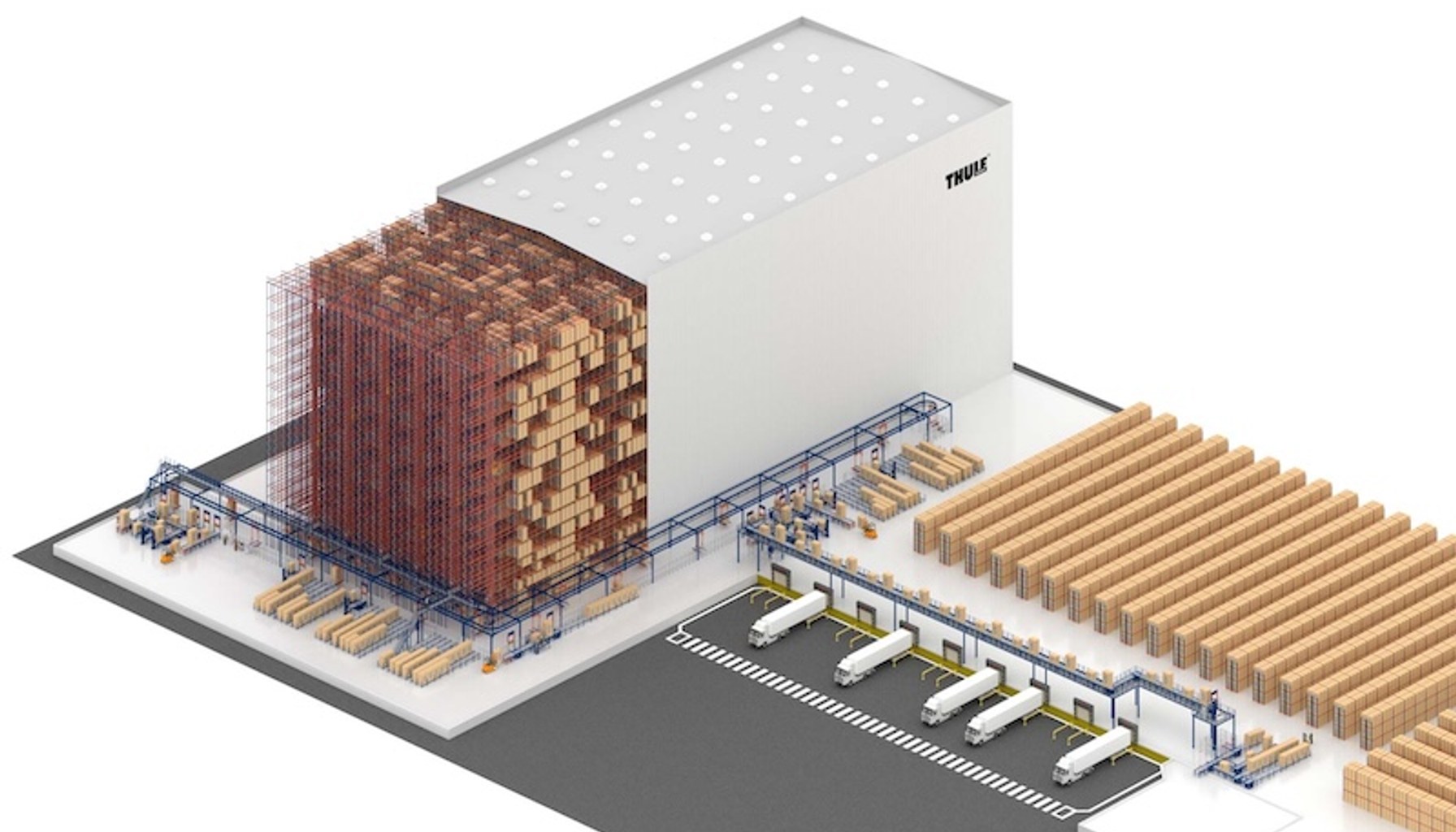
Thule just automated Europe’s distribution hub in Poland.
Swedish outdoor-gear maker Thule has tapped Mecalux to build a state-of-the-art automated warehouse in Krzyż Wielkopolski, centralising its European product range and extending service to international markets. The deployment marks a bold step in Thule’s supply-chain redesign, aimed at slimming lead times and sharpening inventory control as demand for fast, accurate order fulfillment grows across online and brick-and-mortar channels.
Industry watchers say the Krzyż Wielkopolski project aligns with a broader shift: as European logistics volumes rise, forward-looking manufacturers are consolidating stock, increasing pick density, and leaning on automation to keep costs predictable. Production data from comparable deployments shows that when a centralised hub is paired with a robust control system, cycle times can fall and accuracy can rise—though the exact gains depend on model mix, peak-season volumes, and how tightly the WMS and robotics are integrated. In Thule’s case, integration teams report that the move should reduce the complexity of cross-border replenishment and streamline replenishment to regional distribution points, potentially shaving days off order-to-delivery timelines for many European customers.
Operational metrics show the value proposition isn’t just in speed. Analysts note that automated warehouses typically deliver sustained throughput improvements and better order accuracy, particularly for mid- to high-volume SKUs that previously required multiple handling steps. ROI documentation reveals that payback periods in similar European DCs often fall within the two- to three-year range, provided the project includes clean data migration, operator training, and a plan for ongoing maintenance. Whether Thule lands precisely on that window remains to be seen, as first-year results will hinge on the ramp of automation and the efficiency of the integration with Thule’s ERP and e-commerce interfaces.
What does this deployment require on the floor to actually work? Integration teams stress that the project isn’t a plug-and-play upgrade. The facility needs adequate floor space for AGVs or AS/RS equipment, robust power provisioning, and reliable data networks to feed the warehouse management system and inventory-visibility tools. Training hours for staff become a sunk cost in the first months, but they’re essential for sustaining performance as software updates and hardware refresh cycles roll in. The lesson from similar projects is simple: the technology can do the heavy lifting, but you still need people who know how to intervene when exceptions appear, perform quality checks, and perform preventive maintenance on the automation layer.
Two other realities often understate the total cost of ownership. First, hidden costs vendors don’t mention upfront—spare-parts inventory, software subscriptions, and periodic downtime during cutover—can unwind ROI if not planned for. Second, even with a central hub, some tasks remain human-driven: complex handoffs, product-assembly line requests, or the handling of nonstandard items require skilled personnel and flexible processes. Floor supervisors confirm that while automated picking and sorting will absorb a large portion of the workload, human operators will still be needed for exception handling, product returns, and special shipments.
The Thule project underscores a pragmatic trend: automating a European distribution backbone can deliver meaningful cycle-time and accuracy benefits, but the business case rests on disciplined integration, careful change management, and transparent expectations about what automation can—and cannot—do. If thePolish facility meets its milestones, the move could set a new baseline for European e-commerce and retail-ready fulfillment, with Thule reaping the benefits as it pushes deeper into centralized, scalable logistics.
- Thule centralises its European distribution with a new automated warehouse in Polandroboticsandautomationnews.com / Source role not classified / Published APR 15, 2026 / Accessed APR 15, 2026