The release simplifies trigger-based automations, updates maps, and adds robotics-related device support.
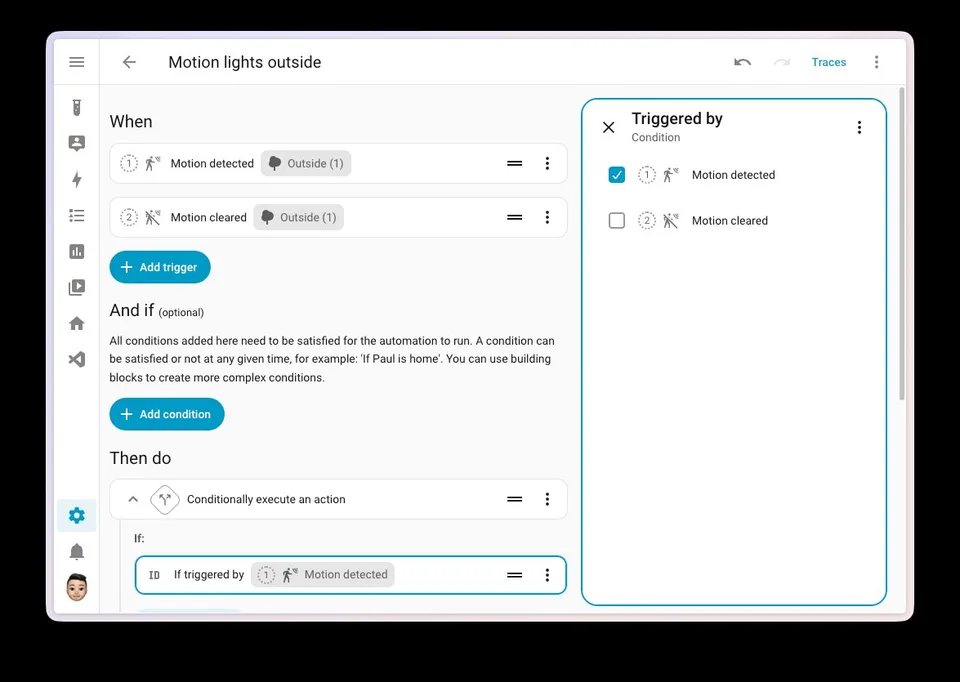
Home Assistant 2026.10 is a software release that makes complex smart-home automations easier to build. Its most useful change helps users combine several starting events—such as motion, a door opening, or sunset—without inventing and remembering trigger IDs.
Home Assistant says the new Triggered by condition lets users select triggers directly in the editor. The system handles the IDs behind the scenes, while existing IDs written in YAML continue to work. The editor also warns about missing or duplicate IDs, which can make older automations easier to repair.
The update also matters to people using home robots. Home Assistant says Roborock wet-and-dry vacuums now update in real time, and the Roborock Q10 can clean selected zones, drive to a chosen spot, and report its location. Lawn-mower devices gain stop actions and an idle state, allowing users to cancel a job instead of only pausing or sending the mower home.
The map has been rebuilt with vector tiles from the OpenStreetMap Foundation. Home Assistant says its instance fetches and caches the tiles, so the browser does not contact outside tile servers directly. Older hardware that cannot draw vector maps falls back to the classic version.
AI setup is simpler but deserves caution. Home Assistant says a new settings page can enable its Model Context Protocol server with one click; new setups expose everything Home Assistant offers, including later additions, and limit connections to administrators. Review the data and controls available before connecting an AI app.
Home Assistant also reports 15 new integrations. Existing users should pay attention to the automation editor and robot support first; those changes offer the clearest everyday benefit.