Host Offloading Unlocks Bigger LLM Training
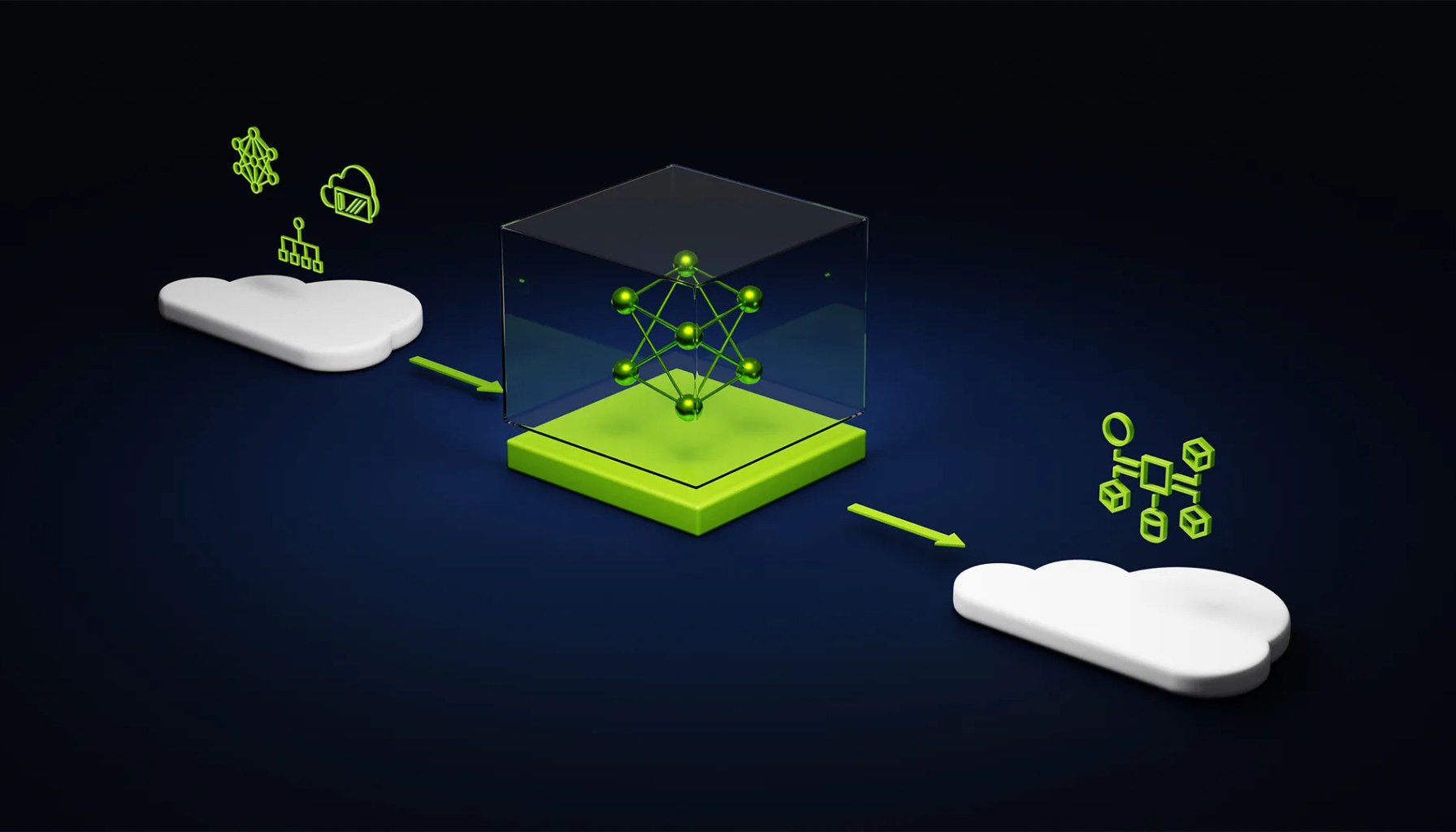
Image / NVIDIA Developer Blog
GPU memory runs dry first as LLMs grow, not compute.
LLM training workloads increasingly hit GPU memory limits before the math is fully crunched. As model size, sequence length, and batch size rise, the memory needed for weights, gradients, optimizer states, communication buffers, and intermediate activations competes for high-bandwidth memory (HBM). NVIDIA’s team explains that HBM capacity often becomes the primary scaling bottleneck long before compute is maxed out, a constraint that forces designers to trade model ambition for practical limits. To push past that wall, the blog shows a pragmatic path: move parts of the training state off the GPU and into host memory, a strategy they call host offloading, implemented within a JAX-based workflow.
In concrete terms, the approach offloads select tensors to host DRAM to free precious HBM for compute while keeping the training loop coherent. The focus is on the parts of the pipeline that aggressively consume memory: model weights, gradients, and optimizer states, along with the buffers used for communication and the activations produced during forward passes. By staging these items on the CPU side and bringing them back into the GPU when needed, the workflow preserves GPU compute throughput while reducing the peak demand on HBM. The team notes that the benefit hinges on careful overlap: transfers must be pipelined with computation so the GPU keeps crunching while data moves, rather than waiting idly for memory to arrive.
For practitioners, the message lands with two clear implications. First, the constraint becomes a design problem, not just a hardware one: the effectiveness of host offloading depends on how well you can orchestrate memory lifetimes and data movement in a JAX graph. The paper shows that judiciously scheduled offloads can relieve HBM pressure enough to permit larger models or longer sequences without upgrading GPUs. Second, the improvement is conditional on the interconnect and memory bandwidth between CPU and GPU. If the CPU-GPU path is a bottleneck, the gains from freeing HBM can be erased by transfer latency, so the strategy works best on platforms with fast host device data movement.
The engineering takeaway is as much about the choreography as the memory math. Offloading creates a new layer in the memory hierarchy where latency, bandwidth, and compute must be balanced. That means more sophisticated memory planning, async data transfers, and perhaps caching strategies to reuse data once it returns to the GPU. The team reports that careful integration into JAX pipelines can unlock headroom for bigger models without bespoke hardware, but it also signals a potential pitfall: if the host path becomes the bottleneck, you’ll see stalls and erratic performance rather than a clean lift in throughput.
Looking ahead, expect this approach to seed broader experimentation across ML stacks. If host offloading proves robust in JAX, similar ideas could migrate to other frameworks or be refined with newer interconnects and memory hierarchies. The core lesson for teams chasing scale is clear: when memory is the limiter, reimagining data residency, even briefly on the CPU, can shift the bottleneck from memory to compute in a favorable way, provided the data movement is tightly overlapped with computation and supported by fast CPU-GPU channels.
- Reducing High-Bandwidth Memory Bottlenecks in JAX-Based LLM Training with Host OffloadingNVIDIA Developer Blog / Primary / Published JUL 10, 2026 / Accessed JUL 13, 2026