MIT dataflow pioneer dies at 94
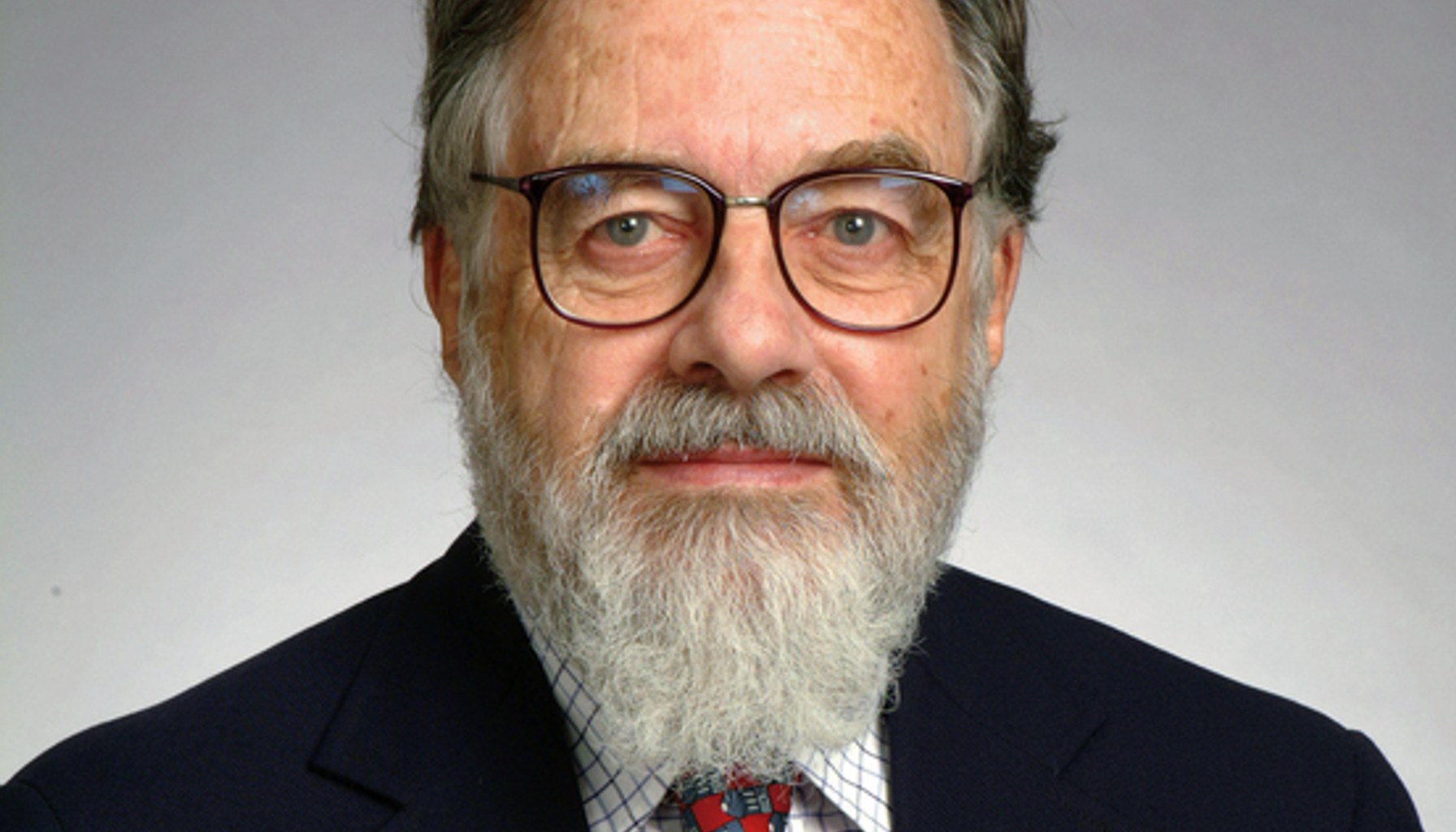
MIT’s dataflow pioneer dies, reshaping how computers think.
Jack Dennis, professor emeritus of computer science and engineering at MIT, passed away on March 14 at age 94. As the longtime head of the Computation Structures Group within CSAIL, Dennis helped usher in dataflow models of computation—an approach that treats the movement of data as the driver of execution rather than a strict sequence of instructions. The idea, radical in its time, helped seed principles of computer architecture that continue to influence how researchers design parallel and streaming systems today.
Dennis’s life blended engineering rigor with a wide-ranging curiosity. He was the second child of an engineer and a textile designer, with early interests spanning music, canoe-building, and model railroading. At MIT, he pursued a prolific mix of activities: he joined the VI-A Cooperative Program in Electrical Engineering, worked on speech processing and radar systems at the Air Force Cambridge Research Laboratories, and played in the MIT Symphony Orchestra. He earned his BS in 1953, MS in 1954, and ScD in 1958, all from MIT, then rose through the Electrical Engineering department to full professor by 1969. His doctoral thesis, “Mathematical Programming and electrical networks,” explored vivid analogies between electric circuits and optimization—an early indicator of the way he would frame computation as an interconnected, data-driven process rather than a purely serial one.
The technical significance of Dennis’s work rests in the dataflow model’s promise: computation activated by the flow of data, enabling new ways to express parallelism and asynchrony. In practical terms, dataflow-inspired ideas seeded novel architectures and scheduling strategies that emphasized how streams of information move through a system, rather than how a single program counter advances step by step. In a field dominated by Von Neumann-style pipelines for decades, Dennis’s line of thinking anticipated later trends toward streaming computation, modular design, and architecture that can better accommodate concurrent processing—precisely the pressures behind today’s robotics workloads.
For humanoids and other real-time systems, the relevance is subtler but real. Robotics teams increasingly run perception, planning, and control as interconnected data pipelines. The dataflow ethos helps justify and guide architectures where perception data from cameras and LiDAR, sensor fusion, and motor commands are mapped into graphs that execute as data becomes available. That mindset underwrites the push toward deterministic, streaming runtimes that can better tolerate sensor jitter and maintain responsiveness in dynamic environments.
Two practitioner takeaways stand out from Dennis’s legacy. First, the appeal of dataflow lies in concurrency and throughput, but it comes with tradeoffs around memory buffering and worst-case latency guarantees. In a humanoid control loop, for example, developers must bound how much time data can spend waiting in buffers before control decisions are made. Second, translating dataflow ideas from theory to hardware remains nontrivial. While software frameworks and middleware have adopted dataflow-like semantics, achieving full, field-ready performance in a humanoid—from perception to actuation—continues to hinge on careful system-level design, predictable scheduling, and robust fault handling.
Dennis’s passing marks the departure of a foundational thinker whose ideas quietly shape how modern computers—and the robots that rely on them—operate. His influence endures in how engineers frame computation as a flowing, data-driven process, rather than a rigid sequence of steps.
- Professor Emeritus Jack Dennis, pioneering developer of dataflow models of computation, dies at 94news.mit.edu / Primary source / Published APR 10, 2026 / Accessed APR 12, 2026