Physical Intelligence unveils general robot brain π0.7
By Sophia Chen
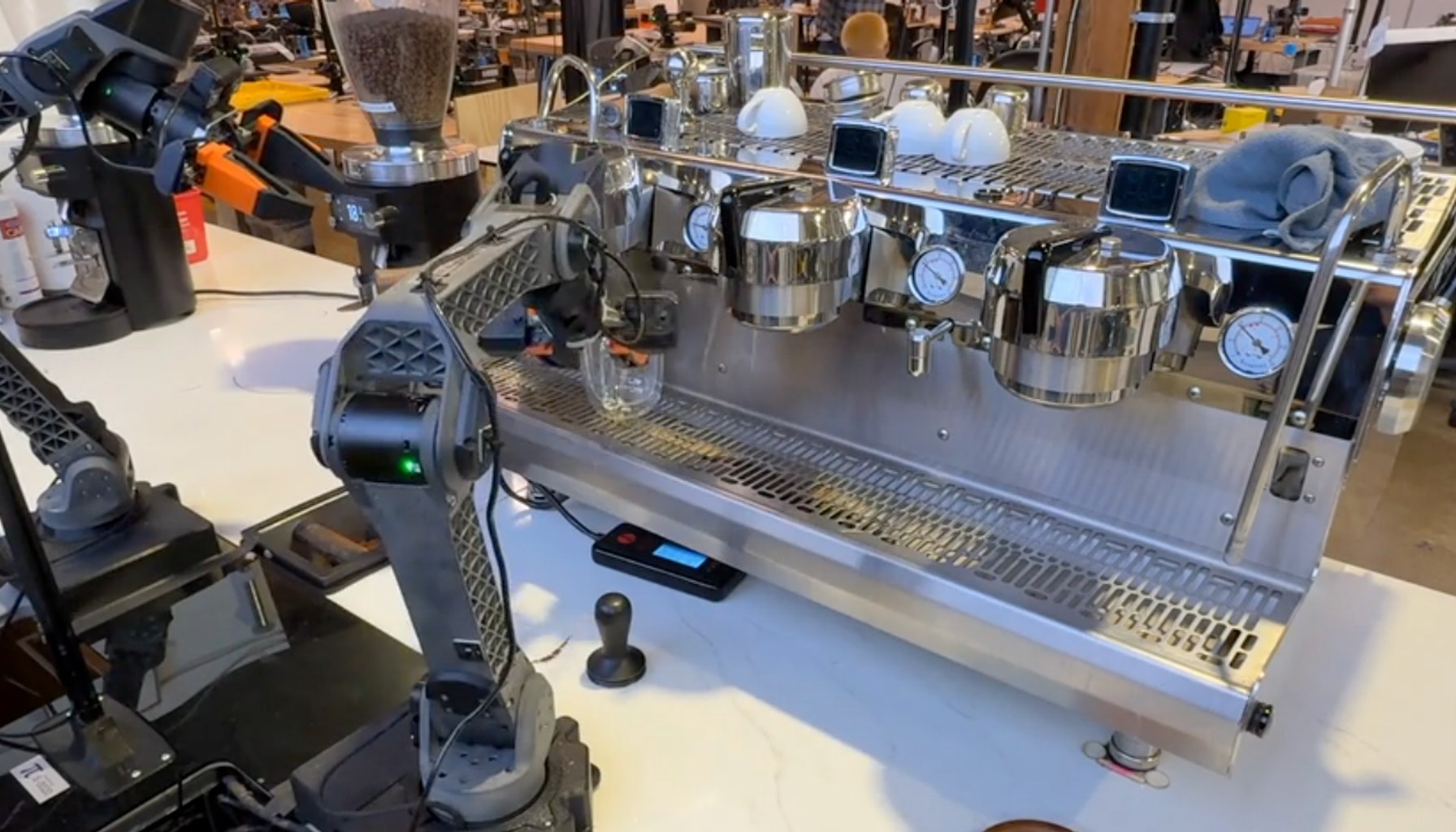
Image / techcrunch.com
π0.7 learns tasks it wasn’t taught.
Engineering documentation shows Physical Intelligence’s new robot brain is aiming to do more than follow preprogrammed scripts—it’s pitched as a general-purpose controller that can infer and attempt tasks beyond its explicit training. The team calls the model π0.7, a milestone they describe as “early but meaningful” on the long road to autonomous, adaptable manipulation. The core claim, as reported, is that the system can figure out how to accomplish unfamiliar goals without being taught each step beforehand, which, if true at scale, could cut weeks of bespoke programming for every new task.
The technical takeaway is not a marketing line but a framework shift: a robot brain that integrates perception, planning, and action in a way that can generalize inside a lab demo at least across a set of manipulation scenarios. Demonstration footage shows π0.7 grappling with tasks it hasn’t seen during training and choosing a sequence of actions it deems reasonable to achieve the objective. The emphasis from Physical Intelligence is that the model doesn’t rely solely on rote imitation or scripted fallbacks; it extrapolates strategy from experience, then tests and refines its approach in real-time.
But there are important caveats every robotics practitioner will notice. The article notes a lack of disclosed specifics on the hardware side: DOF counts, payload capacities, and the exact end-effectors involved are not published in the referenced coverage. In other words, the public-facing material centers on the cognitive chassis—the brain—without laying out the mechanical envelope around it. For R&D engineers evaluating a true humanoid system, that omission matters, because generalization in a controlled task does not automatically translate to robust performance on a full-bodied robot with grippers, hands, or bipedal locomotion in a cluttered environment.
From a readiness standpoint, the event sits in the lab-demo realm rather than field deployment. The TechCrunch report frames π0.7 as an early but meaningful step, with “lab-tested” implications rather than a production-ready product. The distinction is not trivial: the leap from solving canned tasks to reliably operating in real workplaces—where lighting, wind, noise, and unpredictable human behavior collide—is where most generalist brains stumble. The gap is not just about software; perception, sensing fidelity, and motion control all bottleneck the transition from demonstration to durable autonomy.
Two notable implications for the broader humanoid ecosystem emerge from this development. First, there is a persistent tension between generality and reliability. A brain that “figures out” tasks can potentially reduce the need for per-task programming, but it also introduces a spectrum of failure modes—misinterpretations of intent, brittle planning in corner cases, and unsafe actions if a learned heuristic encounters unseen dynamics. Second, data quality and safety become front-and-center. A general-purpose robot brain can learn more efficiently only if its training data captures enough variation to avoid overfitting to clean lab scenes. The next test for π0.7 will be how well the system handles edge cases and how it behaves when the cost of a mistake (missed grip, dropped object, or collision) is non-negligible.
Compared with earlier attempts to bake generality into robot cognition, π0.7 appears to be pushing on a familiar constraint: the brain can infer, plan, and act, but the hardware and real-world testing boundaries still determine whether the broader promise translates. If the company can publish a few concrete numbers—actuator counts, payloads, power draw, and runtime figures—alongside more varied demonstrations, observers will have a clearer footing for assessing scalability.
What to watch next: (1) disclosure of hardware specs and energy budgets; (2) multi-task demonstrations outside sanitized lab settings; (3) failure mode analysis and safety interventions during autonomous execution; (4) data efficiency improvements—how much prior experience the brain needs to generalize to a new task.
In the grand scheme, π0.7 is a provocative signal: a robot brain that looks like it might learn on its own. The question is whether it will learn to stay upright and useful once the lab gloss wears off.
Sources
Newsletter
The Robotics Briefing
A daily front-page digest delivered around noon Central Time, with the strongest headlines linked straight into the full stories.
No spam. Unsubscribe anytime. Read our privacy policy for details.