Quiet fiber muscles reshape humanoid actuation
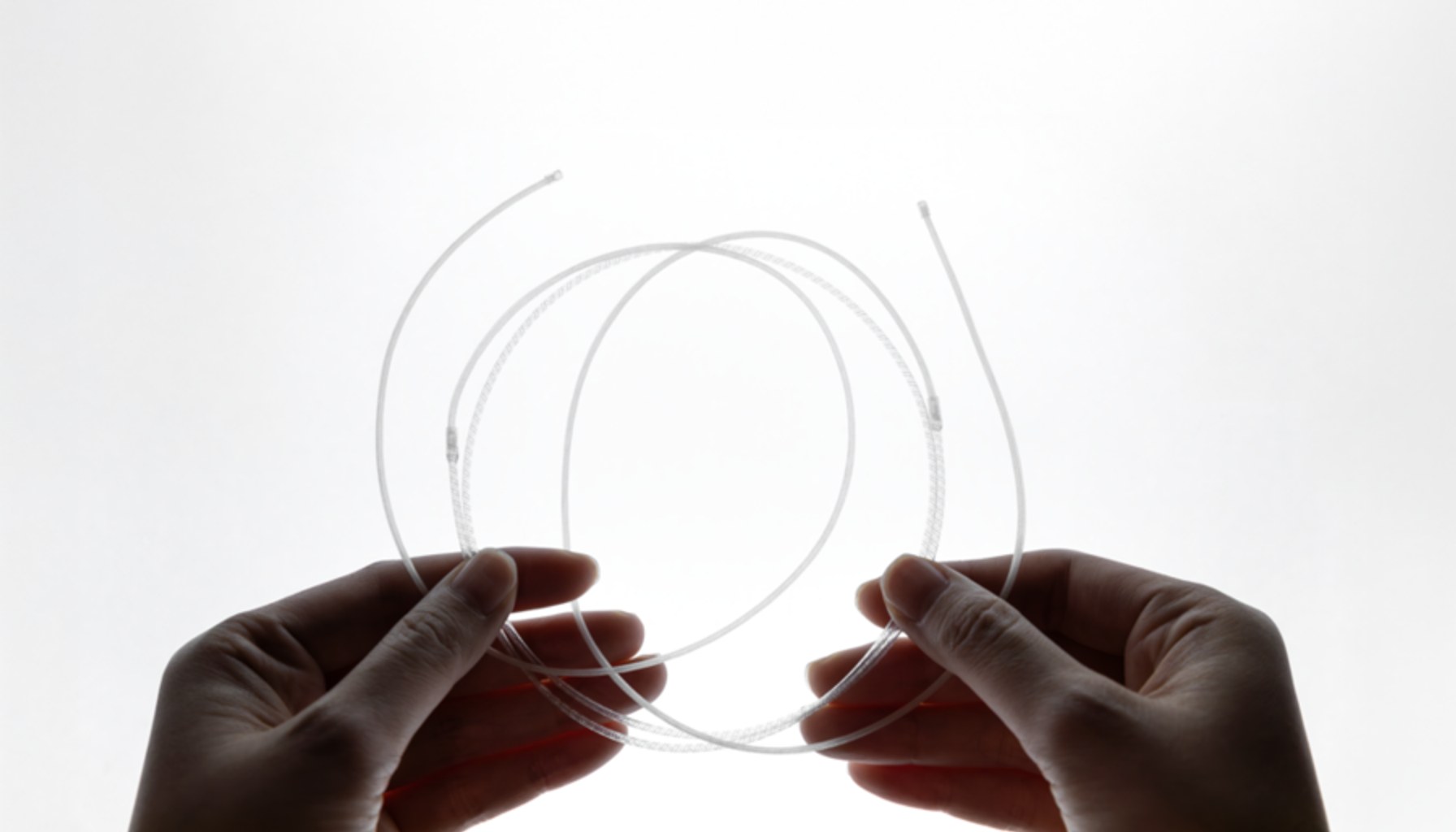
Researchers stitched muscles into fiber—and the robot stays silent.
A new type of electrically driven artificial muscle fiber could finally give humanoid hardware some of the quiet, compliant behavior that biology pulls off so effortlessly. MIT Media Lab and Politecnico di Bari researchers have paired a fluid-driven “thin McKibben” actuator with a micro solid-state pump based on electrohydrodynamics, all built into a fiber-form factor. The result, described in Science Robotics, is an actuating element that can be configured in different braid-like layouts to suit a given task, while avoiding bulky motors, external pumps, or exposed fluids. In other words: you get muscle-like contraction with none of the hard hardware you associate with traditional robotics.
The technical approach is worth a closer look. The fiber combines two established ideas in a novel way: a fluidically driven artificial muscle that expands and contracts under internal pressure, and a compact electrohydrodynamic (EHD) pump that generates that pressure inside a sealed fluid chamber without moving parts or an external supply. Engineering documentation shows this pairing can produce controlled, smooth actuation in a fiber that could be woven into fabrics or integrated directly into soft robotic limbs. Demonstration footage shows a fiber muscle that can be shaped to match task-specific force paths, which is a meaningful improvement over rigid actuators when comfort and safety around humans are a priority.
The project is led by Ozgun Kilic Afsar, a PhD candidate at MIT, with Vito Cacucciolo of Politecnico di Bari and four co-authors. The technical specifications reveal a design philosophy more aligned with soft robotics than traditional servo-based robots: actuation that remains compliant and stealthy, and a control surface that can scale by stitching many fibers in parallel rather than adding a handful of heavy motors. Demonstration results hint at the potential for wearable devices, assistive devices, and soft grippers that interact with human users without the stiffer feel of conventional robotics.
From a practitioner’s perspective, there are clear implications and practical hurdles. First, this fiber-based actuation is conceptually compelling for humanoids that need to operate near people without producing loud noise or abrupt motion. The torsional or bending degrees of freedom would come from how fibers are braided and arranged, rather than from rigid joints—opening paths to more fluid gait phases and safer hand interactions. Second, the control problem remains nontrivial: coordinating many fiber muscles, each with its own nonlinear response, will demand advanced models and possibly new control hardware to keep motion predictable across a full body. Third, energy and reliability are open questions. The device relies on an internal sealed fluid and an electrohydrodynamic pump; the energy budget, battery integration, thermal management, and long-cycle durability will determine whether this approach can transition from lab demo to field-ready humanoid systems. Finally, manufacturing scalability matters: roll-to-roll fabrication or scalable weaving of fiber muscles must be proven at larger scales before this can become a standard actuation layer in humanoids.
The work represents a meaningful advance over prior soft-actuation approaches that required bulky pumps or external fluid supplies. The fiber format itself is a notable improvement: it promises anisotropic stiffness and localized actuation while keeping the overall footprint and noise down. The technology readiness is still squarely in the lab-demo bucket; there is no indication of a field-ready humanoid integration yet. But the core idea—embedding a compliant, powerful actuation element inside a fiber and driving it with a compact, no-moving-parts pump—addresses one of the stubborn bottlenecks in soft-actuated humanoids: practical, body-friendly actuation that can be integrated into wearable or form-fitting hardware without compromising safety or comfort.
The paper’s results will likely invigorate a line of follow-on work: quantitative benchmarks for force output per fiber, fatigue resistance across thousands of cycles, and an architecture map showing how many fibers are needed to replace a conventional joint in a small humanoid limb. Published benchmarks confirm a path forward, even if the path is longer and more incremental than a flashy prototype reel would suggest.
The technical specifications reveal why this isn’t a solved problem yet—and why that matters. It’s a careful step toward “muscle-like” actuation with integrated, silent power in a fiber, but there’s still a long way to go before you see a fully actuated humanoid wearing or wielding these fibers in the real world.
- A new type of electrically driven artificial muscle fibernews.mit.edu / Primary source / Published APR 09, 2026 / Accessed APR 12, 2026