Robotics will not have a clean Llama moment
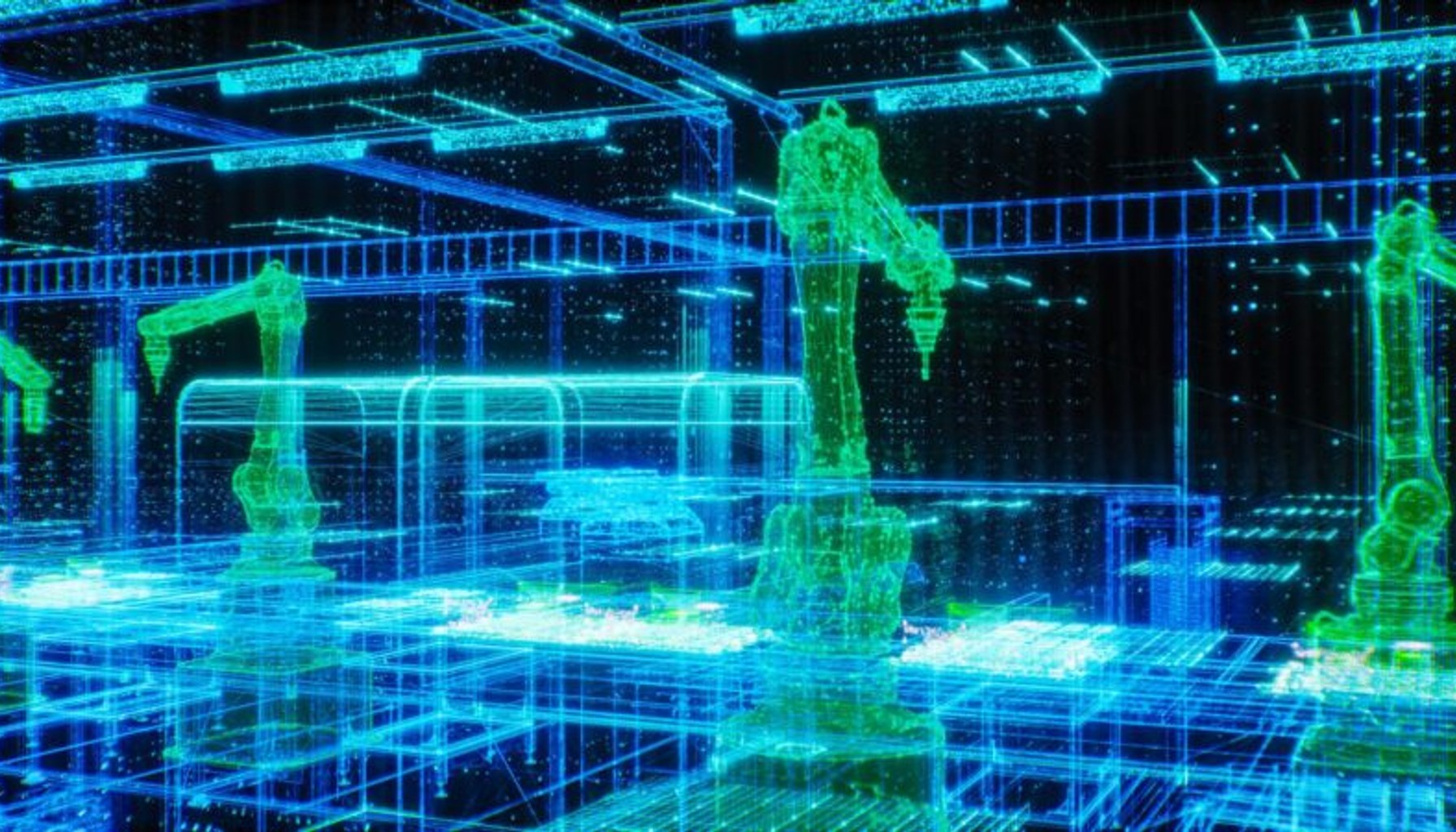
Image / The Robot Report
On a bench test, a small quadruped turns right cleanly, then the left drags and loses contact. That moment is more than a hiccup; it crystallizes a core limit in current robotics. A policy that looks brilliant in software or on a lab notebook fails in the real world once hardware bends to gravity, friction, and asymmetric contact. The Llama moment many technologists hoped for, one scalable, plug-and-play policy that automatically runs any robot, remains elusive because moving from a spoken or written instruction to a safe, reliable motion is a full stack problem. The same code that generates a smooth turn on paper runs into the cell's safety envelope the moment it has to push a leg into a different servo region, load the joint differently, and respond to uneven terrain.
In practice, the path from policy to motion hinges on a local control stack that translates abstract commands into motor commands on the installed hardware. Documentation indicates that robot policies do not travel on their own; the hardware, calibration, and control software shape every movement. Testing shows that what looks symmetric in software can behave very differently in hardware, once contact mechanics diverge between limbs or between units. This is the reason why a reusable starting point in a model like the Llama family helps software teams, but it does not guarantee a universal robot that can just be dropped into any body and work.
The industry response has begun to move up the stack. DeepMind's Open X-Embodiment project pooled robot data across institutions and robot bodies, and its RT-X results found transfer gains in some settings when data crossed embodiments rather than staying siloed to a single machine. The horizon now looks more like a multi-part system than a single magic model. Gemini Robotics is emblematic of that shift: Gemini Robotics 1.5 is a vision-language-action model that takes what it sees and instruction and turns it into motor directives. Its successor, Gemini Robotics-ER 1.6, sits higher in the stack, handling spatial reasoning and task planning while supporting progress checks and tool calls. The progression reflects a deliberate separation of perception, planning, and action, with each layer contributing to a workable, testable robot behavior rather than a single all-powerful policy.
The industry narrative around deployment is evolving as well. NVIDIA has pushed distribution in the same direction, aligning hardware acceleration and software stacks to enable practical rollout rather than theoretical capability. The overarching takeaway is that a policy can guide a robot, but it is the interplay with perception, planning, sensing, and actuation that determines feasibility, reliability, and safety in the field. The fault is not solely in the policy but in how the policy is instrumented, tested, and wrapped with checks that technicians can rely on months later.
From the lab floor to the pilot site, engineers are watching for concrete signals of progress and risk. A core constraint remains the hardware-dependent nature of motion: two legs can perform the same command differently if one leg’s contact patch or joint load differs. The practical rule for practitioners is stark but liberating: expect incremental gains from cross-embodiment training, but do not assume a single model will conquer all bodies. Value will come from disciplined integration, clear interfaces between perception, planning, and control; robust fault records for postmortems; and standardized evaluation across hardware variants.
What to watch next is a quiet triad: how well cross-embodiment data generalizes across families of bodies, how the stack preserves safety while expanding capability, and how industry players codify the lessons into repeatable deployment so that the next bench test does not merely illuminate a failure mode but tracks toward a reliable, shared standard.
- Robotics will not have a clean Llama momentThe Robot Report / Trade / Published JUN 10, 2026 / Accessed JUN 10, 2026