Congress Moves to Form a National Robotics Commission
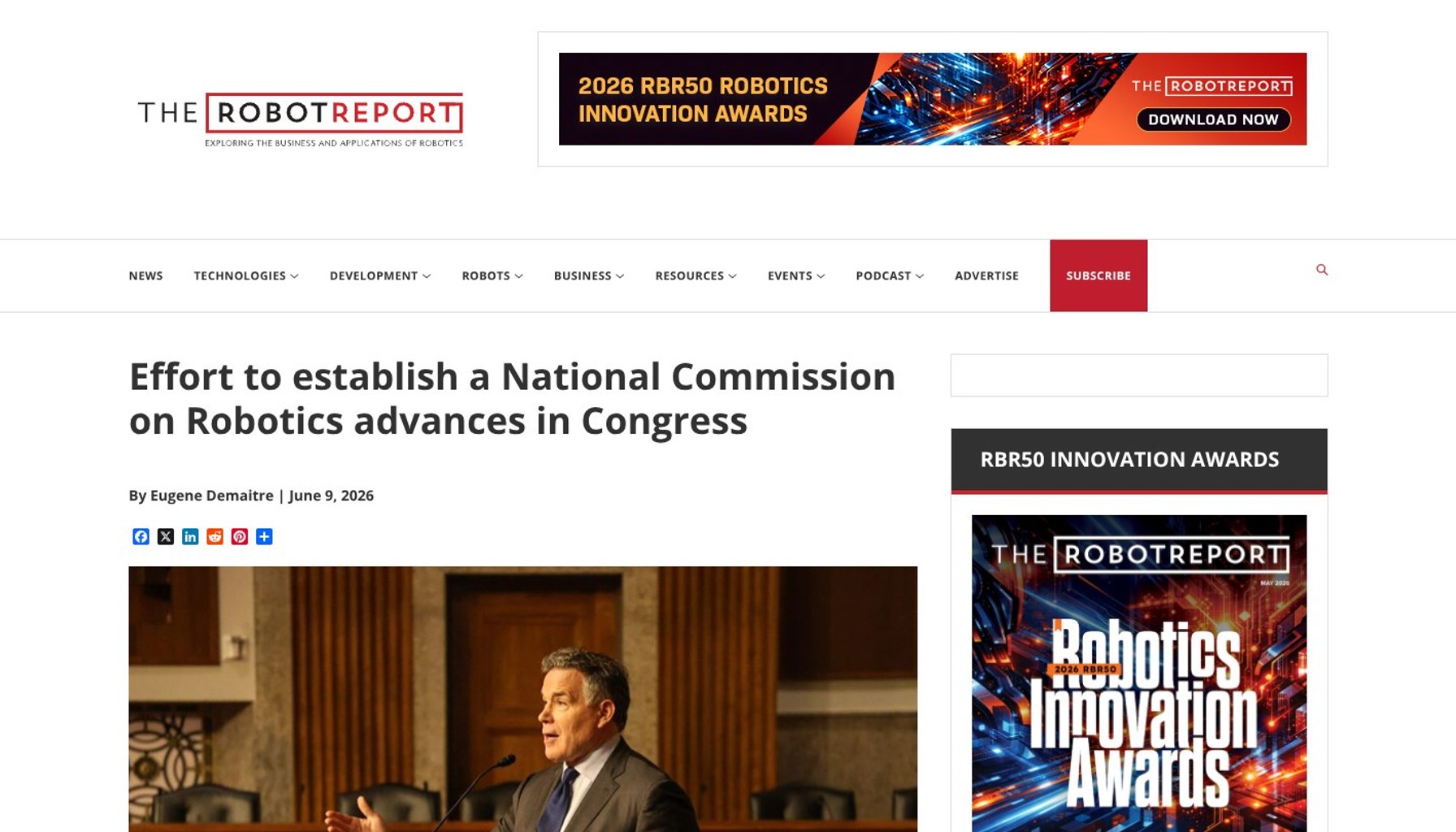
Congress eyes a robotics watchdog to safeguard U S edge.
A bipartisan push in both chambers would create an independent National Commission on Robotics charged with assessing U S competitiveness and recommending policies to strengthen leadership in robotics across industry. In the Senate, Senators Dave McCormick, John Hickenlooper, Todd Young, and Martin Heinrich last week introduced a bill to establish the commission, aiming to pull together leading experts to map risks and opportunities across supply chains, national security, and workforce development. In the House, a companion measure, H.R. 7334, was introduced in February by Representatives Jay Obernolte, Jennifer McClellan, and Bob Latta, all members of the Congressional Robotics Caucus, signaling a coordinated push across the Capitol.
The policy framing is practical and urgent. “Advancements in robotics are rapidly changing how we live and work,” Hickenlooper said, underscoring a challenge policymakers have wrestled with for years: robotics can bolster economic performance and defense, but unified federal policy has been slow to emerge. The idea is not to supplant existing programs but to create a distinct, independent body that could cut through jurisdictional gridlock and produce a coherent view of where the United States stands and how to strengthen its lead.
McCormick added color from a regional lens, praising Pittsburgh as “an incredible hub of robotics talent” and arguing that American leadership in robotics helps create high paying jobs, solidify domestic supply chains, and drive long term growth. The commission, as proposed, would assemble experts to assess priorities in robotics and offer policy recommendations designed to keep the United States ahead of competitors. The sponsors stress that the scope includes both civilian and military relevance, a recognition that advances in automation ripple through manufacturing, logistics, healthcare, and defense alike.
If enacted, the commission would serve as a focused, independent steward capable of translating research and innovation into policy options. Yet observers note that the value of such a body hinges on more than its chair and charter. The commission could be only as effective as its mandate, funding, and the willingness of other branches of government to adopt and implement its recommendations. The current framing points toward a rapid policy timeline rather than a lengthy bureaucratic process: a defined timeline for deliverables, with concrete steps to move from assessment to action.
From a practitioner’s standpoint, three realities will determine how meaningful the commission becomes. First, the mandate must be tightly scoped and adequately funded; without a clear implementable remit, the body risks producing analyses that gather dust. Second, policy alignment across commerce, defense, and labor, plus state and local governments, will be essential to avoid duplicative efforts or conflicting signals to industry. Third, the commission’s composition matters: a balanced mix of industry, academic, labor, and public sector voices will help ensure that recommendations reflect real constraints and incentives on the factory floor and in boardrooms alike. And finally, observers will watch for tangible milestones such as a midterm assessment or a final policy package that translate the commission’s findings into concrete steps the government and industry can act on within a practical horizon.
Overall, the move signals a shift from aspirational discussion to a structure that could steer federal robotics policy in a more deliberate, outcomes oriented direction. If it clears Congress and earns executive buy in, the National Commission on Robotics could become a focal point for coordinating standards, incentives, and investments that shape how the United States competes in a technology driven era.
- Effort to establish a National Commission on Robotics advances in CongressThe Robot Report / Independent source / Published JUN 09, 2026 / Accessed JUN 11, 2026