Humanoid robotics moves on two fronts: speech-to-grasp control and U.S. import restrictions
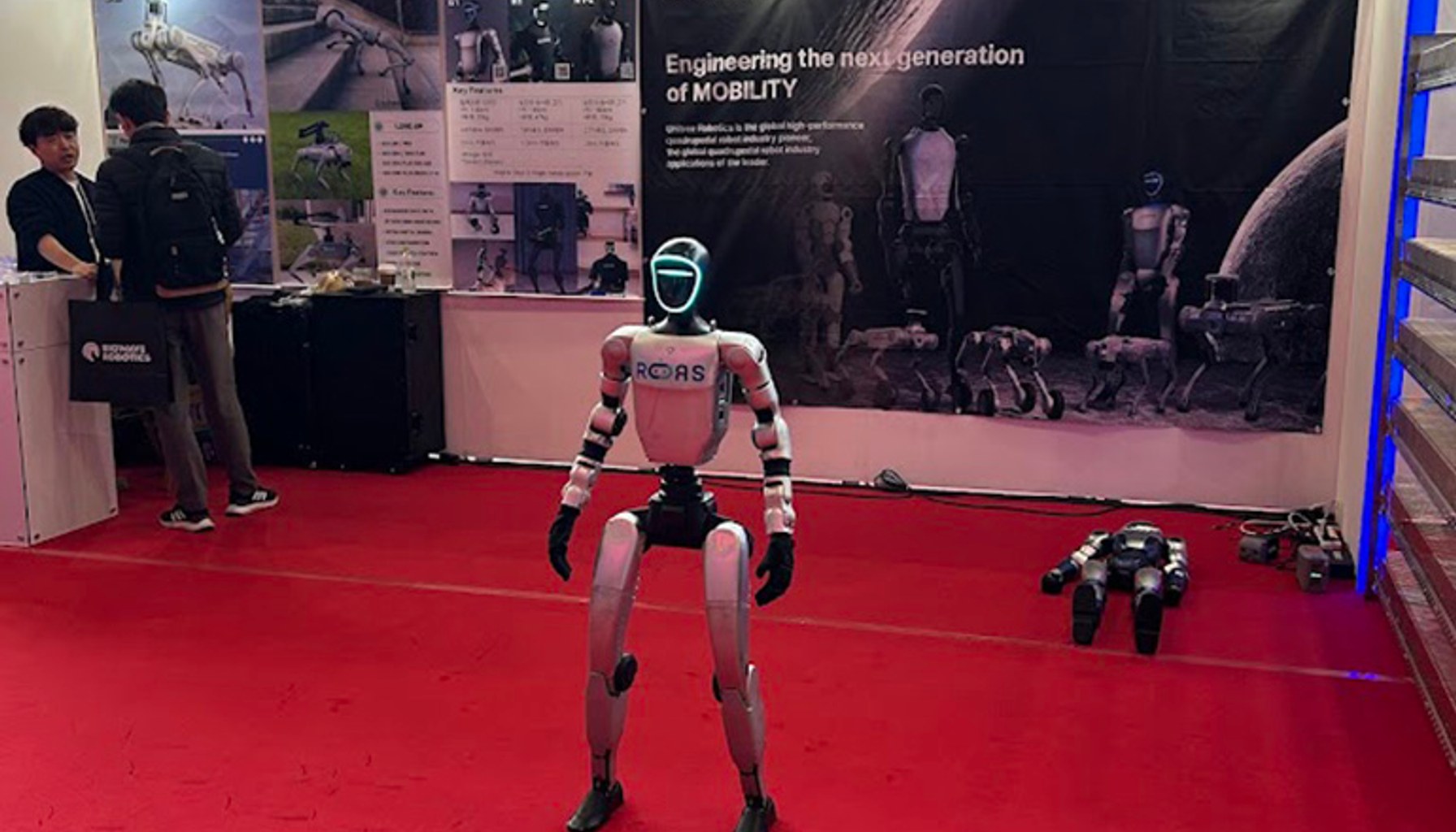
Image / therobotreport.com
Research is pushing humanoids toward lower-latency, speech-driven manipulation, while regulators are tightening the rules around foreign-made mobile robots and their power systems.
Speech input gets closer to the control loop
A new paper from arxiv.org, titled Speech2Grasp: Data-Efficient Transfer of Text-Conditioned Grasp Detection to Speech in Humanoid Robots, argues that humanoid robots do not need a ground-up speech stack to understand spoken commands. Instead, the authors test whether a text-conditioned grasp detector can be adapted to speech with a lightweight projector.
The paper uses ALBEF as the case study. The researchers report diagnostic analyses showing that a lightweight MLP-based projector can adapt the model to speech while preserving semantic discrimination and robustness. In practical terms, that matters because humanoid systems often sit on tight runtime budgets: every extra module in the perception pipeline adds latency, and every added dependency increases the surface area for failure.
The framework they introduce, Speech2Grasp, is aimed at text-conditioned grasp detection in humanoid robots. The abstract says real-world humanoid robot experiments show Speech2Grasp outperforms a cascaded ASR-based pipeline while reducing inference latency. That is the key engineering point. A cascaded speech-to-text-then-to-action architecture is easy to understand and common in prototypes, but it creates compounding error: misrecognition in the ASR layer can turn into a bad grasp, and the extra conversion step costs time.
The study’s claim is not that speech itself is solved. It is narrower and more useful than that. It suggests established text-conditioned models can be transferred to speech in a data-efficient way, which could lower the amount of speech-specific training required for robotics teams already working with text-language models. For deployment, that is significant because data collection for humanoids is expensive: the cost is not just annotation, but embodied trials, hardware wear, operator time, and the long tail of edge cases.
Why latency matters for humanoid deployment
For engineers, the phrase “reduced inference latency” is not a marketing flourish; it is the difference between a responsive robot and one that feels brittle. Humanoids are full-stack systems. They have to sense, parse intent, select an action, and execute it under mechanical constraints. If a speech interface adds unnecessary milliseconds or introduces failure points, the robot may still work in a lab demo but stumble in a real workflow.
That is why the paper’s emphasis on a lightweight MLP projector is notable. The design implies an architectural preference for reuse: keep the base text-conditioned model intact and adapt the input side rather than rebuild the whole stack. That can reduce training burden and simplify integration, especially for teams trying to move from curated demonstrations to broader deployment.
Still, the practical bar is high. “Real-world humanoid robot experiments” tells us the system was tested on hardware, but the abstract does not provide the operational details that operators would want: task diversity, grasp success rate, environmental variability, or how the system performs under background noise. Those gaps matter because lab success in humanoids often comes from controlled conditions that disappear on the factory floor or in a service setting.
U.S. regulators target imports of advanced robots and power inverters
On the policy side, The Robot Report says the Federal Communications Commission said an interagency body convened by the White House has determined that certain foreign-made “advanced robotic devices,” including mobile robots such as humanoids and quadrupeds, pose unacceptable national security risks.
According to the report, the FCC’s action restricts imports of certain robots and connected power inverters produced in foreign countries. The agency cited supply chain vulnerabilities and cybersecurity risk to American critical infrastructure. The ruling, as described by The Robot Report, does not affect sales, marketing, or use of devices already acquired, or models that already received FCC equipment authorization. It also does not apply to federal purchases. Software updates for foreign-supplied systems can get approval with a waiver.
The distinction between “new devices” and already authorized or already acquired devices is important. In deployment terms, this is not a blanket shutoff of the installed base. It is a gate on future imports, which could reshape sourcing decisions for startups and system integrators looking to standardize on low-cost foreign platforms.
The FCC also provided an exemption for advanced robots and power inverters that receive conditional approval from the U.S. Department of War or Department of Homeland Security, The Robot Report said. That means the policy is not absolute; it is conditional and security-mediated. For operators, the implication is that compliance paths may still exist, but they will likely be slower, more documentation-heavy, and more dependent on the end use.
Security, supply chains, and the economics of humanoids
The policy debate is not abstract because humanoid and mobile robots are increasingly networked computers with actuators attached. Robert Little, described by The Robot Report as a business development advisor and former chief of robotics strategy at Novanta Inc., said cybersecurity became a major issue after researchers found a backdoor in Unitree robots and later discovered some models were transmitting data back to servers in China without the owner’s knowledge.
That concern aligns with the FCC’s framing, but the business impact reaches beyond cybersecurity. If certain imports are restricted, the immediate winners are domestic and allied suppliers that can localize production or secure conditional approval. The Robot Report quoted Georg Stieler, a global robotics advisor and managing director for Asia at STM, saying the measure could slow U.S. physical AI innovation by cutting startups and researchers off from future low-cost Chinese platforms before comparable Western alternatives exist. He also said it opens opportunities for suppliers able to localize production in the U.S. or obtain conditional approval.
That is the tension in the current market. Low-cost hardware accelerates experimentation, but it can also create dependency. Restricting access may strengthen domestic manufacturing capacity over time, yet it can raise development costs in the near term. For investors, that changes the runway math. For operators, it changes procurement. For engineers, it changes which platforms are available for validation, simulation-to-hardware transfer, and pilot deployments.
What this means for the humanoid stack
Taken together, the paper and the FCC action show two sides of humanoid maturity. On one side, researchers are trying to reduce the compute and data overhead needed to make robots understand spoken instructions in a useful way. On the other, governments are increasingly treating humanoid and mobile robots as strategic networked infrastructure, not just machines.
The technical lesson is straightforward: the best humanoid systems are likely to be the ones that collapse unnecessary steps in the perception-and-control pipeline. Speech2Grasp points in that direction by favoring direct transfer from text-conditioned models to speech. The policy lesson is equally clear: deployment now depends not only on manipulation performance, but also on where hardware is made, how it connects, and whether it can pass security review.
For anyone building or buying humanoids, the message is the same. Performance claims need to be read in terms of runtime, data efficiency, and failure modes. And deployment decisions now carry supply-chain and cybersecurity constraints that can be just as important as grasp success.
- Speech2Grasp: Data-Efficient Transfer of Text-Conditioned Grasp Detection to Speech in Humanoid Robotsarxiv.org / Primary source / Published JUL 29, 2026 / Accessed JUL 30, 2026
- Experts react to FCC limits on U.S. imports of new humanoid and mobile robots - The Robot Reporttherobotreport.com / Trade / Published JUL 29, 2026 / Accessed JUL 30, 2026