Advantech and Nvidia Unite to Reboot Factory AI
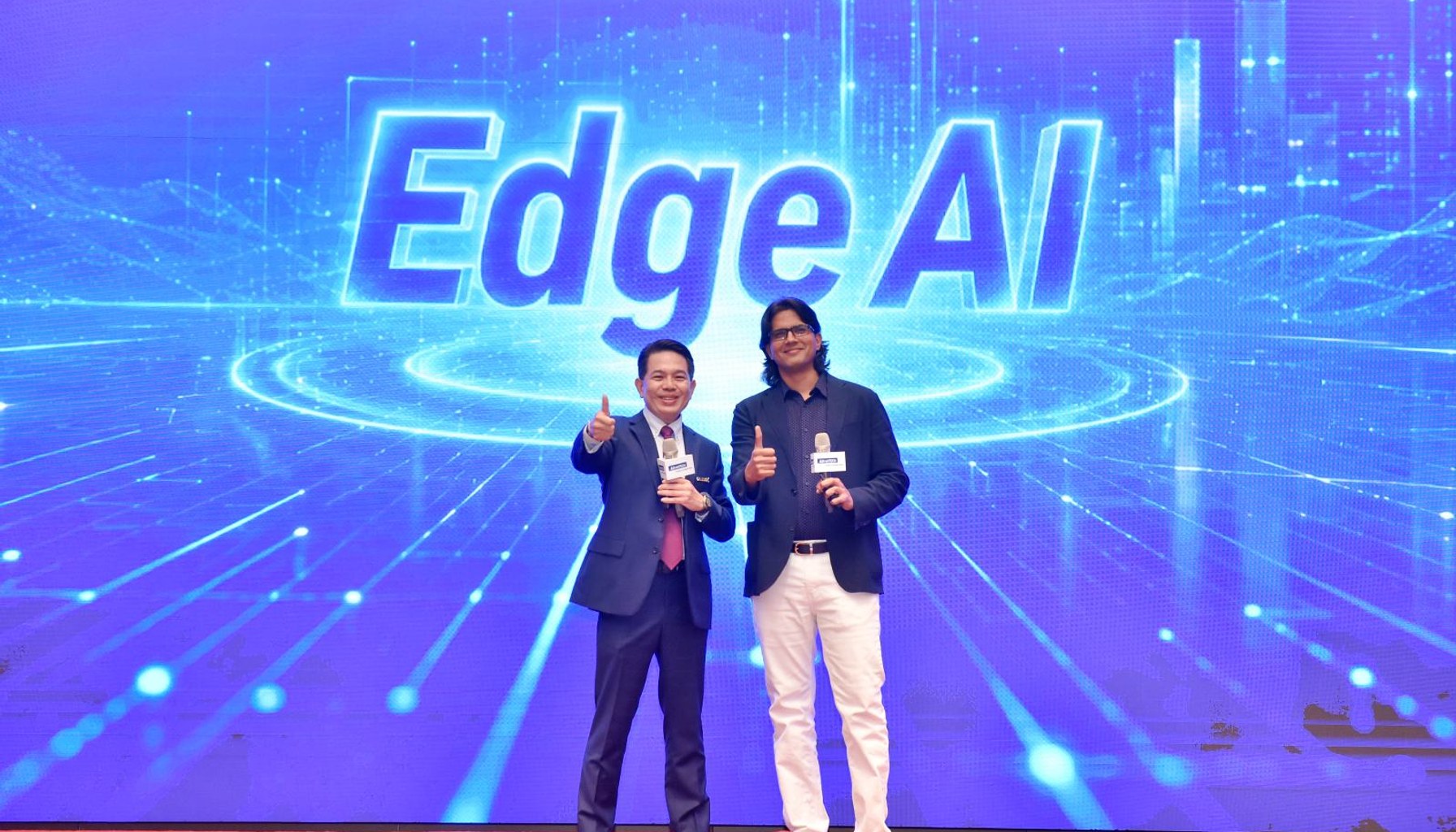
Factory AI just got a real-time boost on the edge.
Advantech announced an expanded collaboration with NVIDIA to roll out an AI based factory architecture that targets both agentic AI and physical AI applications on the plant floor. The stack is built around NVIDIA NemoClaw, NVIDIA Factory Operations Blueprint, NVIDIA RTX PRO, NVIDIA Jetson Thor, and Advantech’s WISE-Edge Developer Architecture (WEDA). The aim is clear: help manufacturers weave AI into real time factory operations, from autonomous line adjustments to smarter quality gates, without sending every data point to a distant data center.
The architecture is designed to sit at the edge, fused with Advantech’s WEDA ecosystem to give operators a unified, scalable path to AI deployment. In practice, that means models can run where the work happens, ready to respond to changing conditions in milliseconds rather than minutes. Agents can monitor equipment health, flag anomalies, and even trigger corrective actions across lines, while physical AI components read sensors and drive actuators in sync with production goals. The combination is meant to reduce downtime, improve yield, and push throughput without sacrificing safety or governance.
However, the reality of putting AI on the factory floor remains heavily dependent on integration. The joint approach must marry NVIDIA’s software toolchains with Advantech’s edge hardware and existing control environments. That means connecting to programmable logic controllers, supervisory control and data acquisition systems, and shop floor sensors while preserving cybersecurity, data ownership, and deterministic behavior. Companies eyeing this stack should plan for data harmonization across disparate equipment and a clear model lifecycle process to retrain and validate AI agents as processes evolve.
Deployment logic hinges on measuring cycle times and throughput, two operational metrics that matter most to plant managers and CFOs. Early pilots typically track how AI informed scheduling, quality inspection, and predictive maintenance translate into shorter cycle times and steadier throughput, plus fewer unplanned outages. The architecture’s edge focus is intended to minimize latency, so planners can count on near real time feedback rather than batch assessments that arrive after a defect or a fault has already slowed production. In formal terms, the goal is to convert AI insights into faster decisions at the source, not at a distant analytics team.
From a practitioner’s lens, two to four hard constraints loom. First, integration depth is not free. The value of an AI enabled line rises with how well the control layer speaks the language of the model (data schemas, timing budgets, and synchronization across PLCs and MES). Second, model reliability remains a risk area. Drift, sensor faults, and data gaps can undermine supposed performance gains unless there is robust monitoring and governance. Third, edge compute budgets matter. Even with NVIDIA’s powerful stacks, the plant must provision enough local compute and network bandwidth to support simultaneous inferences across multiple lines. Finally, change management matters. Operators and technicians will need training to trust autonomous agents, interpret AI signals, and intervene safely when needed.
Deployment data shows manufacturers are prioritizing real time edge intelligence that respects the realities of the factory, including data sovereignty and predictable performance. The case for this joint stack rests on a pragmatic promise: the ROI shows up not as a single blockbuster feature but as a suite of improved cycle times, steadier throughput, reduced downtime, and more consistent quality, all while keeping control of the physical process in the hands of humans when needed. What to watch next? Expect validation across different line configurations, more explicit data on cycle time reductions, and expanded testing across multi site networks to prove the scalability of this integrated approach.
The Advantech NVIDIA collaboration signals a maturing view of factory AI as an operations tool, not a miracle. It is a push toward a repeatable, auditable, edge centered workflow that aligns AI models with the rhythms of real production, with the hope of turning smarter decisions into faster, more reliable manufacturing.
- Advantech expands collaboration with NVIDIA for factory AI systemsDesign World / Independent source / Published JUN 11, 2026 / Accessed JUN 11, 2026