Advantech Links Factory AI to Energy Monitoring, Waste Targets and 2040 Renewable Goal
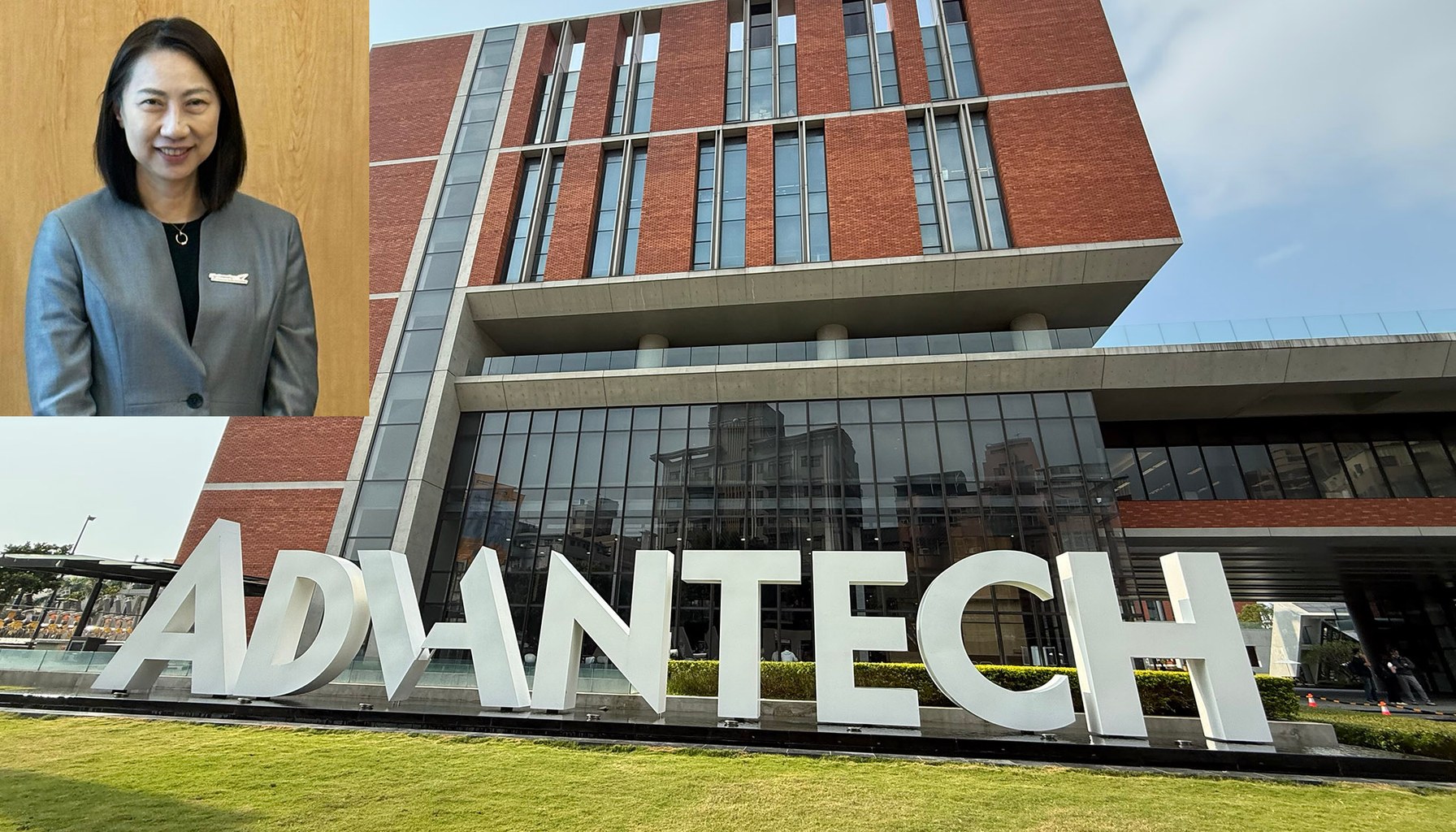
Image / designworldonline.com
The company says production planning software, workstation guidance and AMRs are intended to raise output while factory leaders are measured on annual waste reduction.
Advantech is using factory energy monitoring, production-planning software, AI-assisted process analysis and autonomous mobile robots as part of an effort to reduce energy use and waste, while targeting 100% renewable energy use by 2040 and net-zero emissions by 2050.
Linda Tsai, Advantech’s president of the Intelligent System Sector and chief operating officer, outlined the approach during the company’s Edge AI Conference in Taipei last month. The company has not disclosed in this account how much energy, waste or emissions its programs have reduced, nor has it provided production-throughput figures or payback periods for the automation investments.
Tsai said Advantech established an environmental, social and governance office in 2020 and evaluates efficiency at both the product and factory level. On the product side, the company considers energy consumption in system design, including compliance with European Union energy-saving requirements for electronic components. It also tracks packaging materials such as plastic and paper, along with supplier materials.
Advantech calculates product carbon footprints using manufacturing-process and material data, Tsai said. That accounting matters operationally because manufacturers cannot manage product-level emissions or supplier-material impacts solely through facility utility bills. A usable system needs manufacturing, sourcing and product data connected to a consistent calculation method.
Inside its factories, Advantech has deployed software that monitors energy consumption through a dashboard available to factory managers. Tsai said the system is intended to help managers identify when they can reduce power consumption. The company also assigns factory leaders a yearly waste-reduction KPI.
The manufacturing automation program includes software that automatically plans production around incoming orders and customer delivery dates. Advantech also projects updated standard operating procedures onto workstation surfaces to reduce assembly time and uses AI to identify process bottlenecks and improve workstation setups.
Those tools require more than an AI model. Production planning depends on current order, due-date and shop-floor status data. Digital work instructions need controlled procedures and workstation-level display hardware. Energy dashboards must be connected to meters and equipment data that operators trust enough to change operating schedules or investigate abnormal consumption.
Advantech is also using smart warehousing and AMRs to move material directly to workers. Tsai said the company’s intent is to save time otherwise spent by employees leaving workstations to collect materials. She said Advantech does not plan to reduce headcount through AMR deployment, instead positioning the machines as a way to increase production efficiency.
That distinction is important for plant operators evaluating mobile automation. AMRs can augment assembly and warehouse workers by reducing walking and material-handling time, but the business case depends on route frequency, material presentation, charging availability, fleet supervision and whether downstream stations can absorb the added flow. Advantech did not provide AMR fleet size, travel times, cycle-time reductions or output gains.
Tsai also cautioned that industrial customers should not assume AI can replace every task. Advantech’s stated emphasis is productivity improvement, including the use of agentic AI for workflow and administrative work, rather than full task replacement.
For manufacturers, Advantech’s program offers a practical structure for connecting industrial AI to sustainability claims: measure facility consumption, assign accountable waste targets, use production and material data for product-footprint calculations, then test automation against measurable labor time, cycle time and throughput constraints. The missing evidence is equally material. Without published energy savings, waste reductions, emissions data, production gains or investment costs, outside operators cannot yet calculate whether Advantech’s approach has delivered a financial return or how quickly it could be replicated elsewhere.
- Can AI be energy efficient for manufacturers?designworldonline.com / Trade / Published JUL 17, 2026 / Accessed JUL 19, 2026