Silent, Flexible Fiber Muscles Drive New Actuation
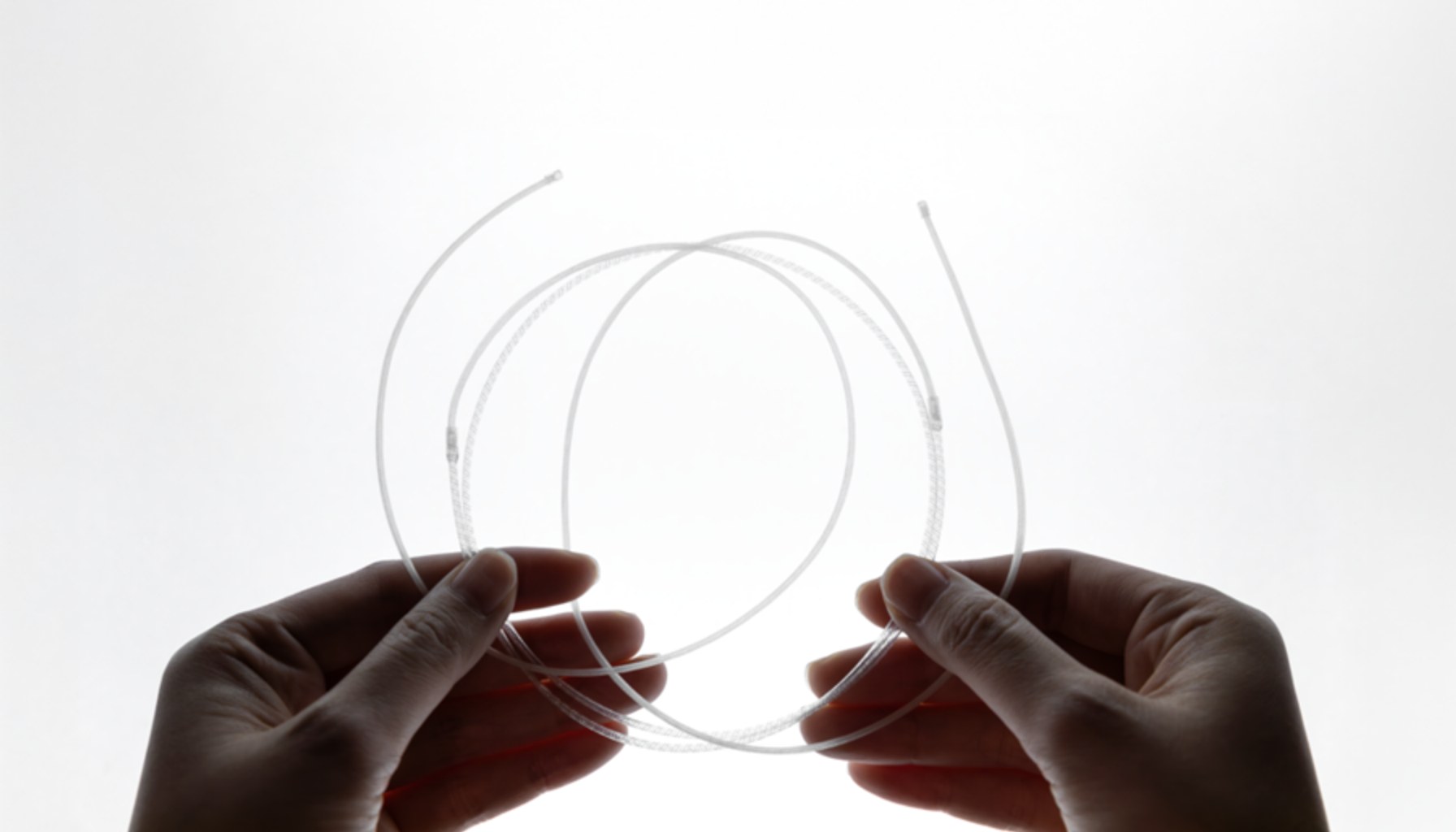
Soft, silent fiber muscles promise robots that move without noisy motors.
A collaboration between MIT’s Media Lab and Italy’s Politecnico di Bari has developed a new class of electrofluidic artificial muscle fibers that could quietly transform how humanoid robots and prosthetics move. The core idea is simple in concept but hard in practice: fibers that can be arranged in different configurations to suit a task, yet remain compliant enough to interface with the human body and operate without bulky motors, pumps, or external fluid supplies. The work, described in Science Robotics, combines two soft-actuation technologies into a single fiber-form actuator: a thin McKibben-style fluidic muscle and a miniaturized solid-state pump based on electrohydrodynamics (EHD).
In plain terms, a McKibben actuator is a flexible tube with an expandable fluid-filled cavity wrapped in an elastic braid. When pressurized, the tube shortens along its length, producing force and motion. The new fiber design embeds a compact EHD pump that generates pressure inside a sealed fluid chamber without moving parts or a dedicated external fluid supply. Engineering documentation shows that this combination can produce actuation with the smooth, compliant feel that soft robotics crave, while sidestepping many of the bulky components that plague traditional hydraulic or pneumatic systems.
The technical specifics reveal a clear intent: create actuators that can be arranged like fibers in a textile, enabling rapid, quiet, and distributed actuation across a surface or limb. Demonstration footage shows fibers that can bend, twist, and grip as part of an integrated system, rather than a single heavy motor driving a joint. There is no mention of a rigid payload in the public release, which is unsurprising given that the fiber is designed to be embedded in flexible substrates or worn as a band or sleeve. The research is led by Ozgun Kilic Afsar, a PhD candidate at MIT Media Lab, with Vito Cacucciolo of Politecnico di Bari and several co-authors.
From a humanoid-robot developer’s lens, the most compelling implication is the potential for high-DOF, distributed actuation without the acoustic or energy penalties of motorized joints. Without traditional motors, the design could reduce weight and improve safety in close-contact tasks. Yet there are important caveats. The MIT release emphasizes lab research and controlled-environment testing; there is no field-ready robot demonstrated yet, and critical metrics—such as true actuation speed, force output per fiber, total reachable degrees of freedom in a full limb, and long-cycle durability—remain to be disclosed. The technical specifications reveal promise, but they also hide the real-world questions: how much power is required to drive the EHD pump, how quickly can a fiber respond, and how will the system behave after thousands or millions of cycles?
From a practitioner’s point of view, two tradeoffs stand out. First, control complexity versus actuation fidelity. Soft, compliant fibers promise safer human-robot interaction, but achieving precise, repeatable motion across many fibers requires sophisticated sensing and feedback—more than a single motor affords. Second, energy and packaging. The EHD pump is miniaturized and solid-state, but powering a network of fibers with consistent voltages and heat management is nontrivial. The upside is scalable manufacturing potential: you can weave fibers into textiles or sleeve-like modules, enabling novel exosuits or prosthetic interfaces. The big unknowns are endurance, environmental robustness, and integration with high-level control systems that humanoid architectures demand.
In short, this development marks a meaningful step toward truly soft, fiber-based actuation for humanoids, but it’s not a finished product. The approach could someday reduce the mass and noise of humanoid actuation while enabling more distributed, fabric-like control. The path to field-ready humanoids will hinge on durability, control frameworks, and concrete performance benchmarks—numbers not yet published, but increasingly critical for any product that claims to replace or augment motorized joints.
As always with demo reels of soft robots, the proof will be in the cycles. If the fiber muscles survive the test of time, they could redefine where actuation power lives: woven into the fabric of the robot, not strapped to its bones.
- A new type of electrically driven artificial muscle fibernews.mit.edu / Primary source / Published APR 09, 2026 / Accessed APR 14, 2026