What we’re watching next in ai-ml
By Alexander Cole
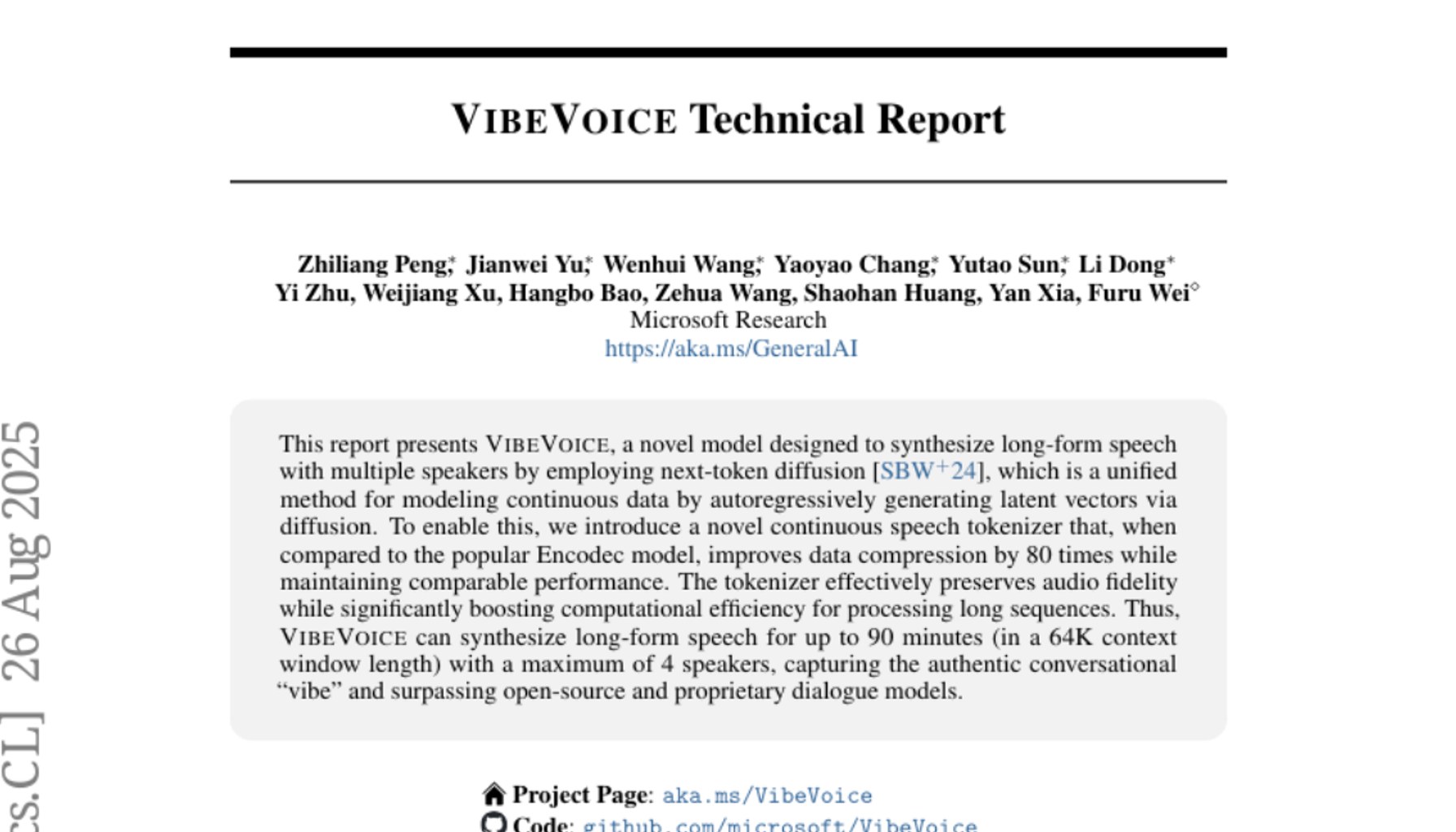
Image / paperswithcode.com
Benchmarks finally caught up with the big models.
Across three major signal threads—arXiv’s AI listing, Papers with Code, and OpenAI Research—the current moment in AI research reads like a pivot from surprise demos to reproducible, benchmark-driven progress. The trio of sources suggests a quiet but persistent shift: researchers are not just chasing bigger numbers; they’re chasing apples-to-apples evaluations, openly shared code, and compute-aware reporting. The result is progress that feels more trackable, less hype-driven, and arguably more portable to real product constraints.
The paper demonstrates an ecosystem where progress is increasingly anchored to open benchmarks and transparent methodology. You can see it in arXiv’s steady stream of cs.AI submissions that emphasize evaluation design, in Papers with Code’s public tie between results and datasets, and in OpenAI Research’s emphasis on robust evaluation protocols and reproducibility. The common thread isn’t a single breakthrough but a discipline: publish the code, define the task, compare fairly, and be explicit about compute. In practice, this yields faster product-readiness signals for teams wrestling with deployment, latency, and budget.
To practitioners, the shift feels like upgrading from a speedometer to a real-time weather forecast for AI systems. You can measure a model’s “speed” and “fuel” (compute) on standardized tests, test suites, and cross-domain tasks, and you can trust the results because the code and data are public. The risk, of course, is benchmark inflation—tuning for a leaderboard can drift away from real-world impact. There’s also a caution about compute and data costs: as benchmarks become the currency, teams without heavy R&D budgets might be left with a gap between published scores and practical throughput. The trend also raises questions about how to validate models on distribution shifts and real-user scenarios, not just curated test sets.
For product teams shipping this quarter, a few implications are clear. First, expect more public evaluation dashboards and reproducible baselines to anchor vendor comparisons. Second, a push toward smaller, more compute-efficient models that still perform solidly on core tasks could reshape budgeting for inference and edge deployment. Third, be mindful of the gap between benchmark performance and real-world reliability—invest in robust internal evaluation that simulates user flows and data drift. And finally, keep an eye on the integrity of benchmarks themselves; as a field, we’ll need ongoing guardrails against overfitting to leaderboard metrics.
What we’re watching next in ai-ml
What this means for products shipping this quarter
Sources
Newsletter
The Robotics Briefing
Weekly intelligence on automation, regulation, and investment trends - crafted for operators, researchers, and policy leaders.
No spam. Unsubscribe anytime. Read our privacy policy for details.