What we’re watching next in ai-ml
By Alexander Cole
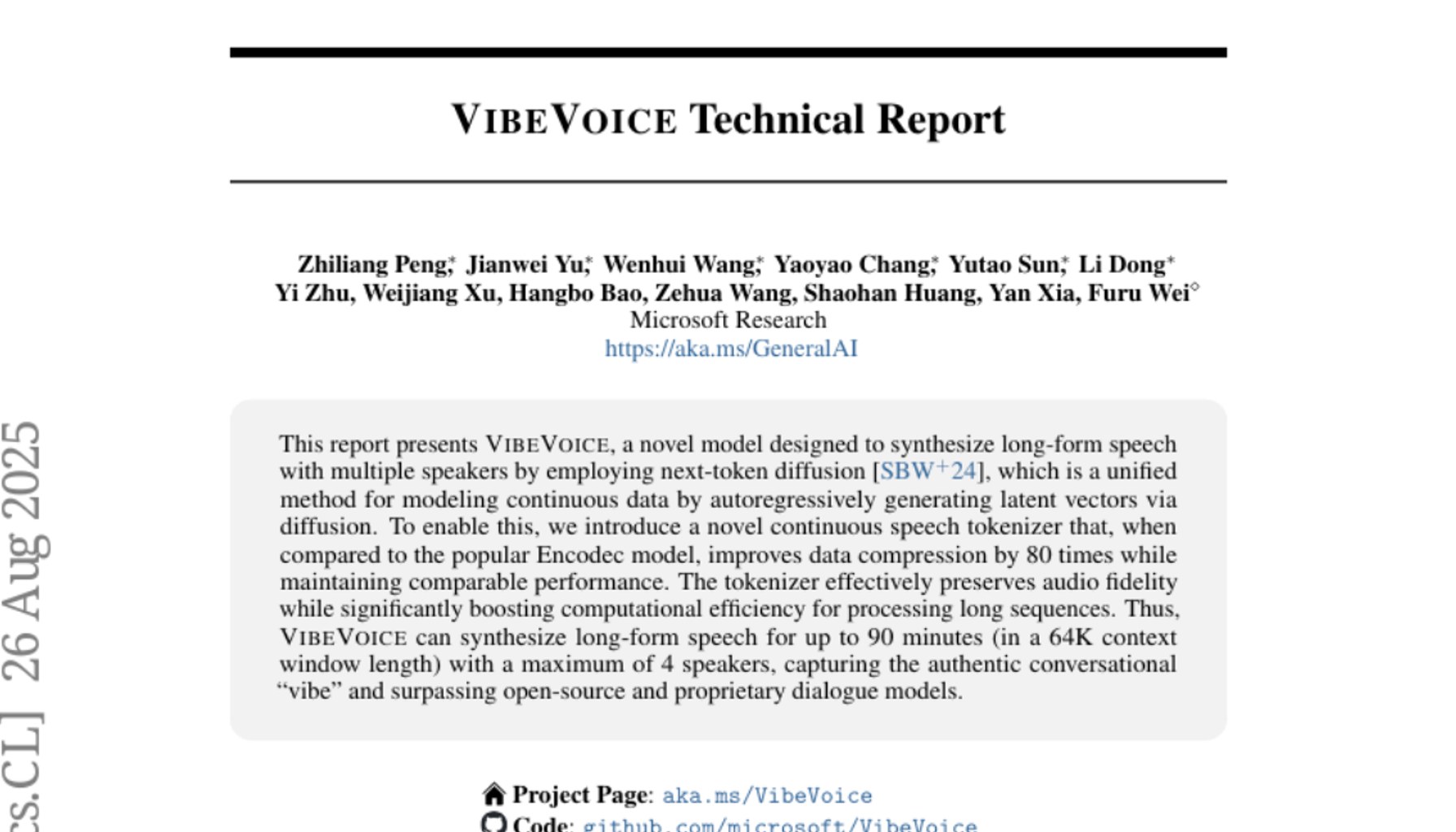
Image / paperswithcode.com
Benchmarks are finally biting back against hype: smaller models are showing surprising strength on diverse tasks.
The story emerging from recent AI literature and industry reports is not a single breakthrough, but a quiet pivot toward evaluation-first development. OpenAI’s research agenda repeatedly foregrounds evaluation metrics and robust benchmarking; Papers with Code tracks and highlights benchmark results across an ever-growing landscape of tasks and datasets; arXiv listings in cs.AI show a flood of papers where what’s being tested and how it’s tested matters as much as what’s being tested. Taken together, the ecosystem is coalescing around a simple truth: getting real-world value out of AI will depend as much on how you measure success as on how big your model is.
In practical terms, researchers and engineers are moving away from “scale for scale’s sake” toward strategies that squeeze value from smarter evaluation, data efficiency, and modular architectures. Benchmark results are increasingly used to justify design choices—be it how you structure prompts, how you fuse retrieval with generation, or how you curate and distribute evaluation data across domains. A notable caveat remains: benchmarks are powerful signals, but they can be gamed or become stale if models exploit narrow test properties rather than truly improving real-world behavior. The technical report details and the code-centric ethos of Papers with Code emphasize reproducibility, which in turn pushes teams to publish more complete evaluation pipelines rather than one-off numbers.
Two takeaways for practitioners
What this means for products shipping this quarter
What we’re watching next in ai-ml
Sources
Newsletter
The Robotics Briefing
Weekly intelligence on automation, regulation, and investment trends - crafted for operators, researchers, and policy leaders.
No spam. Unsubscribe anytime. Read our privacy policy for details.