ABB and Jacobi roll out AI palletizing for integrators
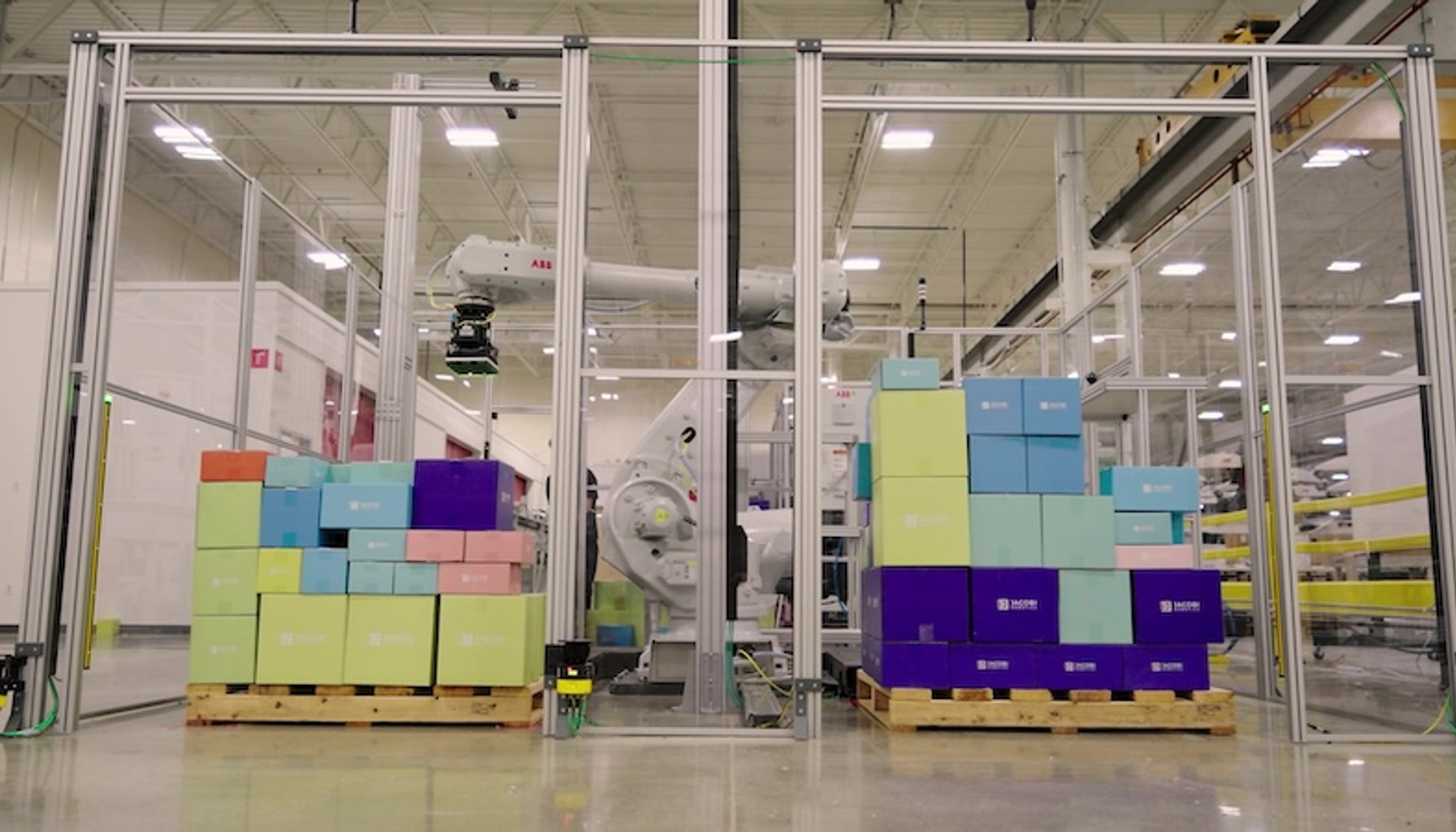
AI palletizing goes turnkey for ABB's integrator network.
ABB Robotics is teaming up with Jacobi Robotics to embed Jacobi’s OmniPalletizer AI into ABB’s hardware-and-software stack, a move the companies say will give ABB’s system-integrator network a productized, repeatable way to deploy AI-powered mixed-case palletizing without upstream sequencing infrastructure. The partnership, announced April 9, 2026, positions palletizing as a repeatable automation asset rather than a bespoke engineering project, addressing a chronic pain point: the gap between a shiny demo and a deployed, predictable cell.
Production data shows that the real hurdle in warehouse AI isn’t the AI math; it’s the tastefully choreographed tango between software, controls, and the facility floor. ABB notes the collaboration will deliver a productized path that bypasses some of the sequencing gymnastics that have slowed deployments in the past. Integration teams report that the OmniPalletizer inside ABB’s portfolio can be deployed with a more standardized workflow, reducing the upfront customization that often stalls projects—especially for mixed-case configurations where box sizes and weights vary by shift and by customer.
The move matters for integrators facing tight project calendars and multi-vendor environments. Jacobi’s software promises real-time decision-making for pallet layouts, aiming to optimize stability and throughput without requiring customers to retool upstream lines or adopt a new sequencing backbone. That’s a significant shift in a space where the vendor promise of “seamless integration” frequently translates into months of tuning and rework. In this arrangement, the emphasis is on repeatability, not bespoke debugging for every site.
From a practitioner’s lens, three forces will guide how this plays out. First, integration requirements will still shape outcomes: the palletizing cell itself consumes floor space and power, and facilities must support robust network connectivity to feed real-time data to the AI engine. Second, the human role doesn’t vanish; operators and technicians will still tune, monitor, and intervene when misfeeds or product irregularities occur. Third, hidden costs creep in even when a solution sounds turnkey: ongoing AI model updates, licensing for the OmniPalletizer layer, and the overhead of aligning the new palletizer with a customer’s warehouse management and ERP systems.
Industry observers will watch for ROI signals once deployments begin to scale. The collaboration’s proponents argue the productized approach shortens the path to value by removing much of the upstream sequencing work that often dominates implementation time. Yet the absence of disclosed performance metrics means the true cycle-time and throughput improvements—and the corresponding payback period—remain to be proven in the field. Until each integrator reports real-world results, the story stays in the realm of potential rather than proven benefit.
What’s clear is that ABB’s network will now have a more repeatable palletizing recipe at its disposal, one that can adapt to mixed caseloads without requiring a bespoke sequencing overhaul at every site. Whether that translates into the kind of 14-month payback CFOs love or a handful of early wins across 2026 remains to be seen. What the industry does know is that the combination of AI-driven adaptation with a standardized deployment path addresses a long-standing bottleneck: turning a persuasive demo into a deployed, reliable cell with measurable throughput gains.
- ABB partners with Jacobi Robotics to roll out AI-powered palletizing for integrator networkroboticsandautomationnews.com / Source role not classified / Published APR 09, 2026 / Accessed APR 09, 2026