Pop-up robots probe public attitudes
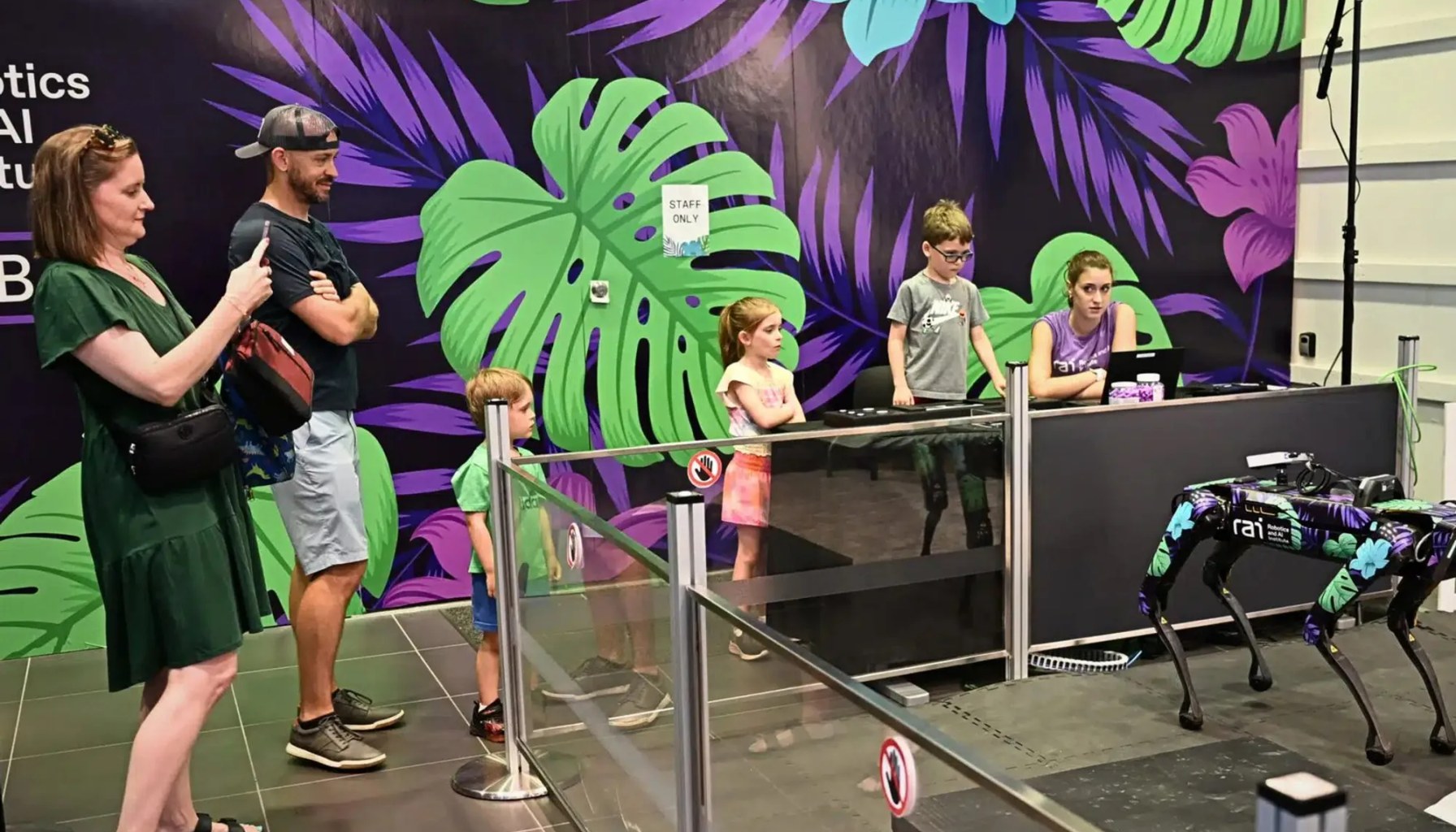
A mall demo that puts robots in the room is the new social testbed for automation.
A Cambridge pop-up in summer 2025 gave everyday visitors a first-hand look at “state-of-the-art robotics” with the explicit aim of measuring how people actually feel about sharing spaces with machines. Engineering documentation shows the organizers—RAI Institute, led by Marc Raibert’s team—set the display up near a pedestrian thoroughfare to move beyond headlines and offer real human-robot interaction in a controlled public environment. The goal, they say, is twofold: let people see a range of robots up close and understand how the public perceives interacting with them in real life.
The space was split into two zones. A museum area showcased the hardware—including Boston Dynamics’ Spot and the ANYbotics ANYmal quadruped—alongside a prior model of the institute’s UMV. Demonstration footage shows visitors watching Spot traverse a taped course, then comparing it with the more mission-focused gait of Any-mal and the observed behavior of the UMV in a separate display. In the second zone, attendees could interact with the machines at a safe, supervised distance, enabling short-lived tasks that mimic everyday activities—from transporting a light object to following a scripted path.
Lab-testing confirms the organizers’ intention to quantify more than curiosity. The technical specifications reveal a deliberate shift from sensational claims to lived experience, with data collection framed around how people respond to autonomous systems when given clear cues and constraints. The pop-up is less about selling a specific robot and more about shaping expectations: what people believe a robot can or should do in a shopping mall, an office lobby, or a factory floor. The experience mirrors the broader industry push to study human-robot collaboration in environments where people work, learn, and shop.
From a readiness perspective, the event sits squarely in a controlled-environment demonstration. It’s not field-ready deployment, and it doesn’t attempt full autonomy in real-world, high-risk contexts. It’s a staged, consumer-facing lab-like setting intended to capture attitudes, trust, and willingness to cooperate with machines under monitored conditions. The result, according to observers, is a more grounded, less sensational gauge of what non-experts expect—and fear—from autonomous systems.
Two takeaway insights stand out for practitioners. First, direct exposure matters: people often form caricatured beliefs about robot capability when they only read headlines or see dramatic demos; hands-on encounters help ground expectations. Second, the contrast across platforms is instructive—Spot’s mobile teleology, Any-mal’s legged agility, and UMV’s unmanned-mobility persona each provoke different questions about safety, reliability, and usefulness in shared spaces. The design of interaction—allowing users to see, touch, or guide a robot within safe boundaries—matters as much as the hardware itself.
That said, the exercise carries honest limitations. The sample is self-selecting—a mall population that happens to stroll by—and novelty effects likely skew early impressions. Visitors may overemphasize or misinterpret capabilities based on how a robot looks or moves, not its real-world reliability in a dense, dynamic workplace. The event’s power, runtime, and charging details were not disclosed publicly, and the demos do not reflect long-term performance in uncontrolled environments. These gaps matter because perception often hinges on specific affordances—how a robot asks for permission, how it recovers from a misstep, or how it communicates intent.
Still, the popup is a valuable data point in a world where press releases routinely outrun experience. Engineering teams eyeing deployment in offices, warehouses, or clinics can use these learnings to craft safer, more intuitive interactions, align marketing with actual use, and design education around what robots can do—and what they cannot—today.
In the end, the data won’t rest on a pop-up’s display boards. It will inform the next generation of user-centered design, where visibility, behavior, and reliability converge to move robots from demo reels to everyday colleagues.
- Studying Human Attitudes Towards Robots Through Experiencespectrum.ieee.org / Source role not classified / Published APR 05, 2026 / Accessed APR 09, 2026