Temple Student Unveils AI Android for Home Care
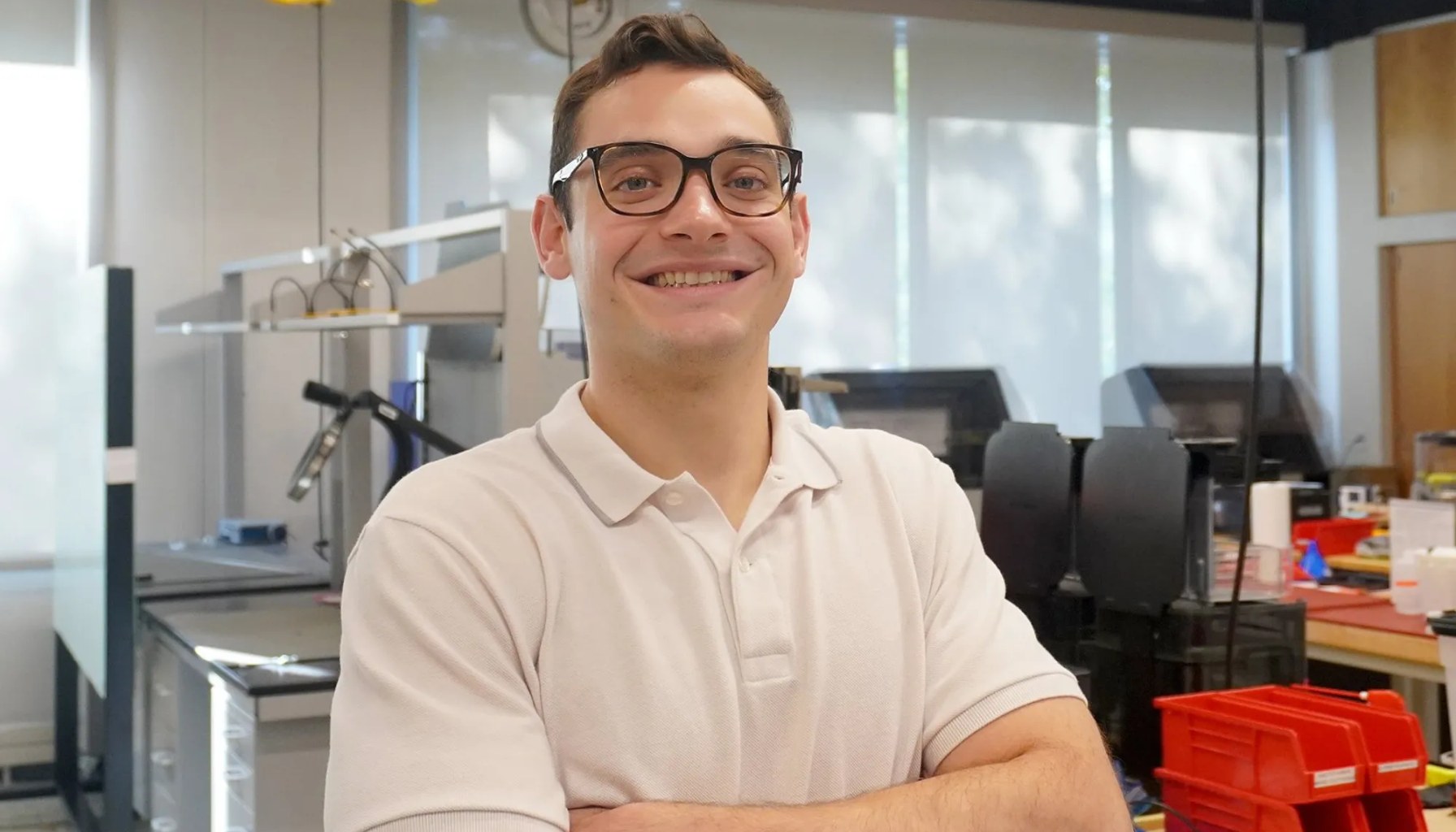
Temple's AI android aims to shoulder caregiving at home.
A Temple University junior, Kyle McGinley, has been channeling his appetite for hardware and software into an AI-integrated android companion meant to assist in-home caregivers. A path from high school tinkering to university research, McGinley has carved out a niche at the intersection of AI, robotics, and practical care. He grew up in Sellersville, Pennsylvania, and after a stint considering physical therapy, redirected into electrical and computer engineering. At Temple he’s a teaching assistant and a research assistant, pushing AI-enabled hardware projects forward while pursuing a bachelor’s degree. His work, and the recognition that came with it, were acknowledged by Temple through the Butz scholarship, awarded annually to an electrical and computer engineering undergraduate aligned with software development, AI, or health education software.
From a humanoids perspective, the project is still very much in the lab, but its aim is unmistakable: make a practical in-home aid that can blend into daily caregiving tasks rather than stand apart as a gadget. The Android companion represents a deliberate push to merge perceptive AI with a physical platform that can interact with real environments—doors, objects, and people—without requiring a clean-room setup. In other words, it’s not just “smart speech” in a shell; it’s a form factor that aspires to manipulate, assist, and respond within a living space. The engineering pathway McGinley is pursuing—tight coupling between AI models, sensor suites, and actuated hardware—mirrors a growing trend in home-care robotics: software advances are only as valuable as the hardware that can safely and reliably enact them.
That said, there are explicit gaps between the prototype on campus and a field-ready robot in someone’s living room. The reporting around McGinley’s project does not publish DOF counts or payload limits for the android, a conspicuous omission when evaluating how capable the machine will be at grasping items, assisting users, or negotiating cluttered spaces. For a home-care robot, those figures matter: the number of degrees of freedom (DOF) affects how naturally it can reach, manipulate, or stabilize objects, while payload constraints determine what it can lift or steady without overstraining joints. In the absence of disclosed specifications, observers must assume a prototype stage where safety margins and control software are still being tuned, rather than a device optimized for production use.
Technology Readiness Level is another critical lens. The project sits squarely in the lab-demo/advanced-research territory: a talented student project recognized by a university scholarship, but not a commercially deployed system. Real-world deployment would require robust validation in controlled environments and, ultimately, field trials with caregivers—covering reliability, safety, privacy, and human-robot interaction. Demonstrations in lab settings often reveal gaps in perception under varied lighting, unpredictable human behavior, and battery endurance; those gaps tend to drive the next rounds of hardware-software co-design.
Two practitioner-oriented takeaways stand out. First, without disclosed DOF/payload and without explicit runtime data, it’s impossible to gauge whether the android can perform routine caregiving tasks without compromising safety. Home environments demand graceful fallbacks, safe-compliance torque limits, and reliable power management—areas ripe for failure modes if not meticulously engineered. Second, the path from an AI-assisted android prototype to a caregiver’s daily tool hinges on measurable improvements over time: concrete benchmarks, human-in-the-loop testing, and transparent reporting of hardware limits and safety features. As McGinley’s work moves forward, look for published specs, battery-life demonstrations, and controlled-environment trials before the project moves past the lab.
In short, this is a solid early step in a long arc toward practical home-care robots. The progress is real, and the impulse is well-timed, but shipping remains a distant milestone—one that will depend on concrete, testable details the field will want to see, not slogans from the lab.
- Temple University Student Highlights IEEE Membership Perksspectrum.ieee.org / Source role not classified / Published APR 07, 2026 / Accessed APR 09, 2026