Agentic AI Takes the Software Wheel
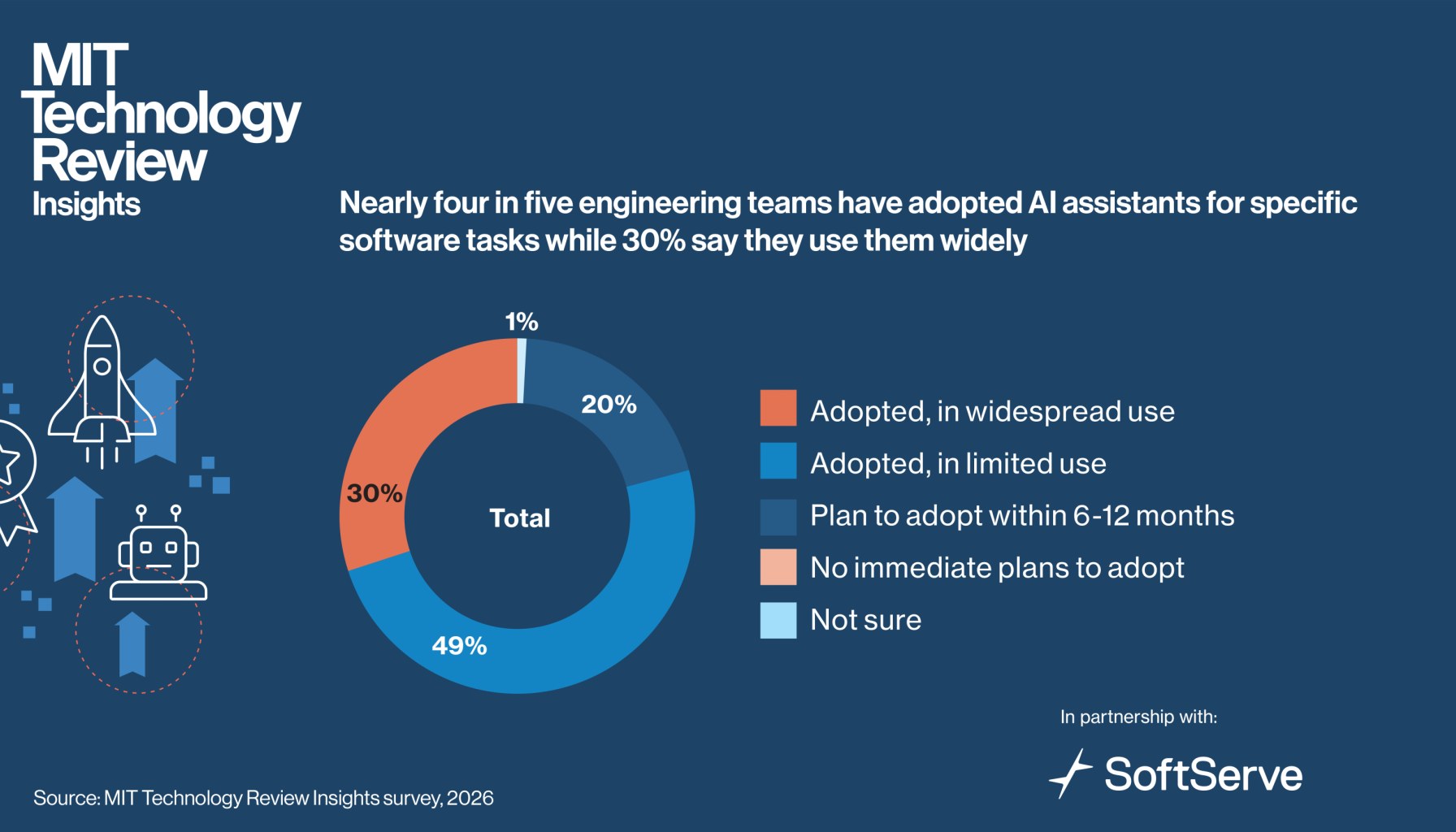
Agentic AI is about to run software projects end-to-end. That’s the bold verdict from a wave of research and a Technology Review report on how engineering teams are rethinking AI’s role—from smart helpers to autonomous project directors.
Two tech revolutions already rewired how software gets built: open source, which democratized access to code, and DevOps plus agile practices, which turned development into continuous, collaborative delivery. Now, a third shift is looming: agentic AI—AI that can reason, set goals, and direct work across an entire project, not just automate a single task. The idea isn’t “AI writes code for you” so much as “AI orchestrates the entire lifecycle.” The report draws on a survey of 300 engineering and technology executives who see the promise in principle, yet acknowledge the obstacle course ahead before broad diffusion becomes routine.
In practice, committees of engineers and product managers aren’t eagerly tossing away their handbooks. The paper’s central takeaway is that agentic AI could automate end-to-end software processes, but adoption is still carefully staged and mostly limited today. The potential is big: imagine an AI agent that can map requirements to a backlog, assign tasks, monitor risk, approve fixes, and steer release cadence with only high-level guardrails from human leaders. In other words, agent-managed development and product lifecycle automation sits just beyond the horizon—if organizations can clear the barriers to diffusion.
For practitioners, the implications are tangible but nontrivial. First, pilot projects will likely be constrained to well-structured domains, where the product scope, data quality, and compliance requirements are clear enough for an AI agent to reason without drifting. Expect a phase of “AI-assisted coordination” rather than full autonomy—the kind of setup where the agent proposes plans, but humans give the final thumbs up. Second, governance and safety become the bottlenecks. Agents that can direct budgets, timelines, and release risk must be tethered to robust oversight, explainability, and rollback mechanisms to avoid misalignment during fast cycles. Third, data readiness and pipeline integration are non-negotiable. The agent’s effectiveness hinges on clean telemetry from code, tests, and deployments, plus a seamless handoff into CI/CD workflows. Finally, teams will need concrete metrics to judge success beyond velocity: cycle time, defect rate, real-time risk exposure, and the quality of decisions the agent makes under pressure.
If you’re shipping this quarter, the message is pragmatic: these capabilities aren’t deployed at scale yet, and the path forward is incremental. Early adopters will test agentic AI in narrow, high-value slices—areas with stable requirements, strong observability, and clear governance. Think of it as turning a conductor loose with a full orchestra: the AI can cue sections, anticipate clashes, and accelerate delivery, but it still needs human baton-wielding to interpret nuance and resolve ethical or strategic questions. The payoff, if the orchestration holds, is not a replacement but a dramatic uplift in coordination—reducing manual handoffs and bottlenecks that slow even the best teams.
The bigger picture: if agentic AI lives up to the hype, we’re looking at a software industry where end-to-end automation could redefine roles, budgets, and accountability. The report’s authors stress that, like DevOps and agile before it, the diffusion will take time, effort, and a rethinking of governance, tooling, and culture. But the potential is audacious enough to warrant a front-row seat in every engineering org’s planning tank.
Industry watchers should expect a wave of pilots to surface in the next 12–18 months, with clear signals around where agentic AI adds real leverage and where human oversight remains indispensable. The era of autonomous project management is not here yet, but the map is being drawn.
- Redefining the future of software engineeringtechnologyreview.com / Source role not classified / Published APR 14, 2026 / Accessed APR 15, 2026