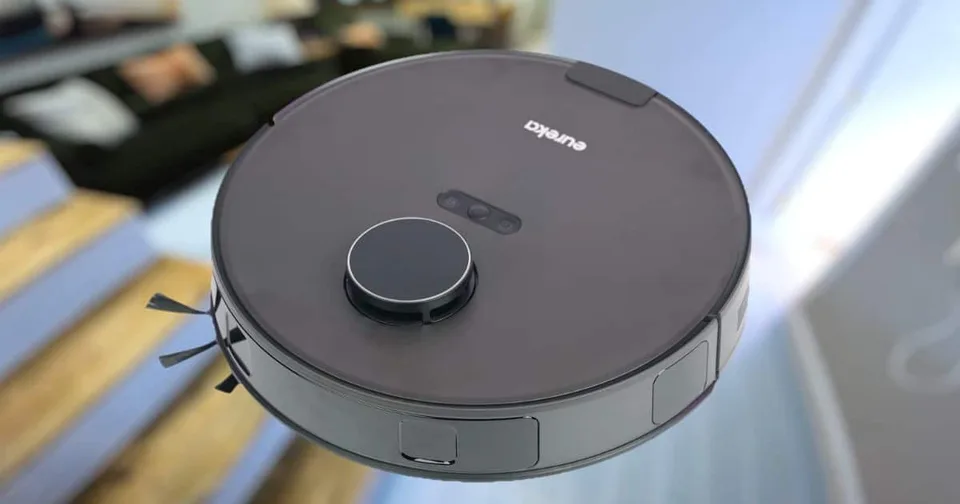
Vacuum Wars found fast mapping and excellent hair resistance, but weaker suction, pet-hair pickup, and obstacle handling.
The Eureka E20 Evo Plus is a robot vacuum and mop built around one unusual money-saving feature: its auto-empty dock uses a reusable dustbin instead of disposable bags. Vacuum Wars bought the robot and tested its navigation, vacuuming, mopping, battery use, and app controls.
The result is a mixed review. The E20 Evo Plus looks most appealing for tidy homes with long hair, large floor plans, or owners who want to avoid buying replacement dock bags. It is less convincing for homes with deeply embedded pet hair, heavy carpet debris, or cluttered floors.
The bagless dock lowers running costs
Most self-emptying robot vacuums use disposable bags inside the dock. Eureka’s system uses a reusable bin and filter instead, so there is no recurring bag purchase.
Eureka says the design can save $70 or more each year in replacement bags, depending on use. The dock can hold up to 45 days of debris before emptying, according to Vacuum Wars.
That could make the E20 Evo Plus cheaper to operate over time. But the supplied review does not give a purchase price, warranty terms, or retail availability, so shoppers cannot calculate the robot’s full ownership cost yet. The $70-per-year figure is Eureka’s estimate, not an independent savings measurement.
You will also still handle some maintenance yourself. The mop tank must be filled manually, and the flat mop pad must be removed and washed by hand. This is not a dock that fully washes and dries the mop.
Fast routes and strong hair resistance
The E20 Evo Plus uses LiDAR, a sensor system that measures distance with light to map rooms and plan routes. Vacuum Wars measured coverage of 0.91 square meters per minute, compared with a current robot-vacuum average of 0.71 square meters per minute.
It completed Vacuum Wars’ studio course in 37 minutes, while the tested average was 56 minutes. Its battery results were also slightly above average, with an estimated 1,807 square feet of coverage per charge versus about 1,170 square feet for the comparison average.
The best result came from the anti-tangle brush system. Only 3% of the test hair remained wrapped around the main brush, compared with a current average of 26%. That makes this model especially interesting for homes where long hair regularly turns brush cleaning into a chore.
Its app adds useful controls, including multi-level maps, schedules, room cleaning, no-go zones, no-mop zones, carpet boost, and adjustable water levels. The mop lifts 10 millimeters over carpet, allowing the robot to vacuum carpet and mop hard floors during one run.
Cleaning performance is merely average
The robot handled ordinary surface debris well, but its deeper-cleaning results were less impressive. It removed 79% of sand embedded in medium-pile carpet, just above the current average of 78%.
Pet owners should pay closer attention to the distinction between avoiding tangles and removing hair. The robot left very little hair wrapped around its brush, yet removed only 73% of embedded carpet pet hair, compared with an 82% average.
Vacuum Wars also measured relatively low suction and airflow. The robot recorded 0.3 kilopascals of suction versus a 0.99-kilopascal average, and 8 cubic feet per minute of airflow versus 17. Eureka advertises 10,000 pascals of suction, but that rating did not match the independent bench measurements.
Mopping worked well in the reported stain tests, but the robot left more water behind than preferred: 3.95 grams versus a 1.07-gram average. Lowering the water setting reduced the measured amount to about 2.9 grams, so careful adjustment may help prevent wet floors or streaks.
Who should consider it?
The E20 Evo Plus deserves attention from shoppers who value a bagless dock, efficient coverage, and reduced hair wrapping more than maximum cleaning strength. It is a reasonable fit for mostly tidy homes with hard floors and routine surface debris.
It is a weaker choice for homes with toys, cords, shoes, or other clutter. LiDAR can map rooms and recognize furniture, but this robot lacks dedicated obstacle avoidance for small objects, so you may need to clear the floor before each run.
Vacuum Wars rated it 2.56 stars, close to its 2.60 average tested score. With no confirmed price or availability in the supplied review, the sensible move is to wait for a clearly competitive retail price. At the right cost, the bagless dock and anti-tangle design are meaningful advantages—but they do not make the E20 Evo Plus a top-tier cleaner.