MR X Brings Fenceless Dual Arm Robotics to Production
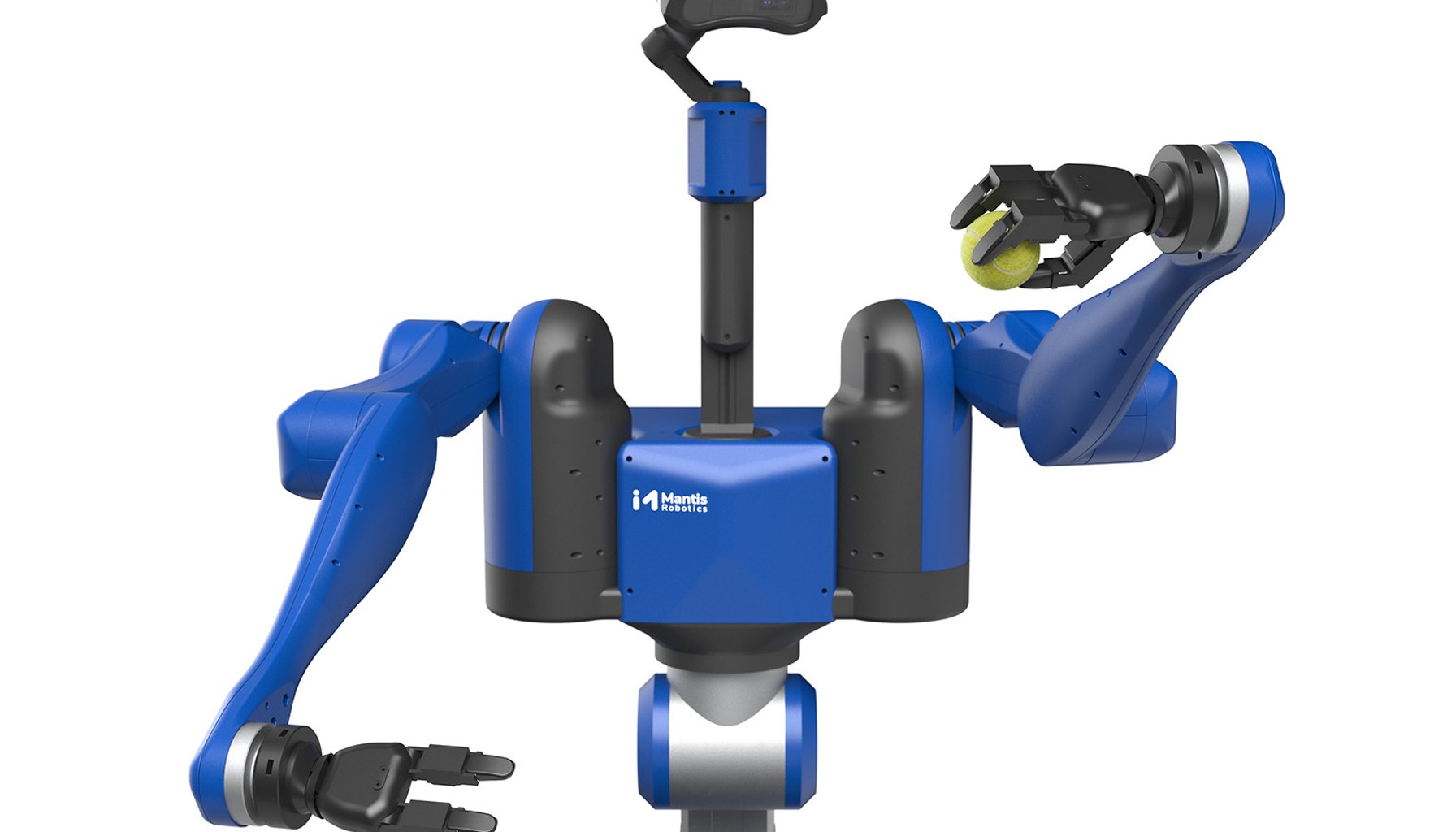
Image / The Robot Report
MR-X works beside humans without fences, at industrial speeds. The dual arm robot from Mantis Robotics marks a bold step toward genuinely fence-free automation, built to share space with people on mixed tasks from assembly to material handling.
Mantis is pitching the MR-X as a first‑in‑class form factor that extends a proven safety pedigree. The company notes the MR-1, certified to ISO 10218 and ISO 13849, already demonstrated that industrial speeds can be attained without compromising safety, and it says the MR-X scales that philosophy to a new dual‑arm configuration. In a defense of the approach, CEO Gerry Vannuffelen framed MR-X as more than another humanoid project: “Don’t mistake this for another humanoid robot. It’s a first-in-class dual-arm robot that outperforms both cobots and humanoids, in terms of both speed and safety.” The claim sits atop a broader narrative that fenceless operation is not a trick of software but a safety architecture that can keep pace with real-world production tempo.
At the core is the patented Mantis SafetyCore platform, described as a reflex system that gives full, continuous awareness of the surrounding environment. The company reports the architecture enables a robot to operate at industrial speeds without fences by maintaining perpetual perception and rapid reaction to human and object intrusions. MR-X builds on that foundation, pairing biomimetic design with a dual-arm arrangement intended for both fixed installations and mobile manipulator deployments. The design language is deliberate: by mimicking body structure and reflexes, Mantis argues the robot can deliver dexterity and strength in parallel, a combination that could reduce the need to separate workers from automation with physical barriers.
Industry observers will be watching how this plays out in practice. The MR-X is positioned to challenge two entrenched approaches: the strictly fenced automation that relies on controlled spaces, and the more limited collaborative robots (cobots) that trade speed for safety. By elevating the reflex‑based safety model to a dual‑arm form factor, Mantis is signaling a path toward higher throughput without sacrificing worker safety. The emphasis on fixed and mobile deployments suggests the MR‑X could adapt to a range of shop-floor scenarios, from line-side manipulations to on-cart reconfigurations, without the overhead of creating dedicated safety perimeters.
From a practitioner’s point of view, several critical considerations emerge. First, this is a safety architecture story more than a single sensor story: the real test will be how the SafetyCore system handles dense human traffic, occlusion, and tool changes in live lines. Second, the dual‑arm configuration improves potential throughput but increases control complexity and the risk of internal arm interference if the coordination logic isn’t rock solid. Third, adoption will hinge on integration work: aligning MR-X with existing PLCs, machine vision stacks, and scheduling systems, plus operator training to understand how the reflex layer interacts with human workflows. Finally, maintenance and calibration become a live concern: if the reflex loops drift or sensors wear, the perceived safety of fence-free operation could degrade, limiting trust among line workers and managers.
The company’s rhetoric hints at an ambitious horizon: the promise of mass deployment in real-world environments. If MR-X can sustain safe, high-speed collaboration in factories without fences, the industry could see a shift in how floor layouts are designed, how tasks are split between humans and machines, and how maintenance cycles are scheduled. The next wave will likely hinge on pilot programs and early production pilots that test long-duration operation, supply-chain integration, and worker acceptance in diverse environments.
- Mantis Robotics launches dual-arm, fenceless robotThe Robot Report / Trade / Published JUN 24, 2026 / Accessed JUN 24, 2026