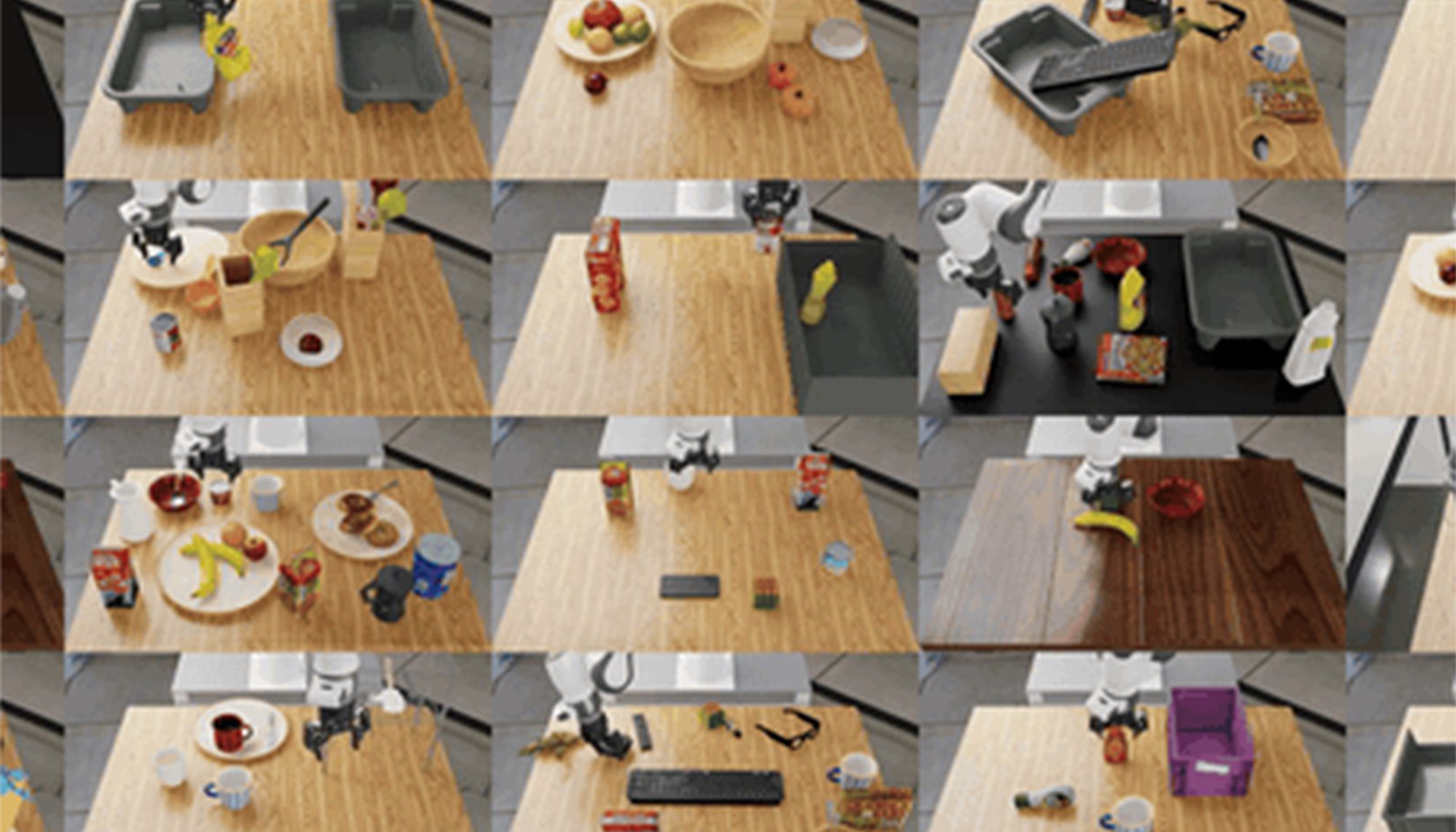
Benchmarks lie; real world testing tells the truth. NVIDIA is leaning into that philosophy as it pitches a more rigorous path to deploying general purpose robot policies. The company argues that the most capable systems today can follow natural language instructions to pick, place, sort, and manipulate a wide variety of objects, but the leap from lab to field remains a choke point. To close the gap, NVIDIA is betting on RoboLab, a simulation benchmarking platform intended to throttle and stress test policies before they ever meet a real world task.
Documentation indicates the core problem with current benchmarks is not raw speed or clever architectures, but realism and coverage. Training and evaluation often draw on the same visual data, and when a model is fine tuned in simulation and tested in the same setup, performance can look impressively high because the model memorized the scene rather than generalized. Real2sim approaches exist to address that mismatch by reconstructing photorealistic environments from real images using techniques such as inpainting or Gaussian splatting, but the per-scene setup time can exceed an hour. The blog post also notes that traditional procedural scene generation often delivers rendering quality that falls short of real observations, leaving a gulf between synthetic tests and real operation.
In NVIDIA’s framing, the answer is not more benchmarks but smarter evaluation pipelines that use simulation as a scalable stand-in for the real world while preserving realism and diversity. RoboLab is positioned as the testing ground for broad, general purpose policies, with the aim of surfacing where a model truly generalizes and where it merely overfits to a particular visual or task distribution. The company reports that the field has made strides, but the hardest unsolved problem remains proving that a policy can reliably operate when objects, lighting, backgrounds, and partial occlusions change in ways not seen during training.
For practitioners in engineering and operations, that shift carries concrete implications. First, testing must decouple from training data to reveal generalization rather than memorization. A policy that succeeds only because it saw the same scene during development is not ready for deployment. Second, the cost and pace of real world testing push teams toward more automated and scalable simulation workflows. If per-scene setup routinely takes an hour, throughput must come from automation, better scene libraries, and smarter proxies that compress the breadth of needed variation without inflating overhead. Third, there is a persistent risk of domain gaps even with photorealistic rendering. Visual fidelity alone cannot guarantee robust behavior in dynamic, real environments where physics, sensor noise, and material properties interact in unpredictable ways. Fourth, the metrics matter as much as the tests. Evaluation needs to target operability in real contexts, not just accuracy on a synthetic task, to translate lab gains into reliable field performance.
Two practical takeaways stand out for engineers and operators chasing deployment-ready policies. One, design evaluation pipelines that explicitly test cross-domain generalization and avoid overfitting to visuals or the particular task mix seen in development. Two, invest in Real2sim automation and standardized benchmarking so large-scale testing remains feasible rather than prohibitive. The push toward real-world proxies within RoboLab signals a broader industry pivot: the next leap in robotics policy will hinge on rigorous, scalable evaluation that mirrors the uncertainties of actual use.
As the field marches toward real-world reliability, NVIDIA’s stance emphasizes a blunt truth: progress in the lab must prove itself under real-world stress. If the benchmarks finally align with deployment reality, what we call a breakthrough may finally resemble something engineers can trust in the wild.