Quiet, fiber-based muscles enter robotics
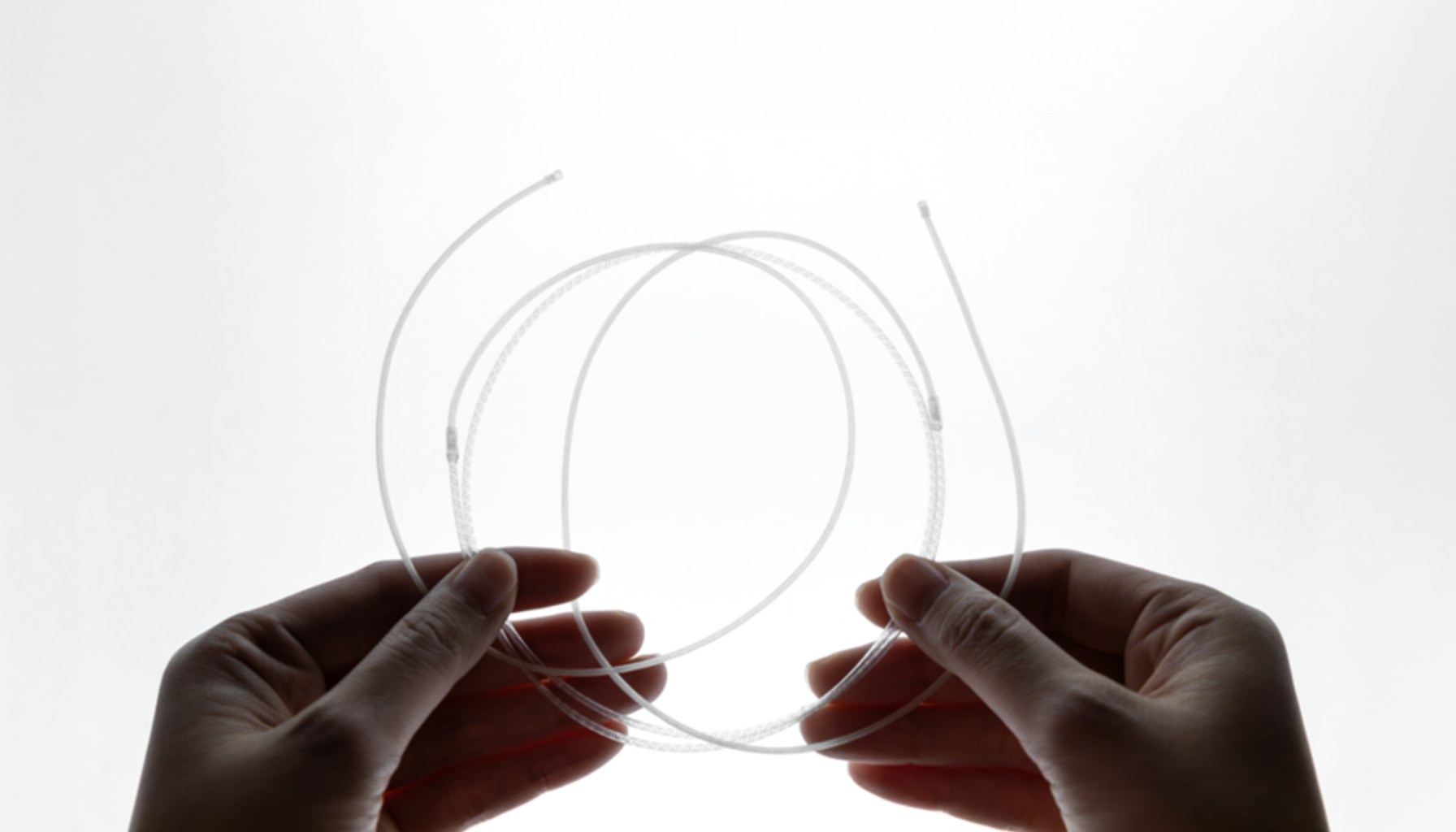
A fiber muscle that moves without motors just got real.
Researchers at the MIT Media Lab and Politecnico di Bari have unveiled electrofluidic fiber muscles—electrically driven actuators built in a lightweight, fiber form that can be woven, tucked into wearable skins, or slung into soft sleeves. The core idea is simple in concept but hard in practice: combine a thin McKibben-style fluid actuator with a miniaturized solid-state pump based on electrohydrodynamics (EHD) to pressurize a sealed fluid pocket inside a fiber. The result is compliant, silent actuation that dodges bulky pumps, external fluid supplies, and rigid motors—the kind of hardware soft robotics has long struggled to avoid.
Engineering documentation shows the system blends two strands of soft-actuator thinking. The first is a familiar yet still challenging actuation principle—the McKibben (artificial muscle) idea, where a braided sleeve contracts when pressurized. The second is an electric pump that can generate that pressure without moving parts or an external fluid reservoir, using electrohydrodynamics to push fluid around inside a sealed microchannel. Put together, this yields a fiber-format actuator that can, at least in principle, be stitched into fabrics or worn as a dynamic sleeve and still feel, to an operator, “soft and quiet.” Demonstration footage confirms that the fibers can generate force while remaining substantially compliant with human operators or delicate objects.
What’s notable here is not a finished humanoid limb, but a hardware abstraction—an actuator technology that could be embedded in future robots or prosthetics. The papers and the MIT release emphasize that this is a modular component, not a turnkey humanoid system. That makes the article belong squarely in the lab-demo lane rather than in the field. The research was published in Science Robotics and led by Ozgun Kilic Afsar of MIT’s Media Lab, with co-authors including Vito Cacucciolo of Politecnico di Bari. There is no disclosed DoF (degrees of freedom) count or payload specification for an actual humanoid built with these fibers. Instead, the emphasis is on the actuator’s intrinsic properties: compliance, silent operation, and the elimination of bulky external hardware.
From a practitioner’s perspective, several tradeoffs and failure modes jump out. First, control fidelity and repeatability in a fluid-actuated fiber are nontrivial. Hydrodynamic effects, hysteresis, and fluid aging can complicate closed-loop control, especially in a wearable or humanoid context where sensing and timing matter. Second, while the approach eliminates motors and external pumps, it still depends on a reliable micro-pump and a sealed fluid system. Potential failure modes include micro-leakage, pump degradation, and heat buildup in compact form factors—the kind of issues that look minor in a lab demo but bite you hard in a real robot’s gait cycle or a prosthetic sleeve worn all day. Third, energy management remains underdefined. The paper describes an electrical drive and a solid-state pump, but it does not publish runtime or battery integration details, leaving “how long can this run in practice?” as an open question for humanoid designers.
Compared with previous generations of soft actuation, the improvement is structural as well as practical: where earlier fluid-driven devices required bulky pumps or external plumbing, this approach promises a self-contained, fiber-level actuation channel. That alone could accelerate integration into soft exosuits, prosthetic interfaces, and lightweight humanoid torsos, where weight, noise, and mechanical clash with users are critical.
What to watch next: (1) field-like testing in wearable robotics or lightweight humanoid limbs to gauge endurance, control stability, and sensing integration; (2) reliability studies—how the sealed fluid and micro-pump hold up under vibration, temperature swings, and long-term cycling; (3) manufacturing scalability—can fiber actuators be produced with consistent behavior at scale; and (4) energy density and charging solutions that make the system practical for daily wear or extended robot operation. For now, this is a compelling, credible step forward, but it remains early-stage innovation, not a ready-made replacement for motorized actuation in a full humanoid.
In short, the work signals a meaningful shift toward truly soft, fiber-embedded actuation that could eventually power quieter, safer, more human-friendly robots. But until someone demonstrates a complete, field-ready humanoid using these fibers with proven DoF counts, payloads, and endurance, it stays a promising building block rather than a finished product.
- A new type of electrically driven artificial muscle fibernews.mit.edu / Primary source / Published APR 09, 2026 / Accessed APR 13, 2026