Simulation and Digital Twins Redefine Factory Planning
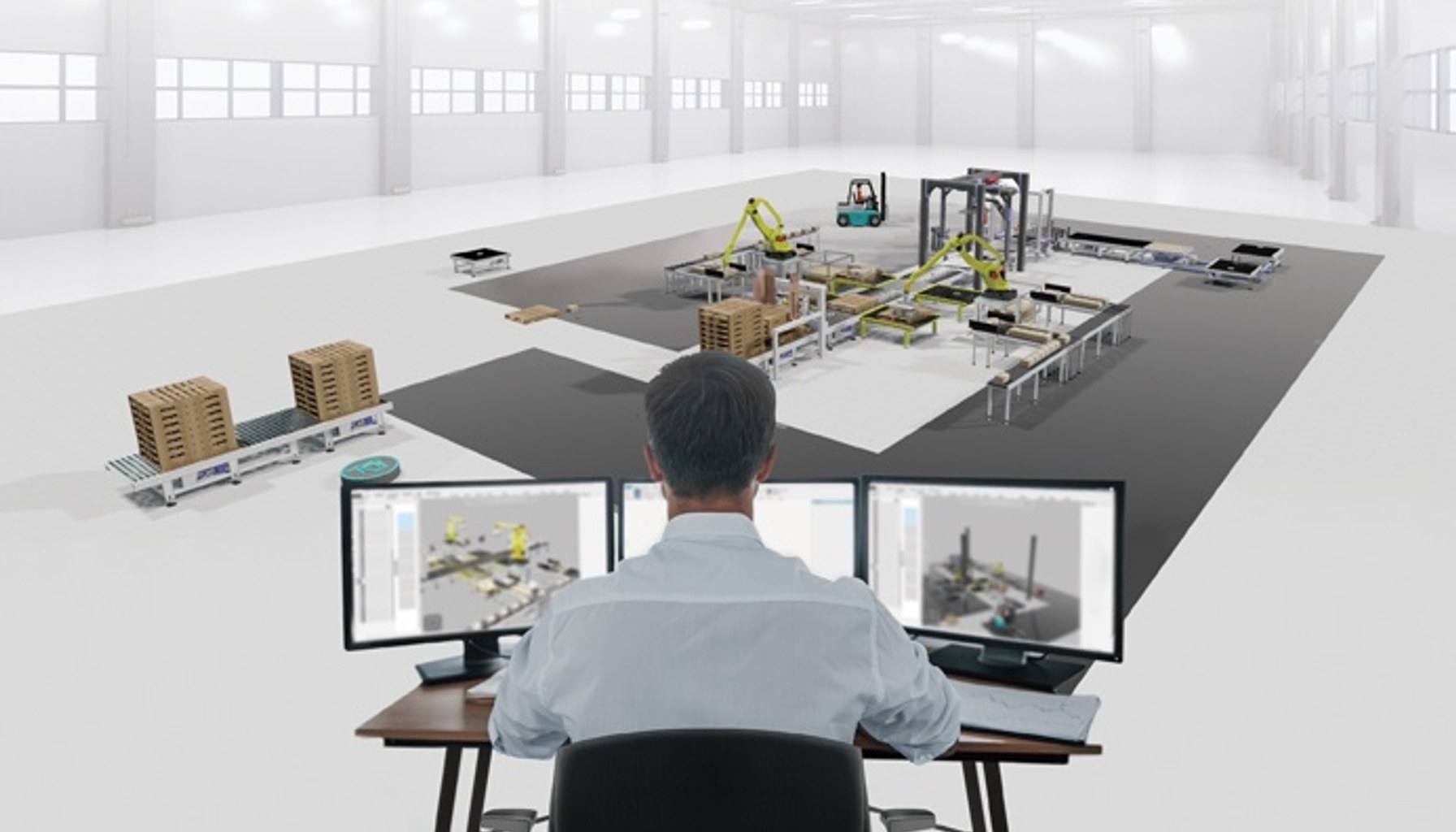
Virtual manufacturing tools are finally delivering real planning value before a single robot moves.
Manufacturers increasingly lean on virtual tools to design, test, and optimize factory layouts long before the first piece of equipment touches the floor. A recent perspective from Visual Components, summarized in a strategic lens on virtual manufacturing, makes a clear distinction that may save plant managers millions in misapplied technology. Simulation and digital twin technologies both build realistic virtual representations, but their purposes, data connections, and scope diverge in ways that matter for ROI and risk.
Simulation, at its core, is a controlled virtual environment. It models the behavior of a specific scenario over time and uses rules to show how components such as machines, conveyors, robots, and tasks interact. In manufacturing, discrete event simulation lets planners explore how a line would perform under different configurations or schedules without touching a real asset. The value is in breadth and speed. You can compare several layout options, identify bottlenecks, and surface timing conflicts without committing capital or disrupting production. The article emphasizes that the real payoff comes when simulation is used to inform decisions before anything is built or installed, not as a stand-alone replacement for field data.
Digital twins represent a different class of virtual systems. They are not merely static or predictive models; they are intended to maintain real-time continuity between the virtual representation and the physical world. In this view, the twin is fed by live data from the factory and can reflect the current state of equipment, workflows, and conditions. The difference is not just fidelity, but purpose. A digital twin is a living replica designed to monitor, optimize, and control processes as they run, whereas simulation runs multiple what-if scenarios in a sandbox. The article points out that this real-time integration is what turns a digital twin from a visualization tool into an operational asset.
For practitioners, the distinction carries practical consequences. First, start with the lifecycle stage: use simulation to unlock options during the ideation and planning phase, testing layouts, staffing, and sequencing without any exposure to real assets. Only after the team agrees on a preferred configuration should they consider a digital twin approach for ongoing optimization and control. Second, ensure data readiness. Digital twins require robust data integration from sensors, PLCs, and MES systems to provide real-time, trustworthy input. Without that data loop, a twin becomes a glossy mirror that offers little actionable insight. Third, align objectives with capabilities. The same investment that powers a dynamic, real-time twin can easily overreach if expectations focus on precision visuals rather than meaningful operational improvements. The strategic lens suggests pairing the right tool to the right stage, rather than trying to force one into the other's role.
The takeaway for plant leaders is simple: first clarify the objective, then pick the tool that fits. Simulation helps you prune options and avoid costly missteps, while a digital twin is properly connected to real data and can sustain gains through monitoring, adjustment, and predictive insights on the live line. The risk, as industry reviewers caution, is to treat the digital twin as a cure for all planning ills or to rely on a simulation as if it were a live control system. When used thoughtfully, the combination can translate into smoother deployments, clearer ROI narratives, and more predictable capital programs.
As the industry tightens its belt on ROI, the value lies in disciplined use of the right tool at the right time, with a clear path from ideation to steady state operation.
- Simulation vs. digital twin: A strategic lens on virtual manufacturingtherobotreport.com / Independent source / Published MAY 25, 2026 / Accessed MAY 25, 2026