Agibot hits 15 000th robot milestone with G2
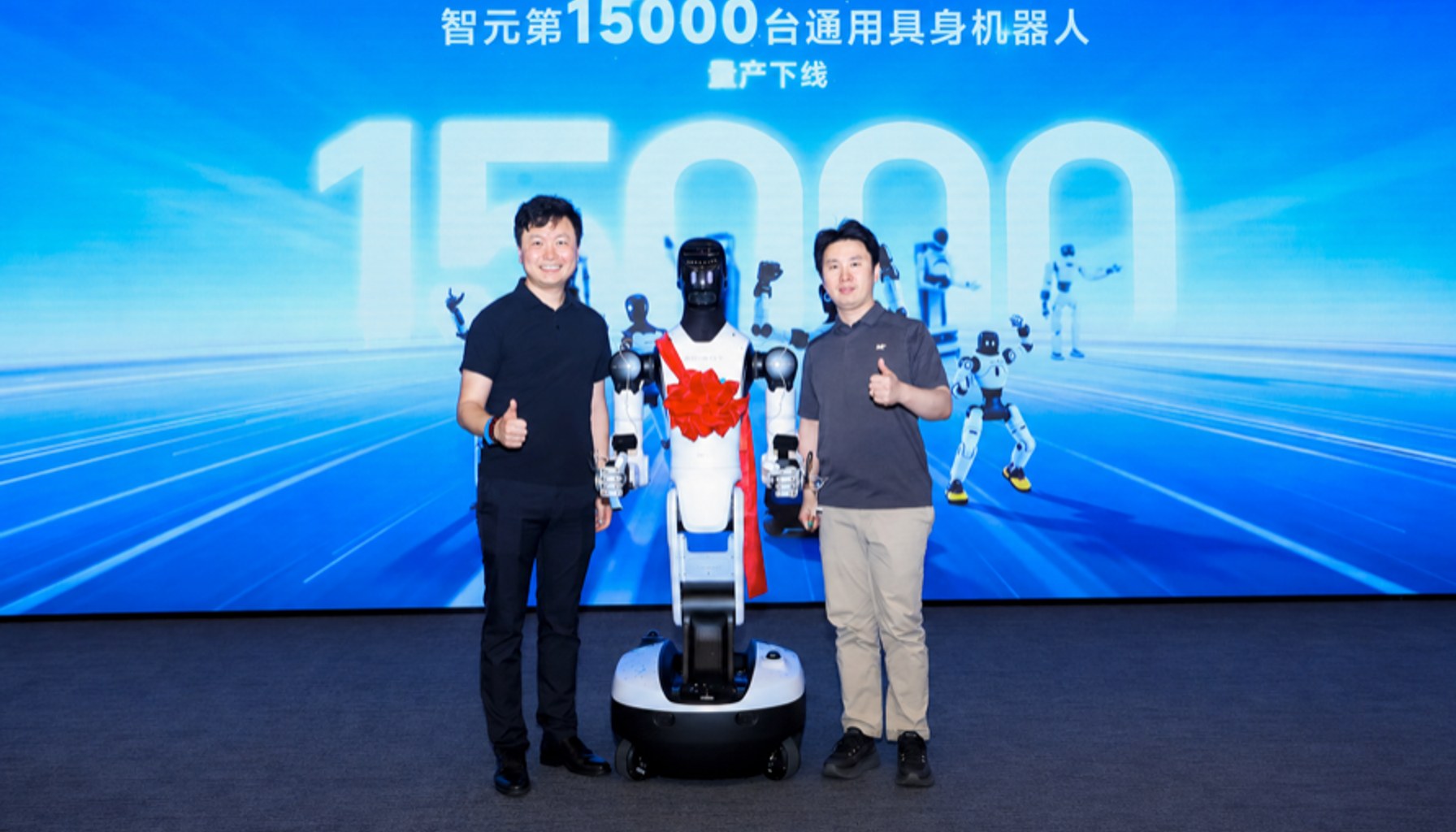
Image / Robotics & Automation News
Agibot just rolled out its 15 000th humanoid robot. The milestone unit is the Agibot G2, an industrial-grade embodied task robot designed for real world operational scenarios. The company reports this follows the rollout of its 5 000th and 10 000th robots, marking a continued production push that underscores how quickly embodied AI is moving from pilot lines to factory floors. While the announcement keeps the exact technical specs close to the vest, Agibot says the G2 remains the backbone of its industrial lineup, built to operate in real world environments rather than toy-test labs.
Details on degree of freedom, payload capacity, and runtime were not disclosed in the release, but the emphasis is on scale and reliability. The milestone is framed as a production achievement rather than a showroom demo, aligning with Agibot’s positioning as a global leader in embodied AI and robotics. In plain terms, thousands of units have shifted from plan to practice, suggesting operators are increasingly counting on humanoid platforms to handle repetitive, dangerous, or precision-focused tasks alongside human workers.
From a practitioner standpoint, the milestone highlights a few realities that operators, investors, and engineers will be watching closely. First, the economics of scale in humanoid robotics are finally becoming tangible. Mass production reduces per unit costs and speeds field deployment, but it also exposes the delicate balance of supply chains for high-spec actuators, sensors, and on-board compute. Second, real world deployment means software hygiene matters as much as mechanical robustness. Embodied AI must contend with noisy factory floors, changing layouts, and integration with existing PLCs, safety systems, and asset management tools. Third, safety and maintenance become ongoing disciplines, not one-time checks. A 15 000 unit lineage implies a mature service ecosystem, including calibration routines, spare parts pipelines, and field service capabilities that can scale with demand.
Another trend the milestone illustrates is the push toward standardized, repeatable deployments. If the G2 line is to support broad industrial adoption, practitioners will be watching for consistent performance across environments, predictable uptime, and clear upgrade paths for perception, manipulation, and safety controls. In that sense, Agibot’s 15 000th unit is both a milestone and a stress test: can a single platform deliver consistent results across diverse plants, tasks, and workflows?
Looking ahead, experts say the next meaningful signal will be the speed at which Agibot scales after this milestone. Will the company accelerate field trials in new regions, or begin to push deeper into highly regulated sectors like pharmaceuticals or automotive, where certification and traceability matter as much as grip strength and payload margins? The industry will also want to see more granular performance metrics over time, such as uptime, mean time to repair, and upgrade cadence, to translate production milestones into measurable return on investment for operators.
- Agibot reaches new milestone as its 15,000th humanoid robot rolls off production lineRobotics & Automation News / Trade / Published JUN 30, 2026 / Accessed JUN 30, 2026