China’s Embodied AI Leap: Being-H0.7 Debuts
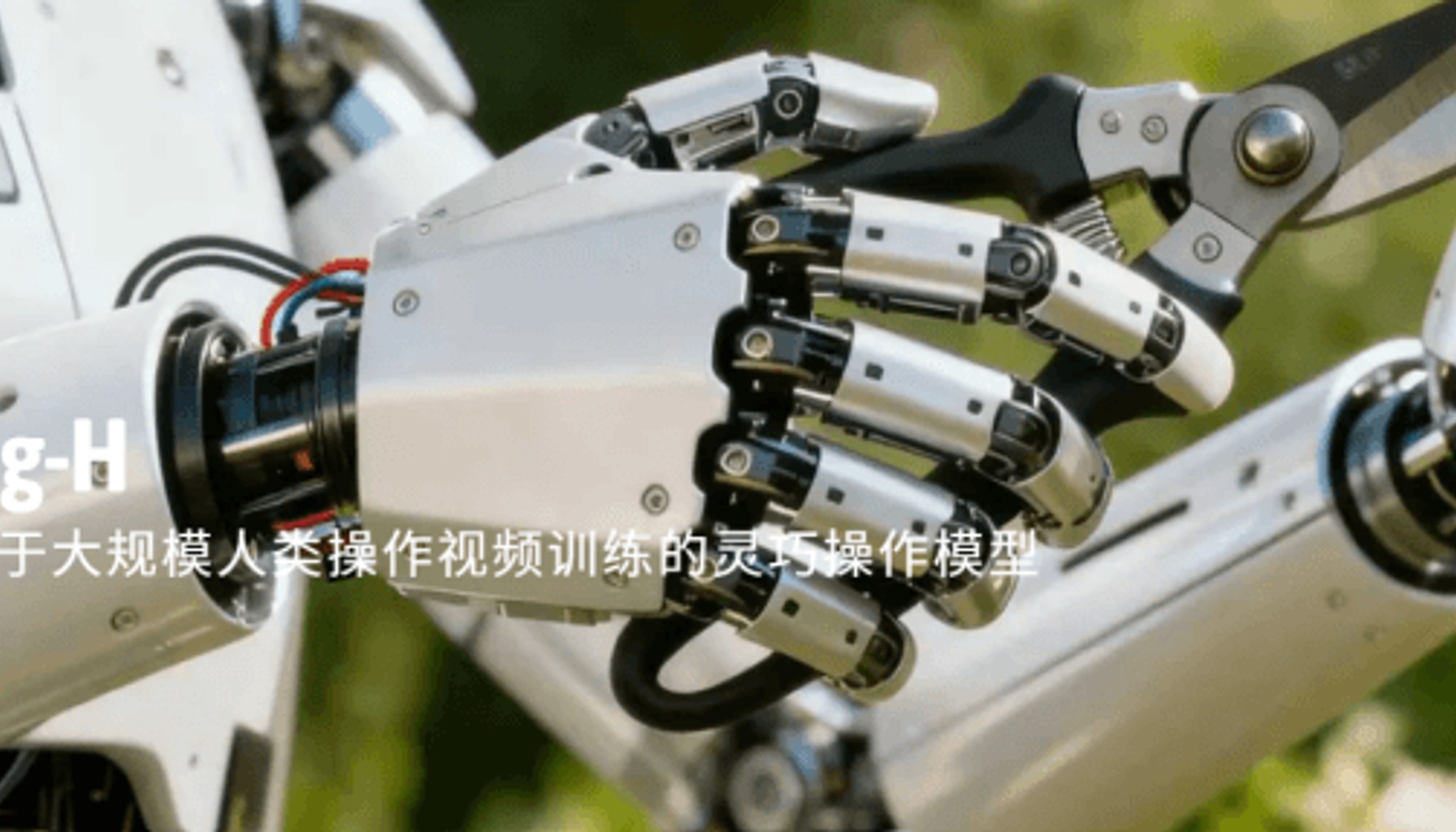
The robot brain China can’t ignore just got smarter.
On April 14, embodied AI startup BeingBeyond unveiled its third-generation flagship, Being-H0.7, trained on roughly 200,000 hours of human video. The claim is more than a data blip: the model is pitched as a latent-space, reasoning-first alternative to traditional vision-language-action pipelines, with a dual-branch architecture that blends a posterior path (grounded in observations) with a prior path (relying on current context). In practice, BeingBeyond says Being-H0.7 excels across six benchmarks, leading in cross-embodiment tasks, continuous dynamics, fluids, and deformable object manipulation—a profile that sounds tailor-made for the messy, variable realities of real factory floors.
For Chinese robotics and automation circles, the release lands in a moment of intense policy and market momentum around “智能制造” (intelligent manufacturing) and the push to blend AI with hardware on the shop floor. The Mandarin reporting around Being-H0.7 frames the milestone as a proof point that high-level embodied reasoning—where perception, decision, and action are fused in latent space—can translate into more adaptable robotic systems. If the lab-to-floor delta narrows here, manufacturers can plausibly expect faster on-site adaptation to part variation, unexpected jams, or new assembly tasks without reprogramming from scratch.
BeingBeyond’s architecture emphasizes latent queries as intermediate variables in latent space to couple observation with action decisions, plus a cross-alignment mechanism intended to improve real-world generalization. That approach matters for China’s diverse industrial landscape, where automakers and contract manufacturers run lines that vary by region, part type, and end-market. A single model that can generalize across embodiments and tasks could reduce the fragmentation of AI tooling across multiple factories—an outcome policymakers have long sought as part of the broader push toward “made in China 2025” style ambitions, without relying on one-off breakthroughs or bespoke datasets.
Two practitioner threads stand out for global and Chinese manufacturers alike. First, data scale matters. 200,000 hours of human video isn’t just flashy; it underpins the model’s claimed ability to reason about physics and manipulation without pixel-perfect future reconstruction. That has clear implications for automation contracts in China: suppliers that can offer edge-ready, video-informed control loops may move up the value chain from simple pick-and-place to mid-automation tasks demanding variable gripping, fluid-like material handling, or deformable-object manipulation—spaces where domestic actuator and sensor ecosystems are already expanding but need smarter software to truly shine.
Second, the hardware-software handshake remains a bottleneck. Chinese robotics players and suppliers—often aligned under state-backed or hybrid ownership structures—have been building out domestic controller chips, servo motors, and perception stacks. A leap in embodied AI raises the bar for edge compute, latency budgets, and safety validation on the factory floor. That isn’t just a tech story; it’s a supply chain story: more capable robot brains require robust, certified muscle behind them. If the model’s latency and energy profile prove friendly to edge deployments, Chinese component makers stand to gain, while global buyers may see more competition for turnkey AI-enabled robots.
A few industry-watch signals to watch next: (1) how quickly system integrators can validate Being-H0.7 in real production lines across diverse verticals; (2) whether domestic AI accelerator ecosystems can sustain the compute load required for continual learning and on-site adaptation; (3) how data localization and privacy norms shape collaboration with multinational manufacturers deploying border-spanning automation kits; and (4) whether the momentum translates into more standardized robot-as-a-service offerings, easing procurement for factories that want the latest embodied AI without tying up capital in bespoke systems.
Ultimately, Being-H0.7 crystallizes a broader narrative: China’s robotics and AI communities are converging on embodied intelligence that doesn’t just mimic human motion but reasons about it in a latent, scalable way. If validated on production floors, this could accelerate a shift from rigid automation to flexible, learning-enabled lines—a development that will ripple through supply chains and manufacturing strategies worldwide.
- BeingBeyond Releases Being-H0.7 Embodied World Model Trained on 200,000 Hours of Human VideoTrained on 200,000 Hours of Human Videopandaily.com / Source role not classified / Published APR 14, 2026 / Accessed APR 14, 2026