Cobots on AMRs Boost Warehouse Throughput
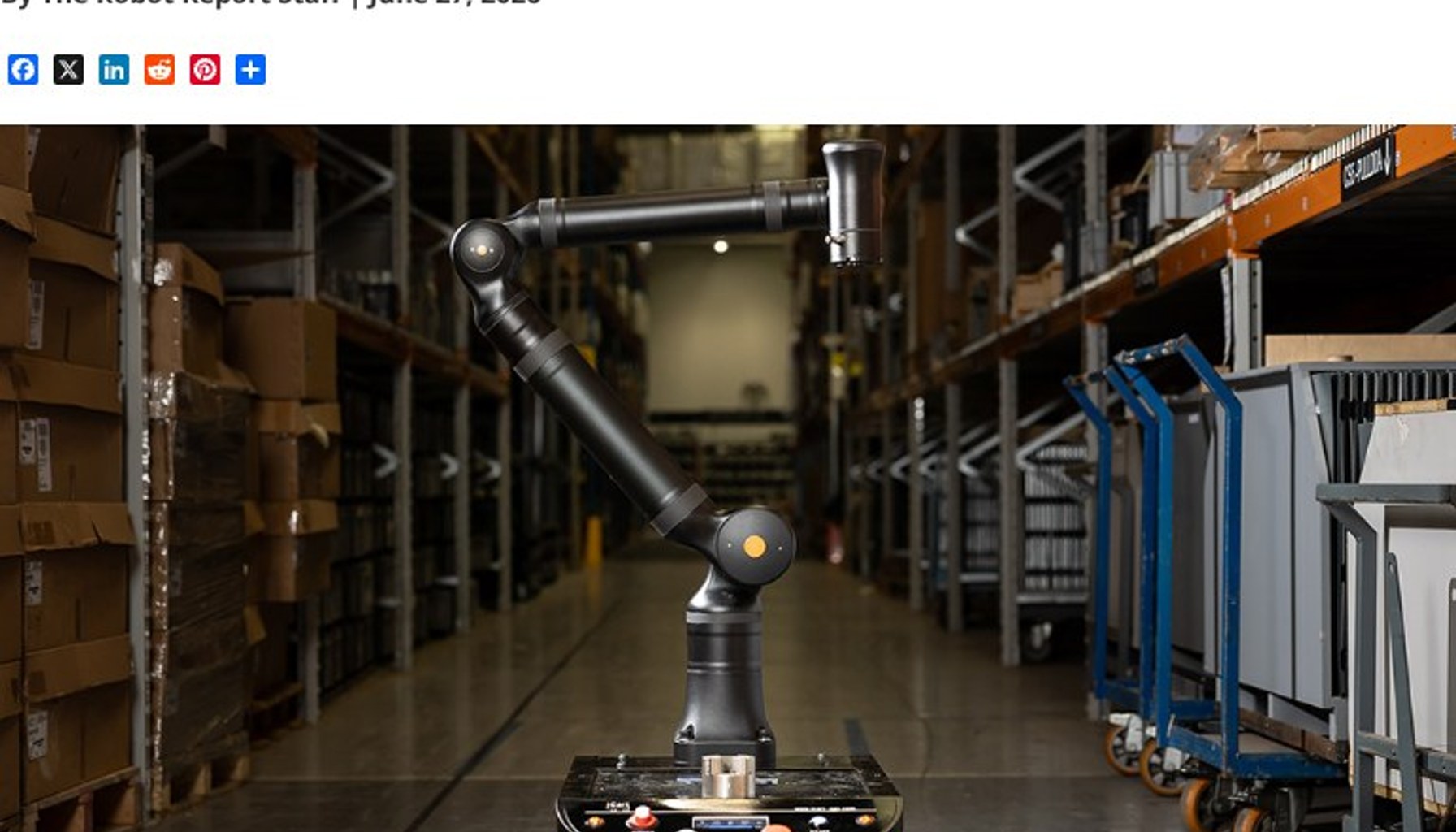
Image / The Robot Report
Cobots on autonomous mobile robots are reshaping warehouses, one task at a time.
Deployment data shows that compact cobot integration lets mobile platforms reach hard to access spaces, handle heavier objects, and perform demanding tasks with accuracy. The trend is part of a broader shift in which warehouses lean on collaboration between humans and machines to keep up with labor shortages and rising productivity demands. As more facilities pilot or scale these configurations, the use of seven-axis cobot arms mounted on AMRs is gaining popularity because it expands range of motion and access into cramped or awkward work zones. Kassow Robots, a proponent of these integrated mobile manipulators, notes that such setups can load and offload materials, drive carts between stations, and perform precision tasks like screwing, labeling, or welding with fewer handoffs.
The case study reports that these integrated systems reduce the number of separate cobot and industrial robot stations required in a typical workflow. Practically, a mobile manipulator can fetch parts, carry them to a station, and return for the next load, all while maintaining tight tolerances. This is not a flashy miracle. It is a chain of coordinated steps where the AMR handles transport, the cobot arm handles manipulation, and the control software keeps timing aligned. The result, deployment data shows, is a smoother handoff between steps and fewer manual touches, which translates into steadier throughput and more predictable cycle times for repetitive tasks.
From the operator’s seat, the promise is clear: fewer bottlenecks created by material movement, less fatigue on workers performing repetitive lift tasks, and the ability to push higher value tasks up the value chain. The rise of these integrated systems tracks with a broader industrial pattern, automation moving from isolated stations to more compact, flexible configurations. Kassow’s integrated backdrive for positioning and programming helps technicians dial in placements with greater confidence, which matters when a task must be repeated dozens or hundreds of times per shift. The trend line is reinforced by the industry’s observed adoption, cobots and AMRs increasingly coexisting on the floor, with the potential to shorten workflows without sacrificing precision.
There are practical realities, however. Start with integration requirements: power, networking, safety interlocks, and route planning must be aligned with existing warehouse systems. The case study notes that successful deployments demand consideration of space for mounting, the AMR’s charging strategy, and how the cobot’s reach interacts with nearby equipment. Maintenance is another reality check; while seven-axis options look appealing for their reach, they introduce additional components to service, and software updates must be synchronized with the AMR platform. In short, the plug-and-play label is a simplification; deployment data shows that getting a compact cobot on an AMR into production demands careful integration and ongoing tuning.
Skilled trades play a discrete but essential role in these projects. Electrical and controls technicians typically lead the integration, ensuring that power, sensors, safety interlocks, and network integration are sound; once the system is live, automation augments craft labor by handling repetitive transport and manipulation tasks that would otherwise consume linemen or inspectors’ time. In other words, automation shifts the work rather than eliminating it, and management teams must weigh the upfront investment against the labor savings and throughput gains over time. Looking ahead, the trajectory is clear: seven-axis cobots on AMRs are moving from niche pilots to more common configurations as facilities seek targeted, measurable improvements in cycle times and throughput while maintaining strict safety and reliability standards.
As adoption accelerates, plant managers and CFOs should watch for how these configurations scale across shifts, how quickly commissioning cycles shrink as software and hardware evolve, and how integration with warehouse software influences real-time throughput. Deployment data shows the efficiency gains are real, but the ROI hinges on thoughtful integration, continuous calibration, and disciplined asset management.
- How compact cobot integration enhances autonomous mobile robot applicationsThe Robot Report / Trade / Published JUN 27, 2026 / Accessed JUN 27, 2026