Macy's Goes AI First to Reshape Retail
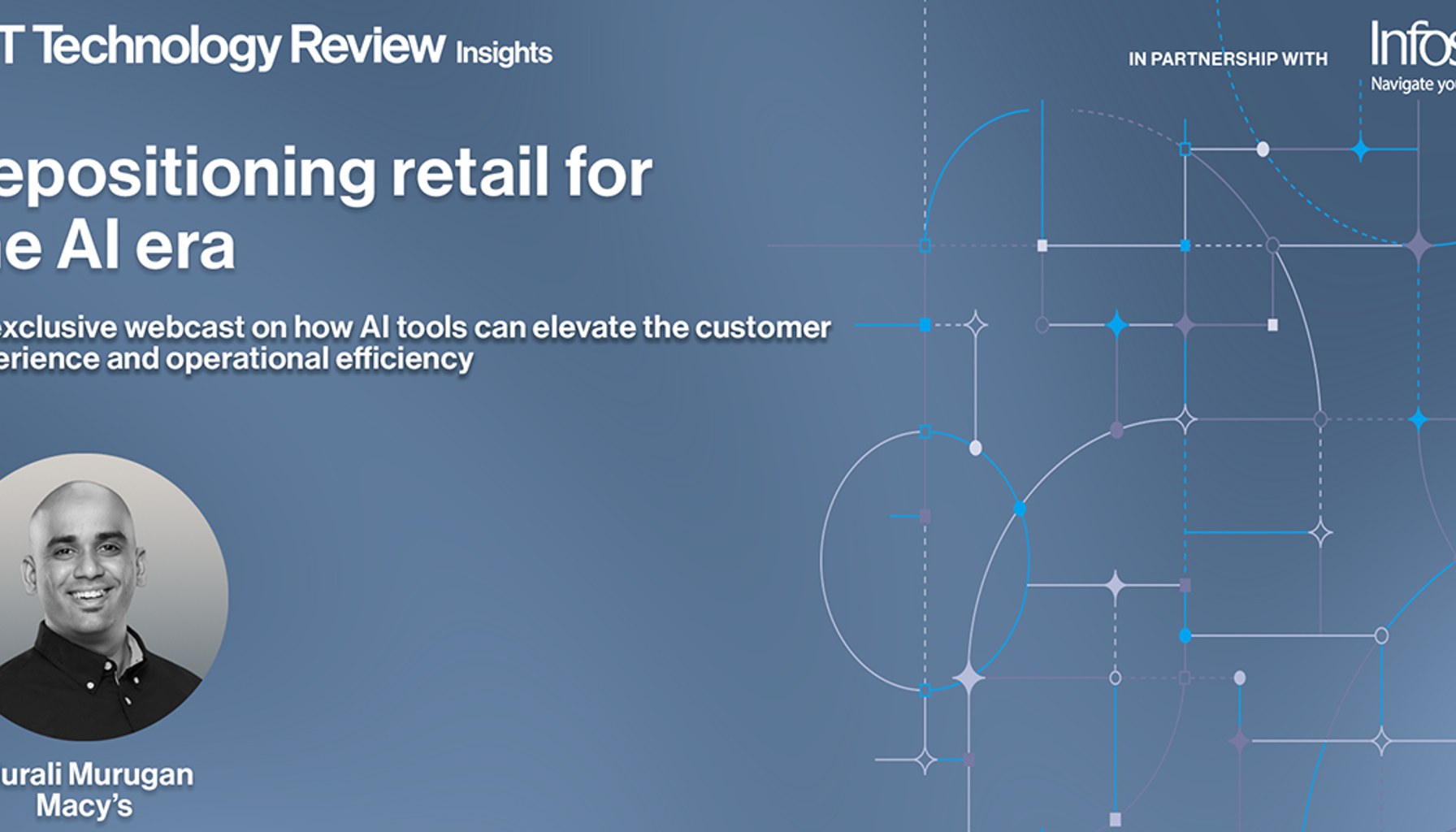
Image / MIT Technology Review
Macy’s is rebuilding its business around AI first, reshaping decisions from search to stocking.
AI first isn’t about tacking intelligence onto existing workflows, the team reports. It’s about redesigning how decisions happen so the business moves faster and every experience feels more relevant by default. Senior director of engineering Murali Murugan describes a shift from isolated pilots to embedding intelligence directly into core systems that run personalization, search, operational planning, and even software development itself. The result, he says, is a tighter loop where the signal and the action are closer together, letting teams react in real time rather than chasing after lagging data.
Carried by a sense of momentum, Macy’s is moving beyond the showroom to rewire its internal machinery. Early wins came from high impact use cases like search recommendations and customer engagement, where measurable gains in conversion and reduced friction quickly built internal support for broader adoption. The company’s approach is to prove value quickly, then scale as a business decision, not just a technology project. That mindset is turning AI into an operating philosophy rather than a flashy add on.
One concrete strand of this shift is conversational commerce through Ask Macy’s, an AI powered shopping assistant designed to act more like a personal stylist than a traditional chatbot. It’s meant to guide shoppers with context and relevance, not just answer questions. Behind the scenes, the aim is to knit together personalization, search, and product data so the assistant can surface options that align with a shopper’s history, current trends, and stock realities in real time. The team points to the broader direction: integrated systems that reduce the gap between what the customer sees and what the retailer executes.
Benchmarks indicate Macy’s is treating the AI program as an architectural rethink rather than a collection of point solutions. The company frames the move as part of a larger trend in retail: legacy players reorganizing around decision pipelines that can adapt at speed. The core idea is to compress the gap between signal and action, so a shopper’s behavior triggers an instant, relevant adjustment in recommendations, inventory planning, and even software deployment. In Murugan’s words, AI first is about redesigning processes so the entire business moves faster and the customer experience feels relevant by default.
What to watch next for engineering teams chasing a similar transformation includes four practical threads. First, the shift from pilots to integrated systems requires a unified data fabric and a decision layer that can operate across personalization, search, and supply chain without forcing a rebuild each time. Second, latency and data quality become competitive differentiators: if signal arrives late or is noisy, the supposed speed advantage evaporates. Third, the organizational behavior around scaling matters just as much as the technology; the team emphasizes that scaling is a business decision, not a tech checkbox. Fourth, conversational interfaces will intensify scrutiny on user experience and safety; as assistants grow more capable, governance and guardrails must keep pace with capability.
In the end, Macy’s story illustrates a counterintuitive result: embedding intelligence into core workflows often delivers faster, more relevant experiences than layering AI on top of existing processes. It’s a disciplined, engineering driven path that seeks to turn data into fast, reliable decisions that move both the business and the customer forward in real time.
- Repositioning retail for the AI eraMIT Technology Review / Mainstream / Published JUN 25, 2026 / Accessed JUN 27, 2026