Construction sites gain AI safety backbone for machines
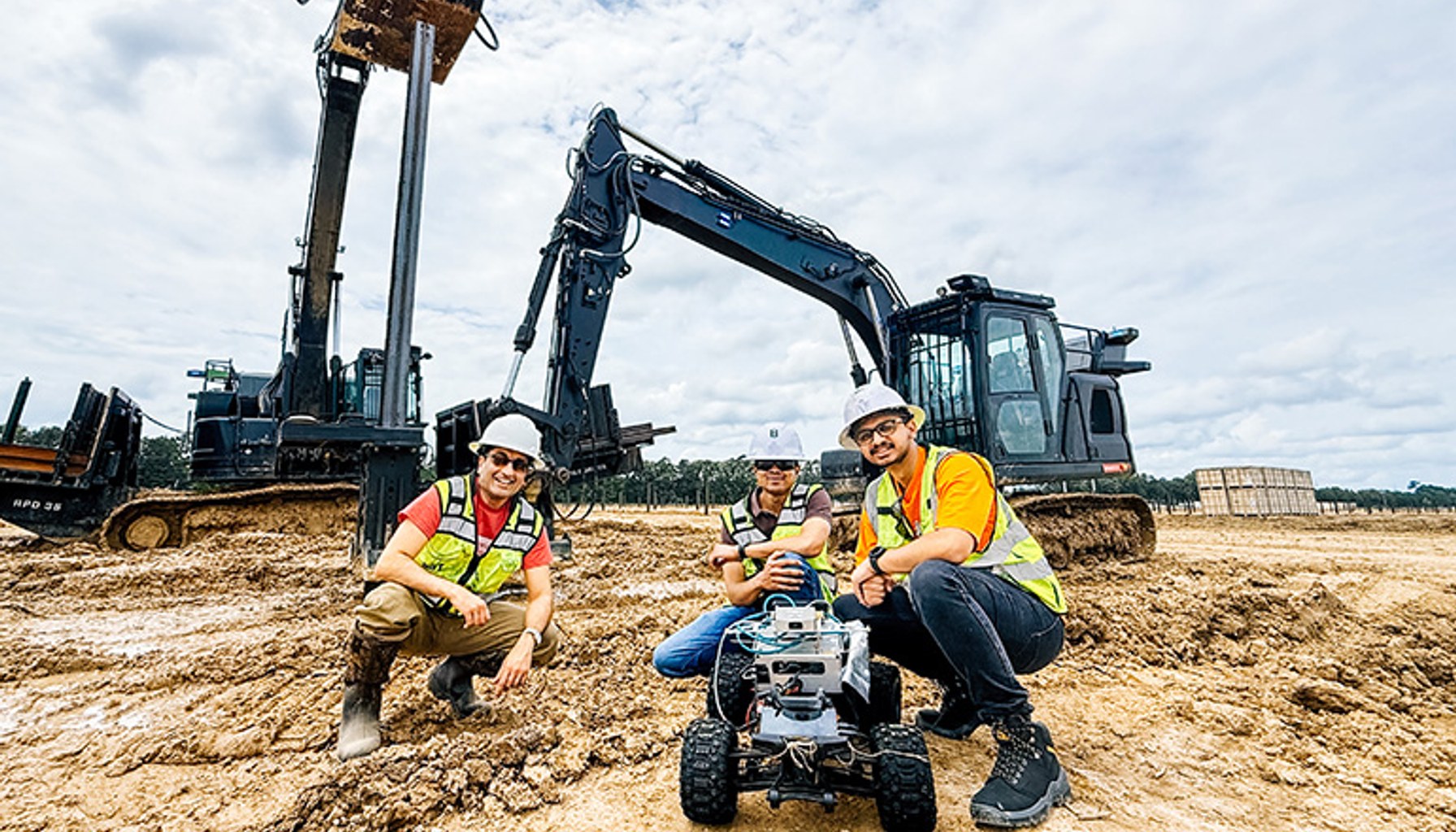
Construction sites just turned into a live AI safety lab. In a collaboration that blends field data with academic rigor, Built Robotics and the University of Pennsylvania’s Safe Autonomous Systems Lab, known as xLAB, are turning real job sites into proving grounds for physical AI that can safely coexist with people and machines on site.
The partnership centers on Built’s small mobile robots, each equipped with a sensor suite, scanning active projects to build a rich dataset. That data will be analyzed by xLAB researchers to create what the teams call a world foundation model for safety in outdoor construction. The idea is simple in concept and ambitious in scope: capture how humans and autonomous gear interact under real world conditions, then train autonomous systems to handle those dynamics reliably.
Deployment data shows Built Robotics has logged more than 50,000 hours of operations, installed more than 3 gigawatts of solar, and is deployed at 40 plus sites. Noah Ready-Campbell, Built’s founder and CEO and a Penn alumnus, partners with Rahul Mangharam, a professor in electrical and systems engineering and the principal investigator of xLAB, to push autonomous controls into outdoor, safety critical environments. Mangharam has focused on the safety implications of automating heavy outdoor equipment, and the collaboration will feed real world data back to the lab to evaluate and improve risk management as machines learn to operate around workers.
The scope goes beyond the typical work of piling and trenching robots. This team envisions using the data to build a foundation model that can anticipate edge cases not usually seen in well controlled environments, including odd human poses, occlusions, difficult lighting, and unexpected human behavior. In other words, the vision is to move from isolated autonomous tasks to safer, more generalizable autonomy that can adapt to the unpredictable rhythms of a live site.
From a practical standpoint, the project requires robust integration between Built’s sensor payload and the labs on site and in the cloud. A data-collection robot will feed a growing, diverse dataset to Penn, where researchers aim to distill it into a safety-centric model that operators and equipment can rely on in the field. The work stresses a crucial reality of automation in construction: the model only helps if it can translate to real, tactical outputs on site and align with existing safety protocols and workflows. The collaboration emphasizes that this is not a plug and play upgrade; the realities of field deployment still demand substantial debugging, calibration, and integration work that can stretch timelines before tangible operational gains appear.
For plant managers and utility leaders evaluating automation, several takeaways stand out. First, the ROI hinges on measurable improvements in safety and data-driven decision making rather than scripted, one off demonstrations. The project’s strength lies in turning on-site conditions into a scalable safety model, not in delivering a single gadget that runs autonomously. Second, integration requirements matter. The on-site sensors, edge compute, and data pipelines to the university lab must be designed to coexist with existing equipment and site management systems, which means vendors must prove reliability, data governance, and fault tolerance in harsh outdoor environments. Third, the effort highlights how automation could augment skilled trades in the long run. While the immediate emphasis is on data collection and safety analytics, a matured foundation model could eventually help operators and inspectors by providing safer, more informed guidance and automating routine sensing tasks, while human oversight remains essential for critical decisions and complex handoffs.
Two practitioner notes to watch. One, data quality and representativeness will drive any real safety improvement; the more diverse and edge-case data the system sees, the more robust the model becomes, but that requires careful labeling and validation. Two, timing and reliability matter. No cycle times or throughput figures were disclosed publicly, so plant leaders should expect a phased approach where gains appear as data pipelines mature and the foundation model proves its value in incremental deployments, not as instant miracles.
The case study reports a bold bet on turning construction sites into learning environments for autonomous systems, with safety and human coexistence as the north star. If successful, the approach could lay a data-rich path toward safer, more predictable automation on some of the most rugged and dynamic work sites in the industry.
- Built Robotics, Penn xLAB to develop physical AI for constructionThe Robot Report / Independent source / Published JUN 16, 2026 / Accessed JUN 16, 2026