DoorDash’s FAA certification puts its drone delivery plan under real operating rules
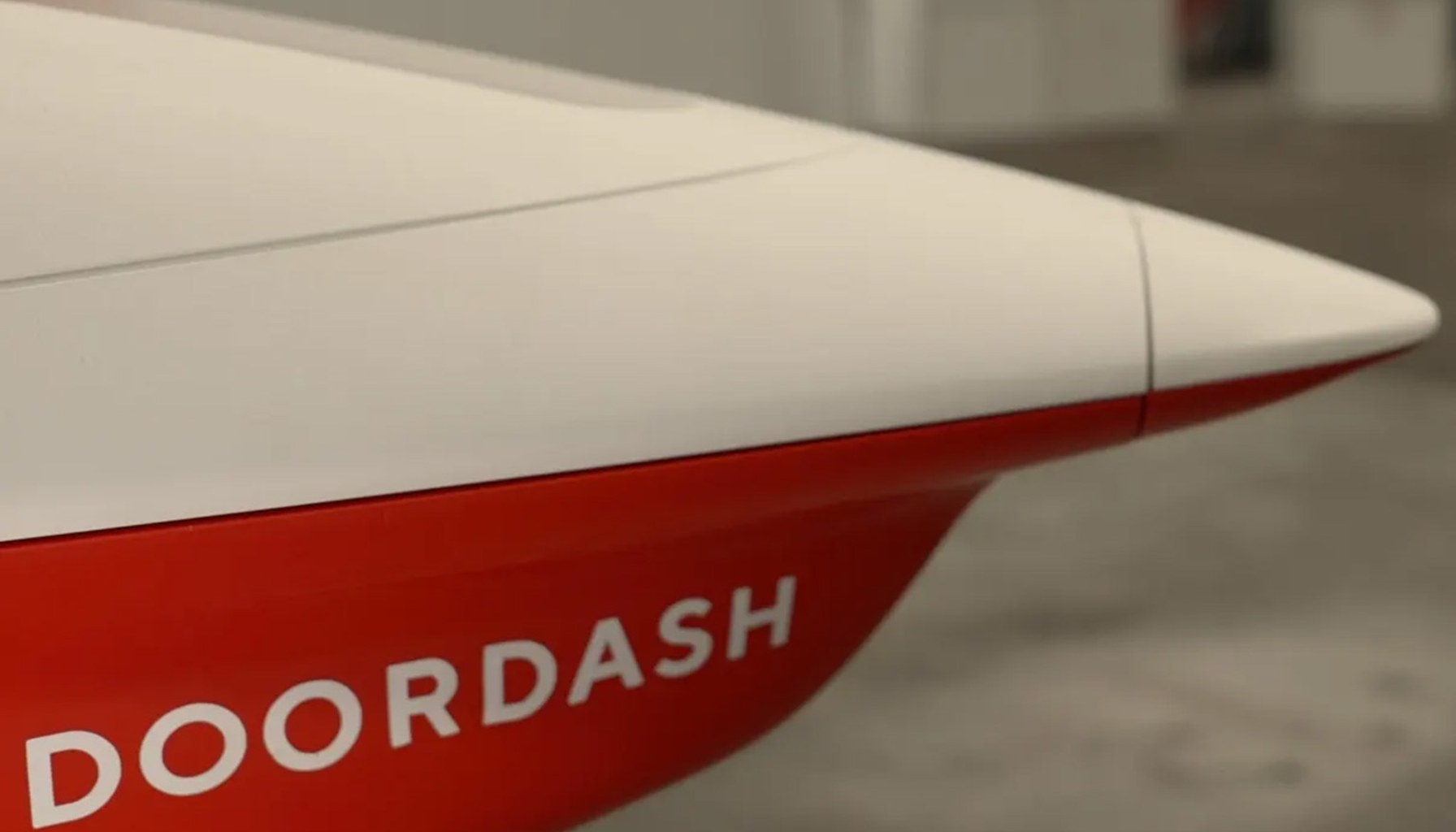
The company says its in-house air carrier approval can help move midrange orders faster while keeping ground couriers on shorter, denser routes.
FAA approval turns a pilot concept into a licensed air operation
DoorDash said it has earned Part 135 air carrier certification from the Federal Aviation Administration, clearing the company to operate DoorDash Air as an in-house drone delivery program. The certification matters because it changes drone delivery from a controlled experiment into a regulated commercial operation, with the FAA treating DoorDash as an air carrier rather than just a technology developer.
For plant managers and supply-chain leaders, the important detail is not the label but the operating burden that comes with it. DoorDash said the certification requires a multi-stage safety review covering aircraft airworthiness, maintenance programs, and flight procedures. According to a DoorDash spokesperson, the company had to clear a five-stage federal process that included airworthiness testing, detailed flight operations and maintenance documentation reviewed by the FAA, an FAA-accepted safety management system, and a hazardous materials program.
That kind of approval does not make drone delivery easy. It does, however, show that DoorDash is moving from software demos to a business model with formal oversight, documented maintenance, and defined operating standards.
DoorDash is building the stack itself, not just buying drone flights
DoorDash is not treating drone delivery as a one-vendor add-on. The company said it is building DoorDash Air inside DoorDash Labs, its robotics and autonomy unit, even though it already works with Wing for drone deliveries. The strategy is to own more of the delivery network rather than rely only on third-party aircraft.
Harrison Shih, head of DoorDash Air, said the company wants drone delivery “to work for any merchant, anywhere” and said DoorDash is “building the full stack” from ground infrastructure to the drone itself and the handoff systems that connect them. DoorDash said its program rests on three pieces: an Autonomous Delivery Platform that routes orders to the most efficient delivery mode, ground infrastructure designed for merchant handoff, and the new Part 135 certification that lets DoorDash operate, fly, and maintain its own drones.
That approach has a familiar operations logic: control the interfaces that create delays. In manufacturing terms, DoorDash is trying to own the handoff between order selection, fulfillment mode, and final transfer. If that works, the company can route work to the cheapest or fastest mode without depending entirely on one external carrier.
The catch is integration. DoorDash says its merchant handoff system is designed to be interoperable across drone providers, which is a smart aim, but interoperability is usually where deployment timelines slip. Every handoff point needs testing, every exception needs a rule, and every maintenance requirement needs a process owner.
The business case is about midrange deliveries, not replacing drivers
DoorDash said its drone network may handle midrange deliveries, which it described as less attractive to Dashers. More than 20% of orders on the platform in 2025 traveled three to five miles, and DoorDash said those orders took nearly 25% longer on average than shorter trips because it takes longer to find the right ground-based Dasher for those routes.
That is the core ROI argument. The company is not suggesting drones replace all last-mile delivery. It is targeting a segment that is slow enough to hurt service levels but not high-value enough to command the easiest ground dispatch. Routing those trips to drones could reduce wait times and keep Dashers focused on shorter deliveries that can be handled quickly near dense merchant clusters.
DoorDash said drones completed deliveries in 25 minutes on average in 2025. It also said some locations in its drone partner pilots saw order volume grow by roughly 30%, with that lift sustained for nine weeks after pilot launch. Those are the kinds of numbers executives look for when deciding whether automation is a throughput tool or just a demo.
Still, the economics should be read carefully. A 25-minute average delivery time is useful only if it comes with enough utilization to justify the capital, operating, and regulatory costs of an air carrier program. DoorDash has not disclosed launch cities or timing for DoorDash Air, so the market still lacks the details needed to judge payback period, fleet size, and utilization assumptions.
Practical gains depend on throughput, maintenance, and weather tolerance
The most meaningful test for this kind of automation is not whether it flies, but whether it holds throughput across ordinary operating conditions. DoorDash says the certification authorizes it to perform commercial operations as a licensed air carrier, but licensed operations bring maintenance discipline, flight documentation, and safety management obligations that can slow scale if the process is immature.
That matters because a drone network is not just aircraft. It is a system of batteries, software, weather constraints, loading procedures, merchant workflows, airspace rules, and maintenance cycles. Any one of those can become the bottleneck.
DoorDash says it plans to design and build its drone in the U.S. using mostly American-made components. That may help with supply assurance and supportability, but it also suggests a deliberate effort to control part sourcing and serviceability. For operators, that can be a strength if it reduces dependency risk. It can also raise cost if domestic sourcing limits component flexibility or drives up unit prices.
Harrison Shih framed the effort around advances in hardware, compute, and AI creating new capabilities for local commerce. That may be true, but the operational advantage will come down to whether the system can keep orders moving with predictable maintenance intervals, clear exception handling, and enough flight density to earn its keep.
What operators should watch next
DoorDash said it will share more details at its Dash Forward event in September. Until then, the practical questions are the same ones any automation buyer should ask before signing off on a deployment.
What is the expected utilization per drone per day? What share of orders can actually be routed to air? How many handoff sites are required per market? What maintenance staffing is needed to keep the fleet flying? What is the fallback when weather, airspace, or a merchant-site issue interrupts the route?
Those questions determine whether drone delivery becomes a reliable operating asset or an expensive pilot with good branding.
For now, the most important fact is that DoorDash has crossed a regulatory threshold that few drone operators clear. The company said it is one of only eight drone operators in the country to have passed the process. That does not guarantee commercial success, but it does mean the program now has the kind of FAA-defined operating framework that can support real deployment planning.
- DoorDash gains FAA certification to operate its own drone delivery program - The Robot Reporttherobotreport.com / Independent source / Published JUL 30, 2026 / Accessed JUL 30, 2026