FireAvert brings stove shutoffs to Home Assistant, but the real story is local safety hardware with a price tag
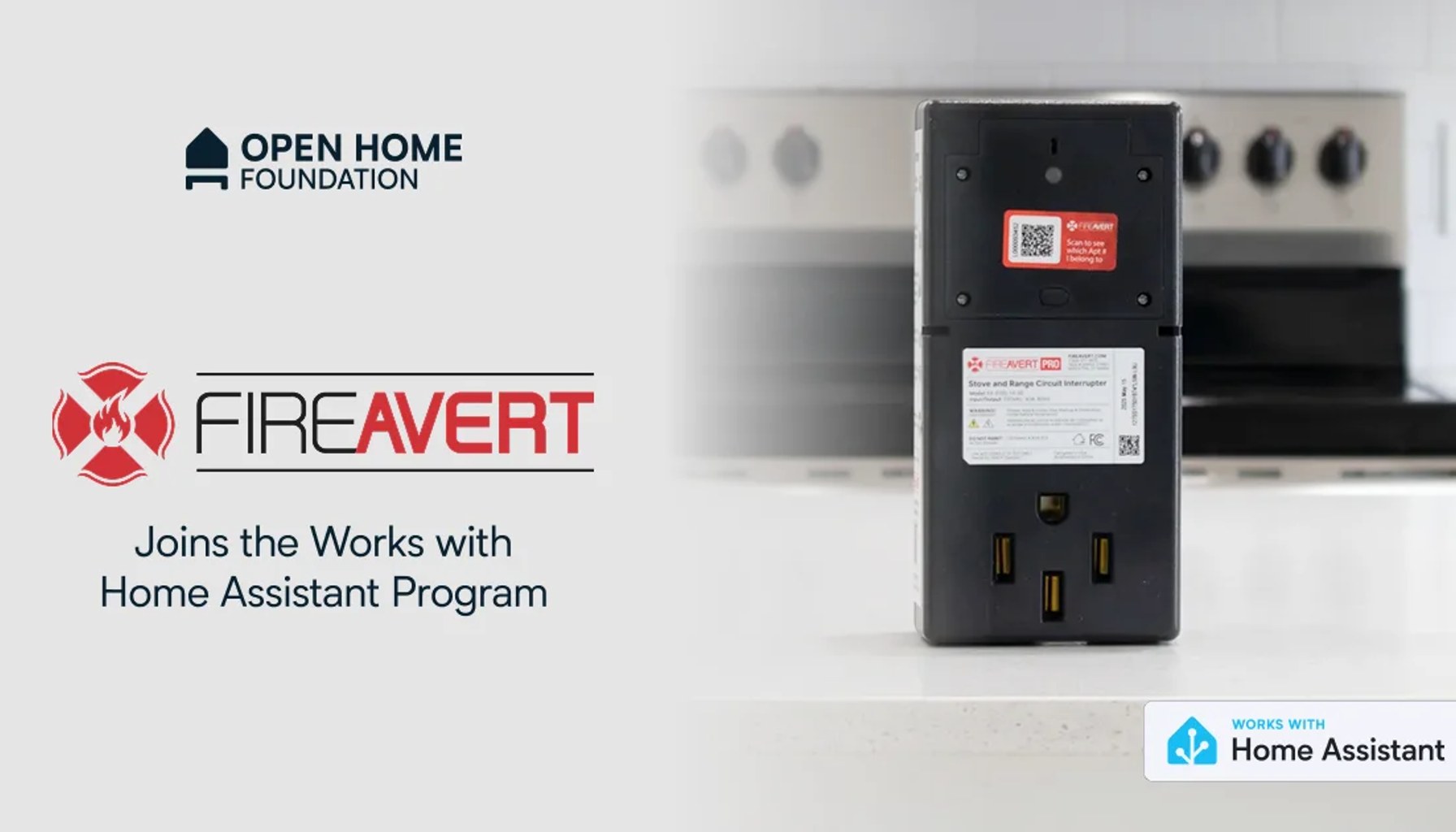
Image / home-assistant.io
The new Home Assistant partner turns kitchen smoke alarms into automatic shutoff triggers for gas and electric appliances. The catch: you’re buying specialized hardware, not a software feature.
What FireAvert added to Home Assistant
Home Assistant announced that FireAvert has joined its Works with Home Assistant program, making the company’s fire-safety devices the first gas and electric appliance shutoff products in the ecosystem. FireAvert’s lineup is built around a simple idea: if smoke is detected, the device cuts power or gas to the appliance before a kitchen mistake becomes a fire.
The company was founded by ex-firefighter Peter Thorpe, who, according to Home Assistant, saw the same kitchen-fire scenario repeat during nearly two decades of service. FireAvert’s original product was the Auto Stove Shutoff for electric stoves, and the company has since expanded into gas stove shutoffs and small-appliance shutoffs for devices such as microwaves, air fryers, and hot plates.
For Home Assistant users, the headline feature is compatibility with Z-Wave. Home Assistant says the FireAvert shutoffs run on the open smart-home protocol and have been certified by the Z-Wave Alliance. That matters because it keeps the devices from being tied to a single cloud app or brand ecosystem.
How the shutoffs work
The basic operation is straightforward. FireAvert’s shutoffs listen for a standard smoke alarm, then automatically turn off the stove or appliance when the alarm sounds. Home Assistant says the idea is to cut heat at the source before flames can take hold.
That’s an important distinction: the device is not trying to detect every possible kitchen hazard itself. It reacts to a smoke alarm. In other words, the system depends on the quality and placement of the smoke alarm already in your home.
Home Assistant also says the shutoffs do not rely solely on Z-Wave to function, so they continue to protect the kitchen even if the network drops out. And they do not depend on batteries for operation. You plug the appliance into the shutoff device and the shutoff into the wall socket, which keeps it powered as long as the appliance is drawing electricity.
That makes the product more reassuring than a gadget that needs periodic charging, but it also means you are adding another piece of inline hardware to a kitchen setup that may already be cramped.
The catch: this is safety hardware, not a cheap smart-home add-on
The biggest catch is cost and complexity. FireAvert is not a general-purpose smart plug you can repurpose across the house. It is specialized safety gear for stoves and other high-risk appliances, and each version has to match the appliance it protects.
Home Assistant listed four certified devices:
- FireAvert Electric 240V 3 Prong Auto Stove Shutoff
- FireAvert Electric 240V 4 Prong Auto Stove Shutoff
- FireAvert 120V Auto Appliance Shutoff
- FireAvert Gas Shutoff
That means buyers need to choose carefully, especially with electric ranges, where plug type matters. A wrong match would be an expensive mistake, and this is not the kind of product you want to buy first and ask questions later.
There is also the issue of what FireAvert is actually doing for you. It is not automating recipes, lighting, or a dashboard panel. It is buying time during a dangerous moment. That is valuable, but comparison shoppers should judge it as safety equipment first and a smart-home device second.
What you get for the money
Home Assistant says all four devices come with a lifetime warranty, and the products are independently tested to CSA and UL standards. Those are meaningful signals for hardware intended to sit between a household appliance and the wall.
The company also gains a privacy and reliability edge from the Home Assistant ecosystem. Home Assistant says its in-house team tested the devices for local control and privacy, and FireAvert’s move toward Z-Wave means the system does not need a cloud connection to keep working.
That combination is the strongest argument for the product. If you want an appliance shutoff that stays functional during internet issues and does not depend on a proprietary app, FireAvert is aimed at exactly that customer.
But the value proposition still hinges on how much you trust the benefit versus the cost of adding dedicated protection to one appliance. Home Assistant notes that the company’s device category is new to the program, joining existing water shutoffs and bringing stove shutoffs into the mix for the first time. That novelty may appeal to early adopters, but it also means this is not yet a widely standardized household category.
Who should pay attention
FireAvert deserves attention from people who already use Home Assistant, especially households that want local-only automation and care about fire prevention. It also makes sense for anyone who has a history of leaving burners on, lives with older relatives, or wants an extra layer of protection in a busy kitchen.
The product is less compelling if you are looking for a broad smart-home upgrade. This is not a “buy once, improve everything” device. It protects specific appliances and addresses a very specific risk.
It is also worth noting that Home Assistant’s announcement frames the devices as part of a broader safety mission, not a convenience play. That is probably the right way to read them. For this kind of hardware, usefulness matters more than flash.
Verdict: buy if you want a local, appliance-specific safety layer; otherwise wait
FireAvert’s Home Assistant certification is a legitimate step forward for open, locally controlled safety gear. The devices are purpose-built, run on Z-Wave, keep working without a cloud dependency, and come with a lifetime warranty plus CSA and UL testing.
Still, the total cost is not just the purchase price of the shutoff itself. You are also paying for a single-purpose layer of protection that only makes sense if it matches your stove or appliance and fits your risk tolerance. For Home Assistant users who want kitchen fire protection without vendor lock-in, this is a real buy. For everyone else, it is a thoughtful wait unless a specific appliance risk justifies the expense.
- FireAvert joins Works with Home Assistanthome-assistant.io / Release / Published JUL 27, 2026 / Accessed AUG 01, 2026
- 3 health-focused Home Assistant projects to try this weekend (31 Jul - 2 Aug)howtogeek.com / Mainstream / Published JUL 31, 2026 / Accessed AUG 01, 2026