July’s robotics headlines were shaped by funding, training, and a U.S. import clampdown
The month’s most-read robotics stories on *The Robot Report* point to a market pushing harder on physical AI while also confronting the practical limits of deployment, control, and policy.
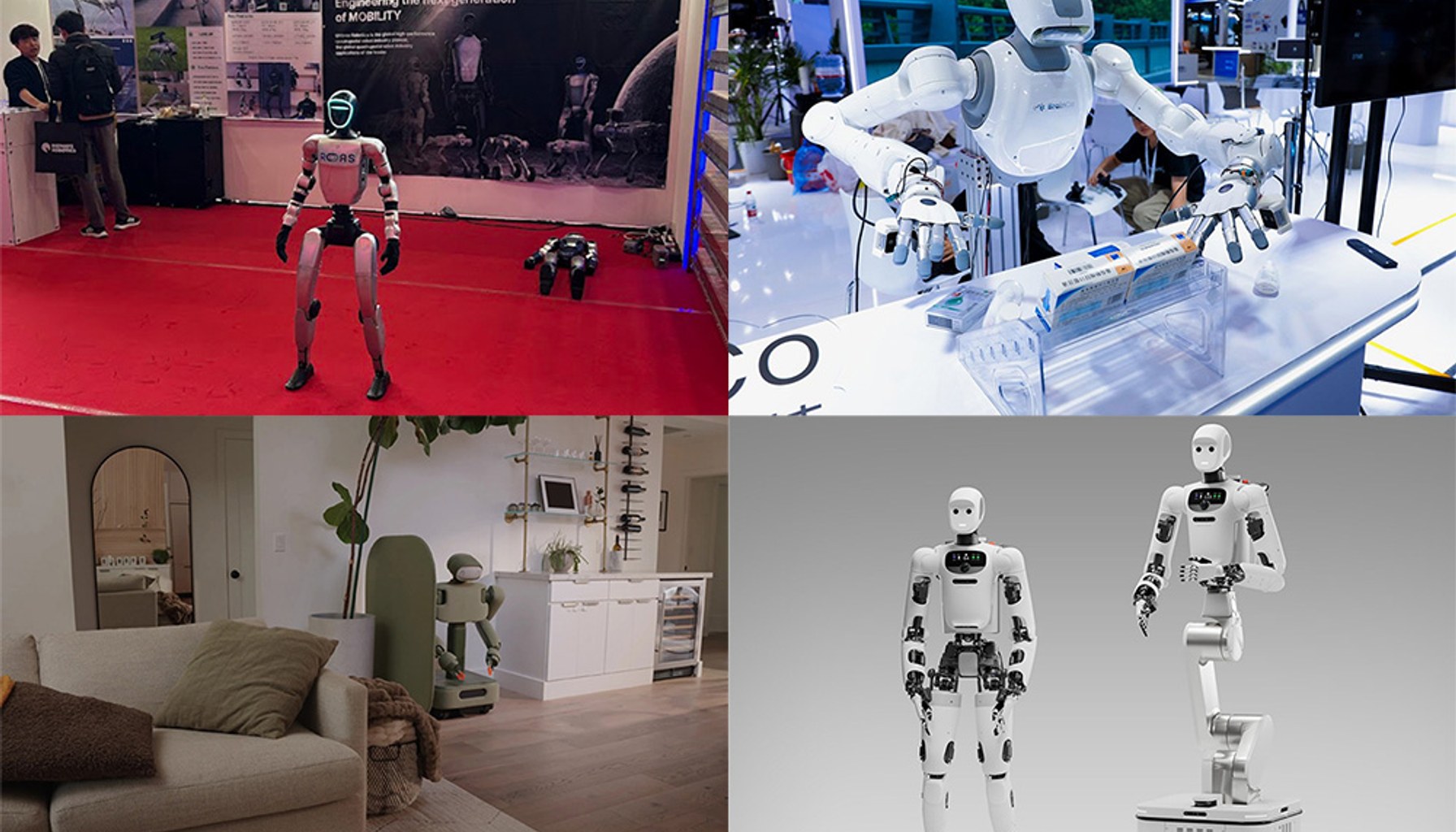
Image / therobotreport.com
The month’s most-read robotics stories on The Robot Report point to a market pushing harder on physical AI while also confronting the practical limits of deployment, control, and policy.
A month defined by capital and ambition
The biggest attention-grabbers in July 2026 were not just new robot demos. According to The Robot Report’s monthly roundup, readers were drawn to large funding rounds, new training approaches, and fresh robot models — with a late-month U.S. policy shift on imports of certain robots dominating the final week.
That mix matters for plant managers and operations leaders because it shows where the industry is spending its money: not only on hardware, but on the data, software, and training infrastructure needed to make robots useful in messy, real-world environments.
At the top of the list was AI² Robotics, which raised about $735 million in a fresh financing round. The Robot Report said that pushed the Shenzhen-based company’s valuation past 50 billion RMB, or about $2.8 billion. The company is positioning itself in China’s fast-moving physical AI sector with wheeled humanoid robots. Big valuations do not equal plant-floor readiness, but they do indicate where investors think the next performance gains will come from.
The same month also saw Walden Robotics emerge from stealth with $300 million in funding and a $1.1 billion valuation, according to The Robot Report. The company said it is building and deploying robots that continuously learn and improve while performing real work. That language is important: it signals a shift away from one-and-done automation projects toward systems expected to adapt over time. For operations teams, that usually means a tougher ROI conversation. If robots are still learning after deployment, the payback window depends not just on installed performance, but on how quickly error rates fall and throughput stabilizes.
Training before deployment is becoming the bottleneck
One of the most-read stories highlighted a problem that many operations teams already know well: the hardest part of robotics is often not a lab demo, but consistent performance in changing environments.
The Robot Report noted that the challenge for today’s robots is no longer limited to automating a task. It is adapting to ever-changing environments, and that variability remains one of the hardest problems. The outlet framed this as a shift from programmed automation toward physical AI.
That matters because a robot that works in a controlled demo cell can fail when fixtures shift, lighting changes, product variation increases, or people move through the workspace. The cost is not just downtime. It is engineering time, supervision time, and retraining time — all of which can erase the financial case if they are not planned up front.
Apptronik’s July announcements fit that theme. The Robot Report said the company launched Apollo 2 and opened an expanded Robot Park in Austin, Texas, described as its flagship data collection and training facility for humanoid robots. For anyone evaluating automation, that is a reminder that deployment readiness increasingly depends on the quality of the training pipeline behind the robot. Facilities built to collect data and refine behavior are becoming part of the automation stack, not just a research afterthought.
Humanoid, another company highlighted in the monthly ranking, introduced KinetIQ Ascend, its reinforcement learning approach aimed at reaching 99.9% manipulation reliability at human speed and beyond, according to The Robot Report. The claim is notable less for the headline number than for the implied benchmark: reliability. In operations, high cycle rates do not help if the robot misses too often, needs constant intervention, or forces buffers into the line. A system built around manipulation reliability is trying to answer the question every plant manager asks first: how often will it actually work?
New robot models are being sold on control, not just motion
AMD also made the list after unveiling its Kria module for real-time control and unified memory for robots, alongside its Ryzen AI Embedded X100 series and Kria AI Robotics platform. The Robot Report said AMD promised deterministic real-time control, unified CPU–GPU–NPU memory, and an open, non–vendor-locked software stack, and claimed the platform can outperform NVIDIA Orin and Thor on system-level robotics workloads.
For industrial buyers, the core issue is not brand rivalry. It is whether the control stack can support the required cycle time, latency, and debugging discipline on the plant floor. “Deterministic real-time control” is the kind of phrase that matters when a robot must coordinate with conveyors, vision systems, and safety interlocks. If response time drifts, the system can lose throughput or require conservative settings that reduce output.
But hardware promises still need proof in the deployment environment. Open software stacks can reduce lock-in, yet they can also shift integration burden onto the customer or systems integrator. That is not necessarily bad, but it changes the cost structure. Budgeting should include the engineering hours needed to connect the robot to upstream and downstream systems, plus the time spent validating performance when the workload changes.
Weave Robotics also drew major reader interest with Isaac 1, a wheeled home humanoid priced at $7,999 or $449 per month. The Robot Report said the robot is designed for chores such as folding laundry, tidying rooms, making beds, and putting away toys. While this is a consumer product, it underscores a broader trend that industrial buyers should watch closely: robotics companies are increasingly packaging autonomy as a service or a monthly payment, not only as a capital asset.
That pricing model changes the ROI conversation. Monthly subscription costs can make the first year easier to justify, but the real question becomes uptime, maintenance response, and whether the robot stays productive enough to beat a human labor alternative or a simpler fixed automation system.
Policy risk is now part of the automation equation
The most-read story of the month was not a product launch at all. It was the FCC’s limits on U.S. imports of new humanoid and mobile robots.
According to The Robot Report, the Federal Communications Commission said a White House-convened executive branch interagency body determined that certain products “pose unacceptable risks to the national security of the United States.” The policy shift came as competition in next-generation robotics and AI intensified.
For operations leaders, this is not a distant Washington story. It is a procurement and continuity issue. If a plant is planning to source robots, parts, or connected systems from overseas suppliers, import restrictions can affect lead times, approved configurations, and long-term serviceability. A robot platform that looks economical on a quote sheet can become expensive if the customer later faces sourcing disruptions or compliance constraints.
This is where the practical ROI math gets real. A deployment’s payback period is only as good as the assumptions behind it: purchase price, installation time, software support, spare parts, training, and the likelihood that the chosen model remains available for expansions or replacements. Policy changes can move any of those variables quickly.
What plant managers should take from July’s rankings
Taken together, July’s most-read robotics stories suggest an industry that is moving fast but still wrestling with fundamentals.
The upside is clear: more capital is going into robotics, training facilities are expanding, and vendors are pushing harder on reliable manipulation, real-time control, and AI-assisted adaptation. The downside is equally clear: robots still need better training before deployment, integration remains nontrivial, and external policy can reshape procurement overnight.
For plant managers and supply-chain leaders, the right question is not whether robotics is advancing. It is whether a specific system can prove value on your line, in your environment, on your maintenance schedule, and under your sourcing constraints.
That means asking for the evidence that matters most: throughput under real conditions, error rates after the first few weeks, time spent on integration, and the expected payback period if the system performs as promised — and if it does not.
- Top 10 robotics stories of July 2026 - The Robot Reporttherobotreport.com / Trade / Published AUG 01, 2026 / Accessed AUG 01, 2026