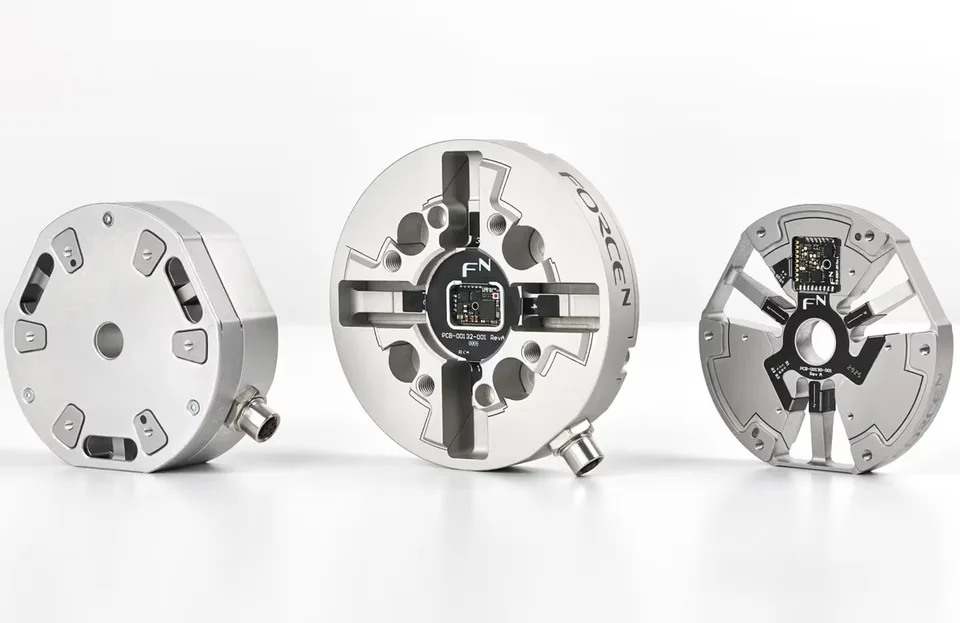
ForceN will brief developers on robot wrists, joint sensing, and lessons from other fields at RoboBusiness 2026.
Force-torque sensors measure the pushing, pulling, and twisting forces acting on a robot’s wrist or other joint. That feedback can help a humanoid adjust its grip when handling objects that vary in weight, strength, or fragility.
The Robot Report says ForceN offers these sensors and has supplied systems to surgical, logistics, humanoid, and other robots. ForceN describes the technology as giving robots a sense of touch. Without it, the company says, robots cannot directly tell how much pressure they are applying while working.
That matters in industrial tasks where a robot must make contact with objects rather than simply move to a programmed position. Force feedback could help it respond to resistance and avoid applying too much force, though the supplied announcement does not quantify improvements in speed, accuracy, safety, or operating cost.
This is a planned industry briefing, not a reported test result or demonstrated new humanoid capability. Robert Brooks, ForceN’s founder and CEO, is scheduled to present “A Crash Course in Force & Torque Sensing for Humanoids” at 2:15 p.m. Pacific on Oct. 20, the first day of RoboBusiness 2026 in Santa Clara, California.
According to The Robot Report, Brooks will discuss ways to use force-torque sensing in humanoids and practices intended to prevent equipment damage. ForceN says he will draw on work with humanoid companies over the past three years, plus sensor development in surgical, logistics, and field robotics.
The practical question for developers is which tasks benefit most, and what accuracy, durability, and integration those tasks require. Those details should become clearer when the session takes place.