Free Will Question Finds Fresh Ground
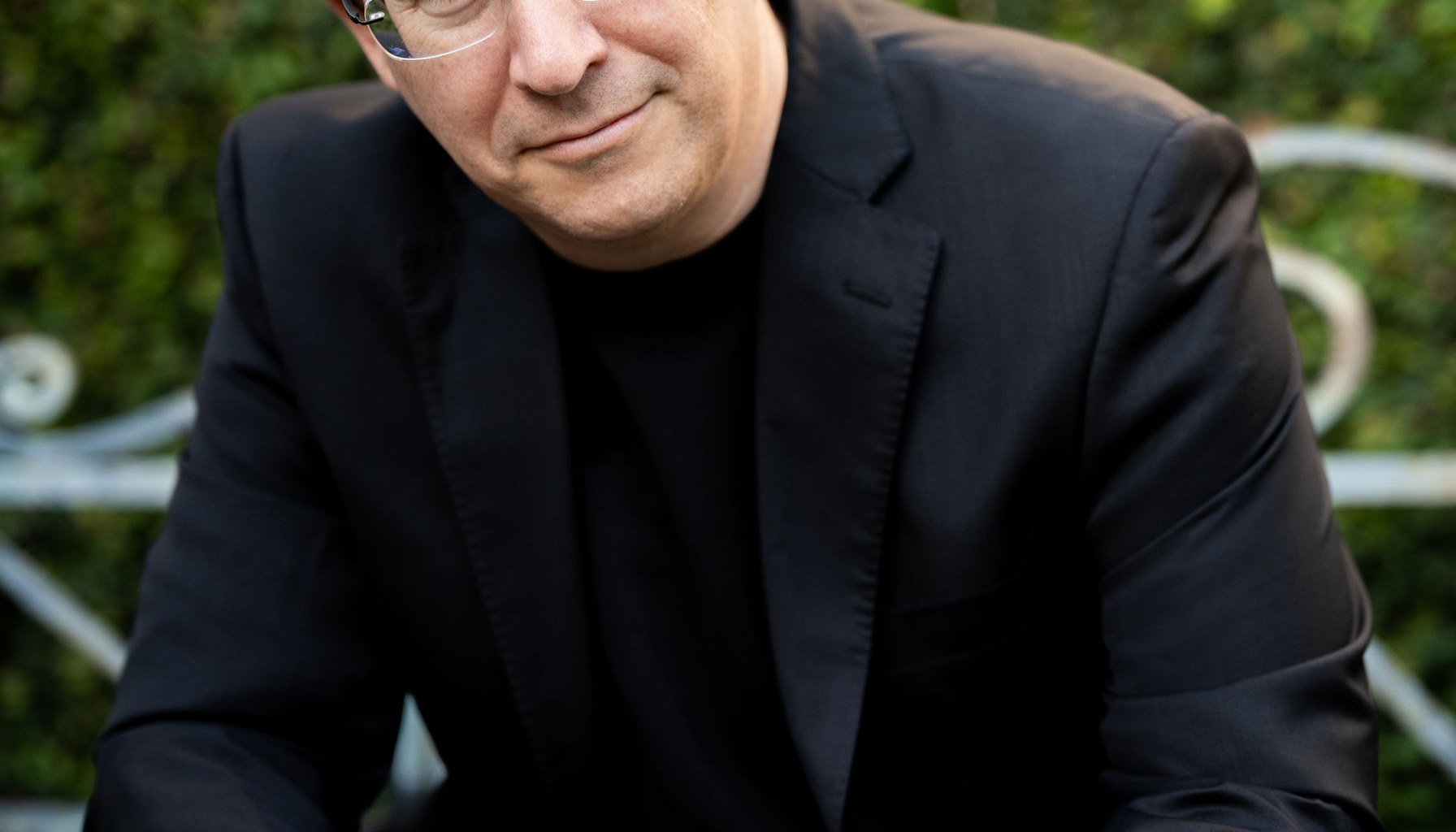
Free will isn’t fiction—Uri Maoz argues it’s testable.
Uri Maoz’s career arc reads like a counterpoint to the usual neuroscience script. He started in the lab studying how the brain tells our arms how to move, working from the wiring of the motor system up to our sense of action. Then, during a mundane moment that turned into a defining one, a professor handed him an undergraduate lecture and said, in effect: teach something relevant—and make it mean something. Maoz chose a topic that sounds almost philosophical in a science class: what neuroscience has to say about free will. “What neuroscience has to say about the question of free will!” he recalls, a spark of excitement in his voice. That moment redirected his research path toward questions about how desires, beliefs, and intentions become actions—and whether humans actually exercise control over those steps.
Today, Maoz is a professor at Chapman University in California, and his pivot has become a quiet counter-narrative in a field obsessed with abstractions. He didn’t abandon the hard math of movement or the messy physiology of the brain; rather, he reframed them as a way to interrogate a stubborn contingency: if we want to understand free will, we need to make it testable. He started from the intuition that decision-making is not a single moment of choice but a cascade: neural states, bodily readiness, beliefs about outcomes, and evolving desires all converge to drive action. The challenge, he says, is turning that cascade into something experimenters can observe, quantify, and reason about—without reducing “free will” to a simplistic checkbox.
The core idea Maoz embodies is deceptively modest: free will may be a real phenomenon, but it’s not a mystical blessing; it’s a variable that science can study if we agree on what counts as an observable proxy for agency. That means modeling how internal wants—desires and beliefs—interact with external cues to produce decisions, and then testing whether those processes align with people’s own sense of responsibility. The research trajectory nods to a long, thorny debate about conscious intent versus unconscious neural preparation, but Maoz insists we can pursue it in a way that yields falsifiable hypotheses rather than rhetorical popcorn.
For practitioners in AI, product design, or cognitive therapy, Maoz’s framing offers two practical takeaways. First, measuring “free will” is not a single metric; it’s a family of signals—how quickly a choice is made, how confident a person feels about it, and how beliefs shift under new information. That means experiments should diversify what counts as a decision signal, rather than chasing a universal checkbox. Second, the tradeoffs are real: experiments with maximal control may strip away ecological realism, while naturalistic work can muddy cause-and-effect. The art is in designing tasks that preserve decision-relevant dynamics while still letting researchers isolate causal levers.
Analogy helps here: trying to audit a driverless car’s throttle while the car is deciding which route to take. You want to know if the choice to turn is coming from a deliberate, free act or from an automatic system rewriting the plan on the fly. Maoz’s approach is about exposing the drivers of the decision—the beliefs, the desires, the sense of control—without turning the lab into a stage where every choice is scripted.
Moving forward, the field will watch for how Maoz and his collaborators operationalize free will in computational terms, and whether their models can predict when people feel they acted freely versus when they felt nudged by circumstance. This quarter’s impact isn’t a product launch or a new API; it’s a sharper language for talking about autonomy in both humans and intelligent systems, plus a set of experiments that could anchor future debates in measurable terms.
If nothing else, Maoz’s work reframes the question as a testable hypothesis rather than a philosophical puzzle. The question remains open, but the pathway to an answer, he suggests, is paved with more precise definitions, better experiments, and an honest accounting of when belief, desire, and action align—or resist—our sense of control.
- You have no choice in reading this article—maybetechnologyreview.com / Source role not classified / Published APR 13, 2026 / Accessed APR 13, 2026