Halos sets standard for robot safety
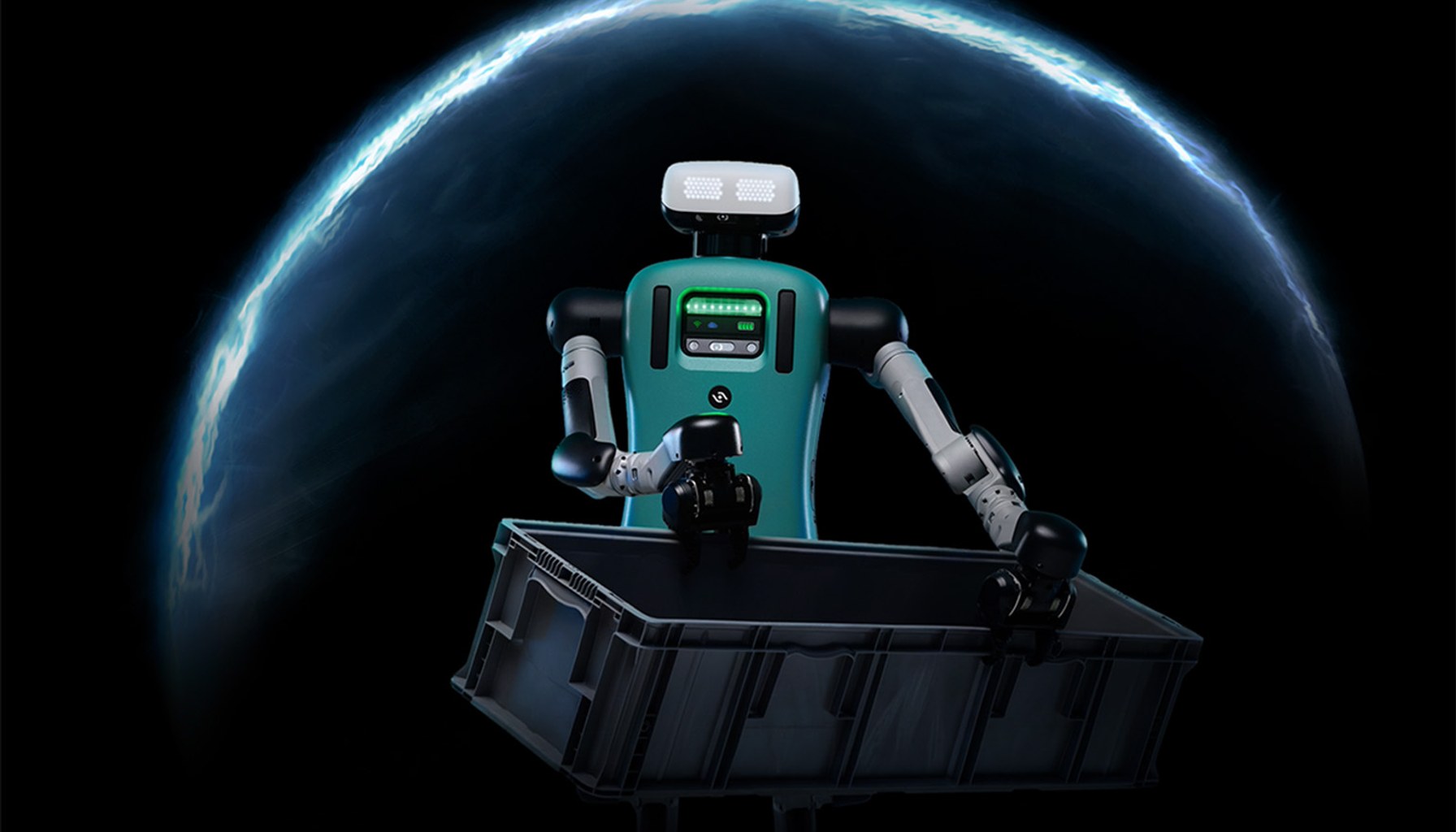
Image / The Robot Report
NVIDIA's Halos for Robotics stitches safety into factory bots.
NVIDIA's Halos for Robotics is a full-stack safety system that unifies AI compute and safety across the software, sensors, and applications that govern autonomous machines operating alongside humans. The company frames Halos as a standardized safety architecture designed to let robots reason about risk, motion, and interaction in dynamic environments, from warehouses to assembly lines. The core idea is simple in practice: safety is not a bolt-on feature but an integral layer that travels with the AI stack, the sensor suite, and the control software, reducing the friction of bringing robots from the lab to real work.
Agility Robotics has taken the first step to put Halos into production by equipping its humanoid bots for use in factories, warehouses, and logistics settings. The deployment fits a growing pattern in which teams want to attach a unified safety fabric to autonomous systems that share space with human workers. The early customer footprint spans some big names and varied use cases, including Amazon, GXO Logistics, Schaeffler, and Toyota Motor Manufacturing Canada, signaling demand from both consumer-focused logistics and traditional manufacturing.
The architecture is deliberate about how it scales. Halos Core for NVIDIA IGX is available in early access for registered developers on Linux and Linux plus QNX configurations, while the Halos Outside-In Safety Blueprint, part of the Halos Applications layer, is also in early access on GitHub. NVIDIA says the system connects AI foundation models, accelerated compute, and distributed sensors with safety applications and inspection workflows to create a cohesive safety spine for robotic operations. The company has framed Halos as not just a set of tools but a safety paradigm designed to be reused across different robot types and environments.
Testing shows that the safety fabric relies on a long lineage of autonomous safety work. NVIDIA contends that Halos draws on more than 18,600 engineering years of autonomous-vehicle safety development to deliver a more mature safety stack for industrial robots. The leadership at NVIDIA frames physical AI as transforming where factories and warehouses operate, but warns that scaling these systems requires a unified safety architecture rather than ad hoc fixes. Deepu Talla, vice president of robotics and edge AI at NVIDIA, stressed that developers and system builders can leverage Halos to deploy autonomous robots alongside workers with greater confidence, accelerating both safety validation and time to production.
The push toward a standardized safety layer also comes with practical constraints for operators and integrators. For one, the Halos Core requires NVIDIA IGX hardware, tying safety performance to a concrete compute platform and its associated power, thermal, and integration requirements. For developers, early access means a period of refinement, with the Outside-In Safety Blueprint offering a template that teams can adapt rather than reinvent. The Open Source angle is meaningful because it invites collaboration and potential interoperability, but it also places responsibility on deploying teams to vet safety workflows against their real-world tasks and local certification criteria.
Two practitioner takeaways stand out. First, the value of a full-stack approach is the reduced risk of misalignment between perception, planning, and actuation in human-robot teams. By tying sensors, AI compute, and safety rules into a single stack, teams can reason about failure modes and latency budgets in a more predictable way, a critical advantage in high-pace warehouses. Second, early access and an open blueprint signal a willingness to crowdsource safety engineering, but operators should watch for real-world reliability signals as Halos moves toward broader production deployments. The next milestones will include broader the adoption by more robot makers, performance metrics under varied load, and how Halos integrates with existing safety certifications in different regions.
In the end, Halos is less about a single product and more about turning safety into a repeatable, scalable engineering pattern. If the first deployments prove that a unified safety stack can be deployed across diverse humanoid and mobile robots, this could accelerate the transition from pilot projects to production fleets with safety as a constant, not a constraint.
- NVIDIA releases Halos, a full-stack safety system for roboticsThe Robot Report / Trade / Published JUN 22, 2026 / Accessed JUN 22, 2026