RealitySync makes automation decisions immersive
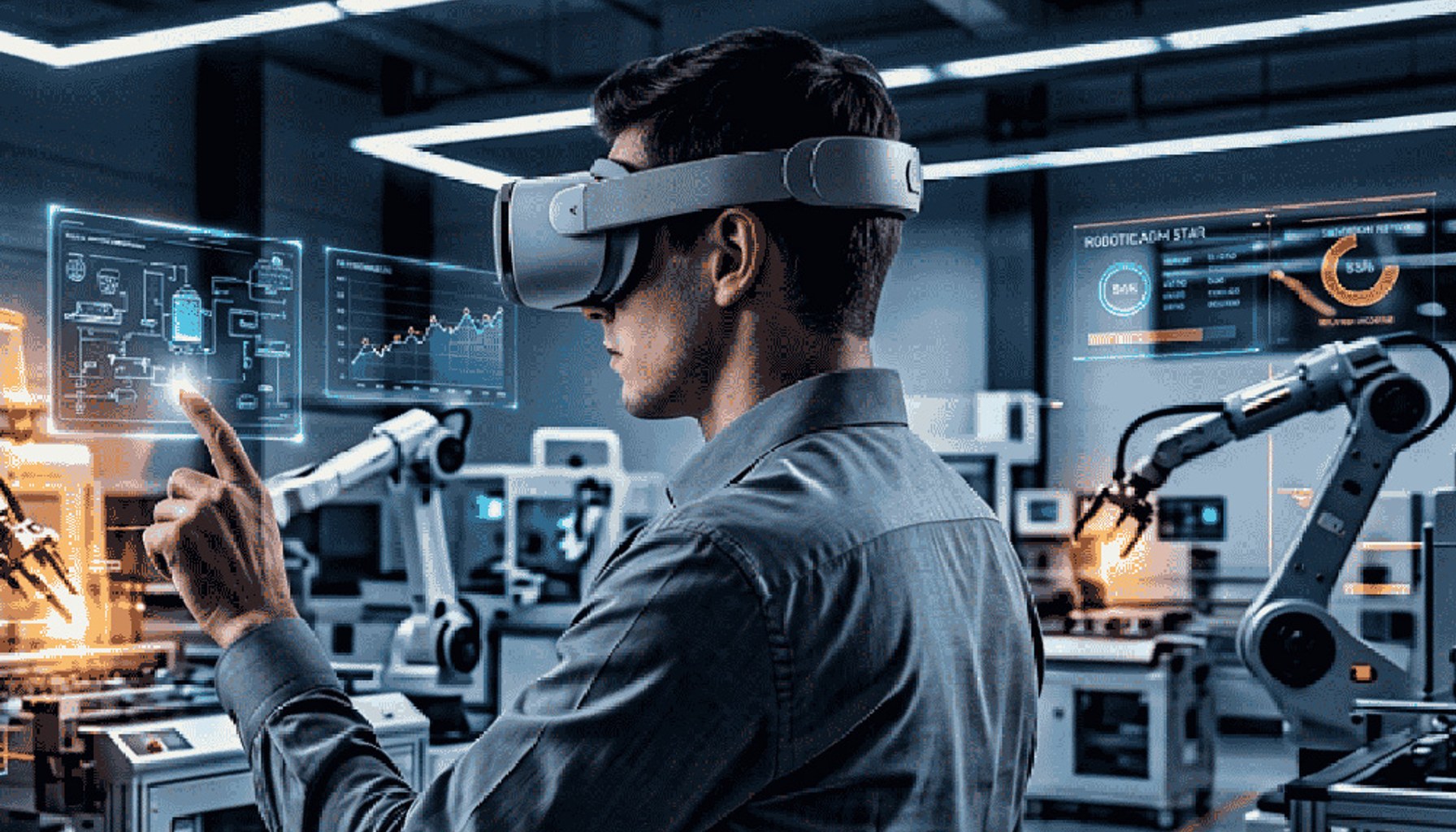
Image / The Robot Report
RealitySync lets engineers walk a factory before it is built. At Automate 2026, Eclipse Automation unveiled RealitySync, a simulation platform that aims to change how manufacturers evaluate, de risk, and scale automation.
RealitySync is pitched as a new way to grapple with the growing complexity of modern production. Traditional methods such as static layouts and two dimensional drawings no longer capture the nuances of truly connected multi site lines. The platform creates immersive environments powered by Apple Vision Pro technology, letting teams step into a future factory, walk production lines, and explore workflows in context. Eclipse will guide the collaboration, connecting people, project data, and the physical system in a shared space. Steve Mai, Eclipse’s CEO, said the industry’s approach to evaluating automation hasn’t kept pace with real world production, and RealitySync is designed to close that gap by making planning more collaborative and informed. Eclipse Automation sits on more than two decades of experience delivering engineered automation across life sciences, EVs, automotive, battery production, heavy machinery, consumer goods, electronics, aerospace and defense, with locations in the United States, Canada, Hungary, and Germany.
Deploying factory automation today requires a practical approach that weighs feasibility and impact. RealitySync is designed to address that need by letting teams validate line configurations, workflows, and ergonomic considerations long before procurement or construction begin. The platform aims to improve transparency across stakeholders, from plant floor operators to executives, by visualizing tradeoffs in a shared, interactive space. Deployment data shows that teams can de risk and scope automation faster when they can compare alternative layouts and sequences side by side, rather than negotiating through PDFs and static CAD. Yet Eclipse stops short of promising magic numbers; the launch materials emphasize decision quality and reduced risk over publishing cycle times or throughput gains. The emphasis is on bringing clarity to the most expensive bets in a capital project.
RealitySync also foreshadows how integration will shape outcomes on the plant floor. The system combines people, data, and the physical system to foster collaboration across engineering, operations, and maintenance teams. That means projects can be greenlit with fewer late changes, and installation teams can begin with clearer, shared expectations. The platform’s reliance on immersive environments suggests a shift in how capital investments are justified: not just on paper, but on a lived, experiential view of the future line. The reality is that pilots and scale up decisions will still hinge on the usual constraints, budget cycles, supplier readiness, and the ability to marry design with equipment procurement, but RealitySync is positioned to speed up those decisions by delivering a more accurate, real time feel for the proposed automation.
Two practitioner oriented insights emerge from Eclipse’s approach. First, the tool’s value is deeply linked to data fidelity and design accuracy. If digital twins, 3D models, and process data aren’t up to date, the immersive walk can mislead teams as confidently as it clarifies. Second, the platform shifts significant planning risk earlier in the project lifecycle, but that requires governance and buy in across functions. Without established decision rights and sign offs for immersive reviews, the benefits may fade as teams revert to traditional methods under pressure. A complementary insight is the need for careful change management: operators and engineers must be trained to interpret immersive simulations and to translate those insights into concrete purchasing, commissioning, and staffing decisions. RealitySync also implies new integration requirements, bridging project data with immersive environments and ensuring that the hardware, particularly Vision Pro devices, is supported across multiple sites.
Looking ahead, Eclipse’s RealitySync represents more than a flashy demo. It is a disciplined attempt to align capital planning with the realities of modern, connected manufacturing. If deployed with disciplined governance, strong data management, and clear cross functional workflows, it could shorten the time to first article and reduce costly mid project pivots. The big question remains whether teams can translate immersive insight into concrete, on the floor improvements, and how quickly suppliers and plants can adapt to the new mode of decision making.
- Eclipse Automation launches RealitySync simulation platformThe Robot Report / Trade / Published JUN 22, 2026 / Accessed JUN 22, 2026
- NVIDIA releases Halos, a full-stack safety system for roboticsThe Robot Report / Trade / Published JUN 22, 2026 / Accessed JUN 22, 2026