History repeats in automation, and this time it matters
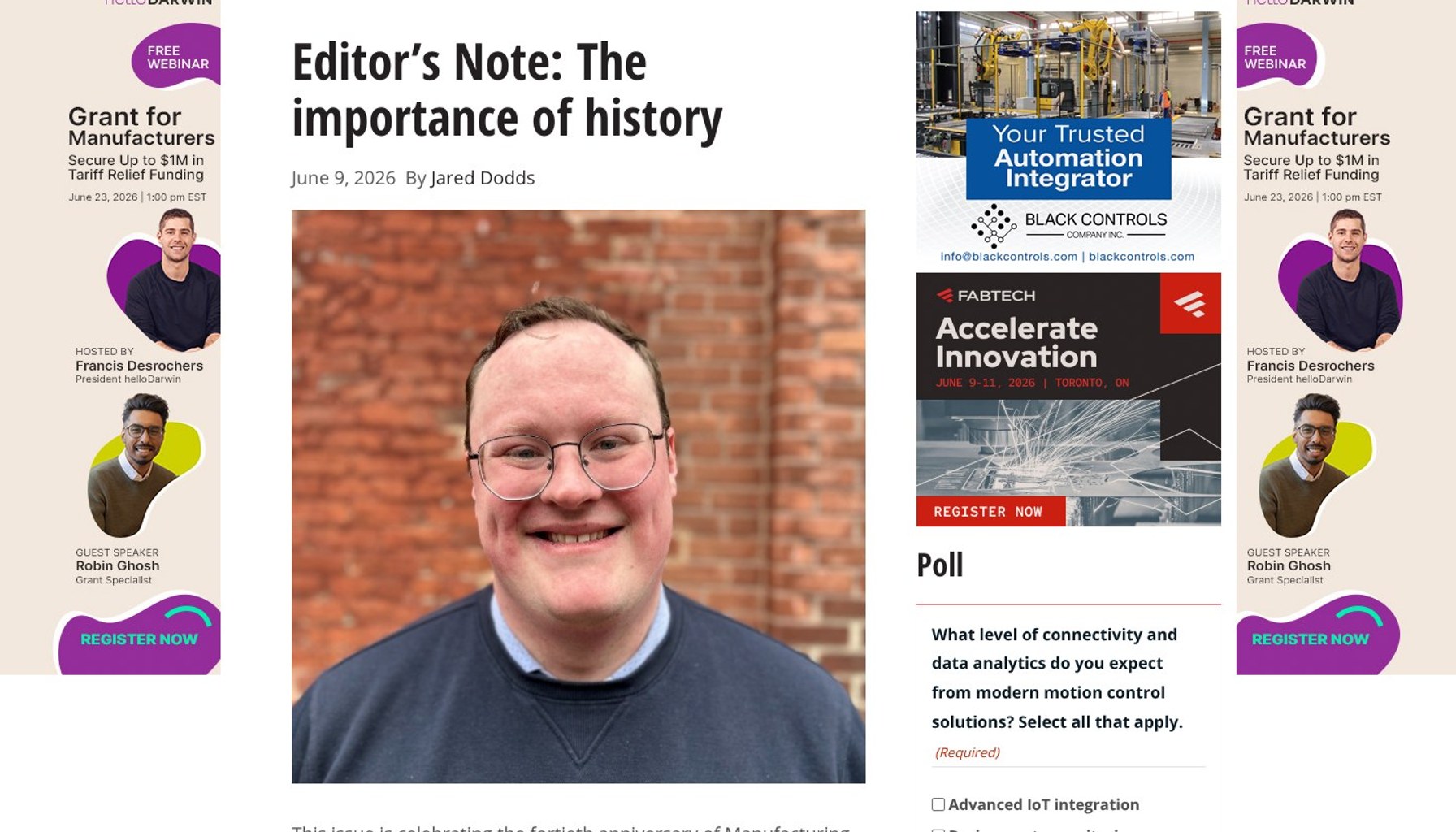
Manufacturing AUTOMATION marks its 40th anniversary with a quiet warning: the same questions that rattled shops a generation ago are shaping today’s automation bets. The editor notes that the early to mid 2000s looked a lot like now, with labor shortages, a stubborn productivity gap, and a feverish appetite for new tech. Back then, PLCs were the bright shiny thing, and the conversation teemed with optimism about faster lines and smarter control. AI and machine learning were not on the radar in the way they dominate talk today, yet the hunger for better throughput was very real.
The piece anchors its argument in history, not nostalgia. The Toronto Reference Library served as a time capsule, the editor recounting copies dating back to 2004. The stories then were about pulling productivity up from a tight labor market, about closing the gap with smarter hardware and better integration, and about the limits of what flashy technology could deliver without a clean, tangible ROI. Paul Hogendoorn’s early commentary on Canada’s labor landscape and Paul DeJong’s PLC centric columns remind readers that the industry has long treated automation as a practical but imperfect instrument, not a miracle cure. The message rings louder today: the ship is not guaranteed to sail on a promise alone.
So what does the historical lens mean for those evaluating plant automation investments right now? Start with the money. Lead with the operational metric, and in practice that means cycle times and throughput. Deployment data shows that the most compelling deployments are those that translate into measurable, repeatable gains on the line, not just glitzy demonstrations. The case for automation must be built on real-world integration work, because plug and play remains elusive. The editor’s memory of two weeks of debugging when new automation lands in a plant is less a caution and more a reality check: the value lies in a predictable ramp from pilot to full production, with every interface mapped, every data channel secured, and every control loop harmonized with existing systems.
That integration stuff matters for ROI and for workforce planning. One hard truth from history is that automation rarely replaces skilled labor wholesale; it shifts it. Where automation sits at the center of a task, it tends to augment linemen, inspectors, welders, and craft labor rather than erase them. The question, then, is not whether automation will touch the worker, but how the worker and the automation stack evolve together. This is why the best deployments frame a clear role for the craft workforce: training, upskilling, and designed handoffs between human and machine so that the line never stalls while the technology catches up.
In the end, the editor argues that history rhymes, not repeats exactly. The same pressures, the push for productivity, the chase of the next technology, and the stubborn friction of integration, continue to shape decisions. The difference today is the scale and speed of data, the promises of AI and ML, and the stark clarity that ROI must be grounded in concrete cycle-time and throughput gains. If operators keep the lesson in view, automation can be a disciplined, operations-led upgrade rather than a marketing sprint. The move from aspiration to measurable improvement remains the critical arc to watch as manufacturers decide what to automate next.
- Editor’s Note: The importance of historyAutomation Magazine / Independent source / Published JUN 09, 2026 / Accessed JUN 09, 2026