Local AI Turns My Home into a Brutal Report Card
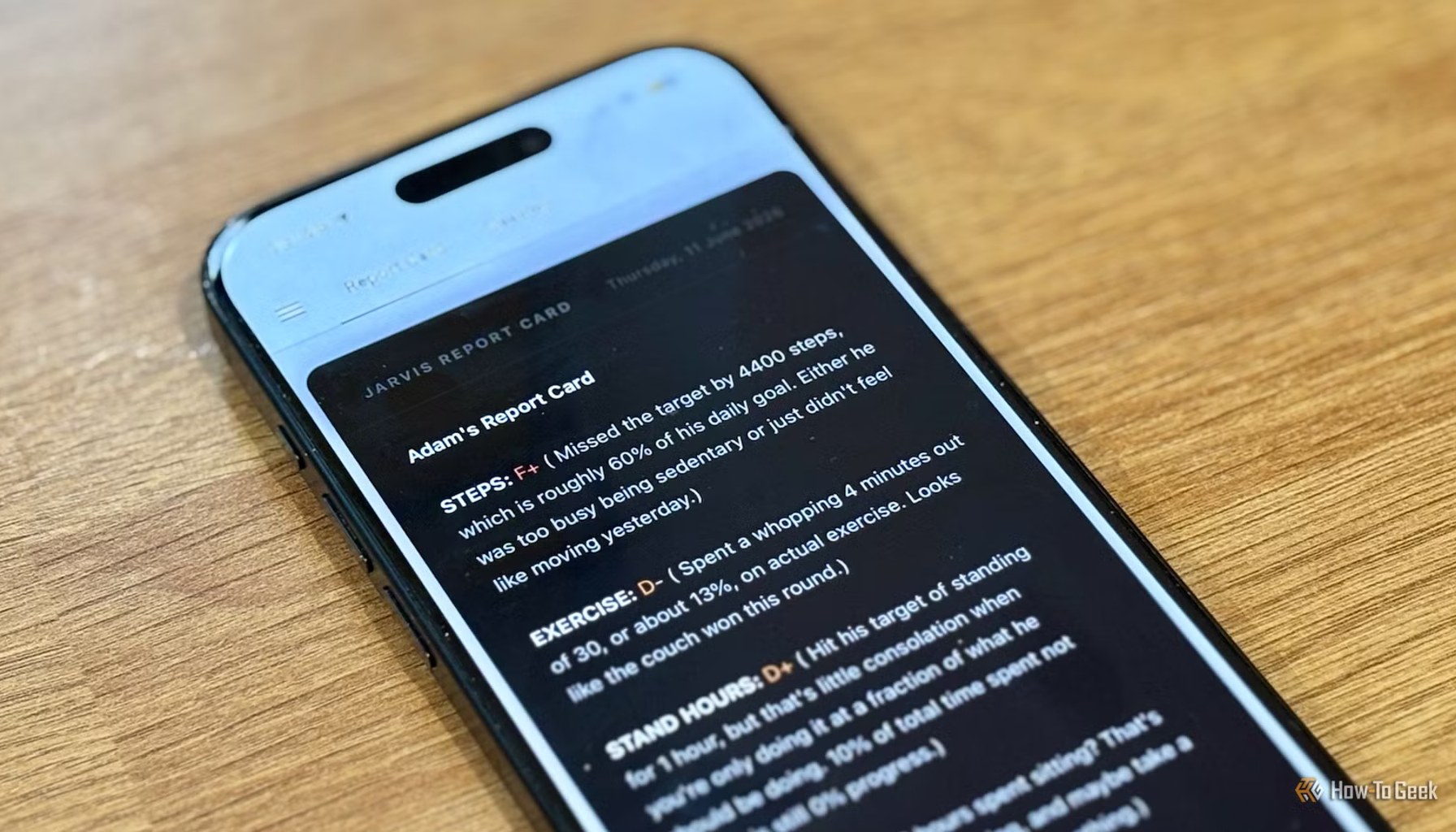
Your smart home grades your day, and it's merciless.
I set up a local language model to generate a daily report card from the data my devices already collect. The idea sounds simple: feed a model a slice of sensor data, such as how long I’ve sat in my office chair, how many steps I’ve logged, and whether I actually exercised, and let it spit out a snarky assessment each morning. The result is a daily ritual that feels part diary, part relentless coach, delivered by a system that runs entirely on my own hardware rather than in the cloud. The tone is blunt, the jokes are sharp, and the goal is clear: accountability with a wink.
The catch, of course, is not the humor but the reliability and the setup. A local LLM promises privacy because the data never leaves the house, but the quality of the daily card depends on how well the model knows your inputs and how you prompt it. If a sensor misreads, or if you tweak the prompts midstream, the card can veer from constructive nudges to comic but unhelpful barbs. That risk is part of the tradeoff of on-device AI: you gain control over data, but you also own the responsibility of calibrating and maintaining the system. The article emphasizes that this isn’t a plug-and-play gadget so much as a tinkerer’s project, requiring alignment between data sources and the model’s interpretation.
From a privacy and security standpoint, the approach has a meaningful upside. Keeping the workflow on a local machine means your personal routines stay in your hands, not in a data center somewhere. Still, that local footprint isn’t a magic shield. You’re entrusting your hardware, software updates, and the model’s handling of personal metrics to your own care and diligence. The setup invites questions about what happens to the logs, how long they’re stored, and whether you keep backups that could reveal sensitive patterns if the device is ever compromised. It’s a reminder that local processing can reduce exposure, but it does not eliminate risk entirely.
Cost is another subtle factor. Because this is a local arrangement, there’s no ongoing cloud subscription to fund, but there is an upfront price in time and hardware. You’ll need a capable local host for the model and the integrations that pull in data from the devices you rely on. You’ll also spend time teaching the system what to read and how to phrase the feedback so it stays helpful instead of cruel. The upside is that once you’re synced, you don’t pay monthly fees for the AI’s daily commentary, which can feel like a win for the budget-conscious tinkerer. The total cost hinges on what you already own and how deeply you want to customize the experience.
Practitioner takeaways are practical and finite. First, on-device AI prioritizes privacy but demands discipline: expect to invest time in configuring data sources, prompts, and safety rails so the feedback remains constructive. Second, integration quality matters: inconsistent data from even a single sensor can undermine the card’s usefulness, so standardizing inputs and validating measurements is money well spent. Third, anticipate evolving maintenance needs: updates to the model or your smart home setup can shift tone or accuracy, so you’ll want a plan for recalibration or occasional retraining. And fourth, watch burnout risk: a daily roast can be motivating at first, but it can sour if the jokes start to hit too close to home without a clear path to improvement.
Is it worth it? For privacy-focused hobbyists who want a daily, humorous audit of their habits and the discipline to maintain a small local system, yes. For the average user seeking a quick, zero-fuss feature, the barrier to entry and ongoing tuning may outweigh the payoff. The broader takeaway is that a local LLM-powered daily card is a telling snapshot of where consumer AI is headed: more personal, more accountable, and more dependent on the craft of setup and curation.
- My smart home sends me a brutally honest report card every day—here's how I set it up with a local LLMHow-To Geek Smart Home / Independent source / Published JUN 12, 2026 / Accessed JUN 12, 2026