Nightstand NFC Tag Fixes Late Night Frustrations
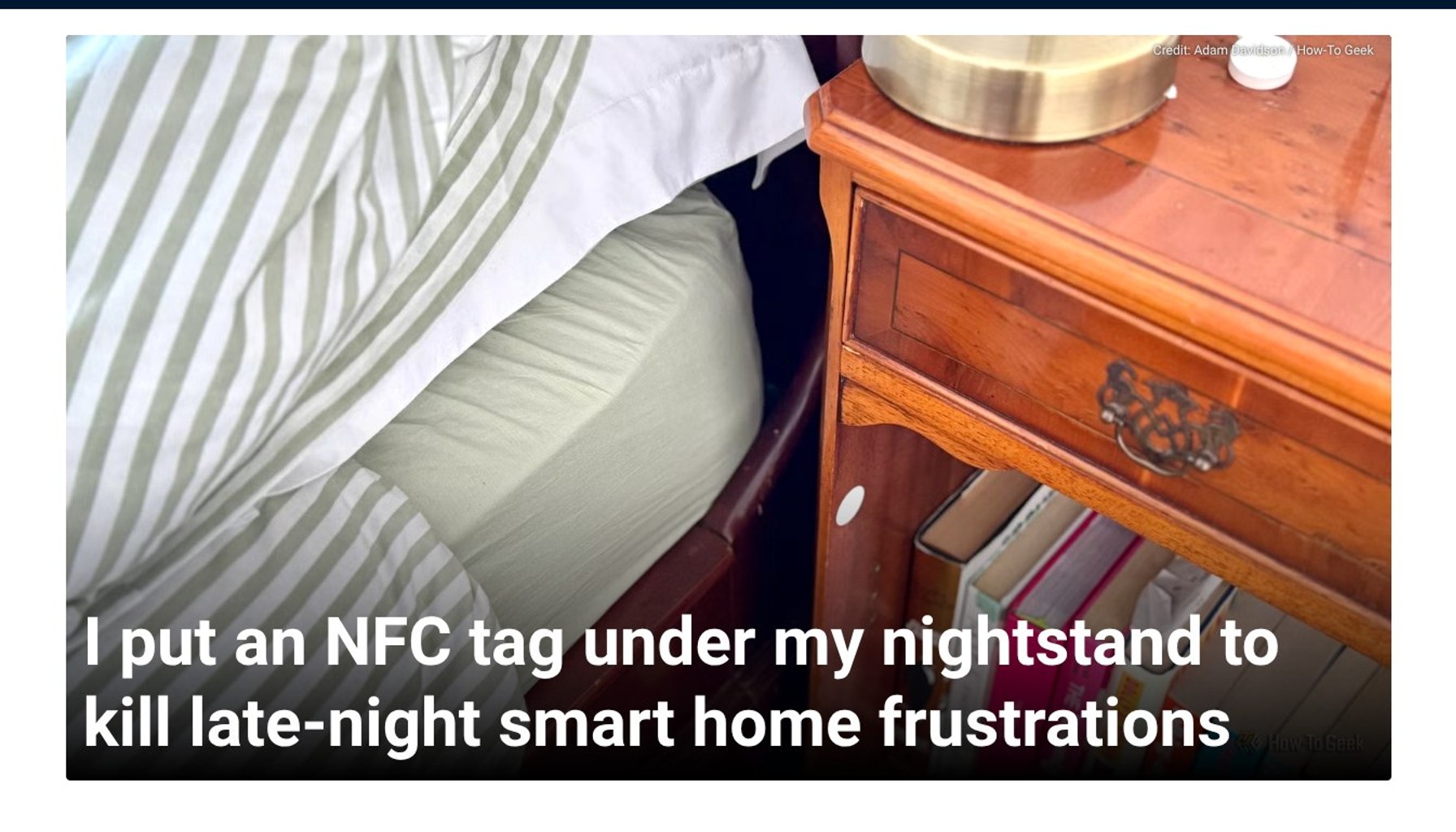
A tiny NFC tag tucked under the nightstand quietly reduces bedtime chaos. Automating a bedtime routine can be harder than you expect, and you don’t want your smart home to shut down for the night when someone is still awake, or when you are reading in bed. An NFC tag placed under the nightstand was enough to solve the problem. It acts as a crisp physical trigger that starts a preconfigured set of actions without hunting for the phone or shouting into a speaker.
The technique is simple: encode the tag to launch a bedtime automation in your home setup. When you tap the tag with your phone, the routine fires and handles the last minute actions in one go. The aim is reliability and ease, so you’re not left waiting for a voice assistant to hear you in the quiet of the room or scrolling through a sleepy phone app. In practice, the tag becomes a dependable, invisible layer of comfort. One tap and the night can settle as planned.
This approach has a lot going for it from a consumer perspective. It slashes friction in the moment, letting a single touch replace multiple interactions. If you’re juggling multiple devices, a physical trigger can be more dependable than trying to coordinate the right utterance or app sequence at the exact moment you’re trying to wind down. It also demonstrates a broader trend in smart homes: tiny, durable hardware elements can deliver meaningful improvements without a full system overhaul. The effect is a calmer bedroom environment and less cognitive load at night, which is exactly the kind of incremental upgrade that appeals to busy households.
But the catch goes beyond convenience. The simple charm of a single tag hides some realities of modern automations. If the hub is offline or the cloud service experiences issues, the routine can fail to run as intended. That dependence introduces a potential reliability risk that isn’t immediately obvious when everything is humming along. There’s also a privacy angle to consider. The more you rely on connected routines that touch lights, climate, locks, or cameras, the more data can flow through networks and servers, even if the trigger itself is just a tag.
There’s also a question of lock-in. Using a tag driven workflow often ties you to a particular ecosystem or app you programmed the tag with. If you later switch platforms or discontinue a service, your nightstand solution may need reconfiguration or could stop working altogether. The NFC tag is a clever, straightforward fix, but it doesn’t eliminate underlying dependencies or the vendor choices you’ve made for your smart home.
From a practical standpoint, the economics are favorable. Total cost including subscriptions is minimal: you purchase the tag once and reuse it with an automation engine you already own, keeping ongoing costs tied to the broader platform rather than the trigger itself. For households looking to add a small, low-effort safeguard against bedtime chaos, a single tag can be a quietly transformative addition.
What’s next is the natural expansion of this idea. Expect more households to experiment with physical triggers that reduce the friction of daily routines, especially as ecosystems become friendlier to quick, tactile automation. These micro inventions remind us that sometimes the simplest hardware tweaks can deliver the most meaningful improvements in how we wind down each night.
- I put an NFC tag under my nightstand to kill late-night smart home frustrationsHow-To Geek Smart Home / Independent source / Published JUN 05, 2026 / Accessed JUN 06, 2026