Nvidia unveils blueprint for autonomous factory manager
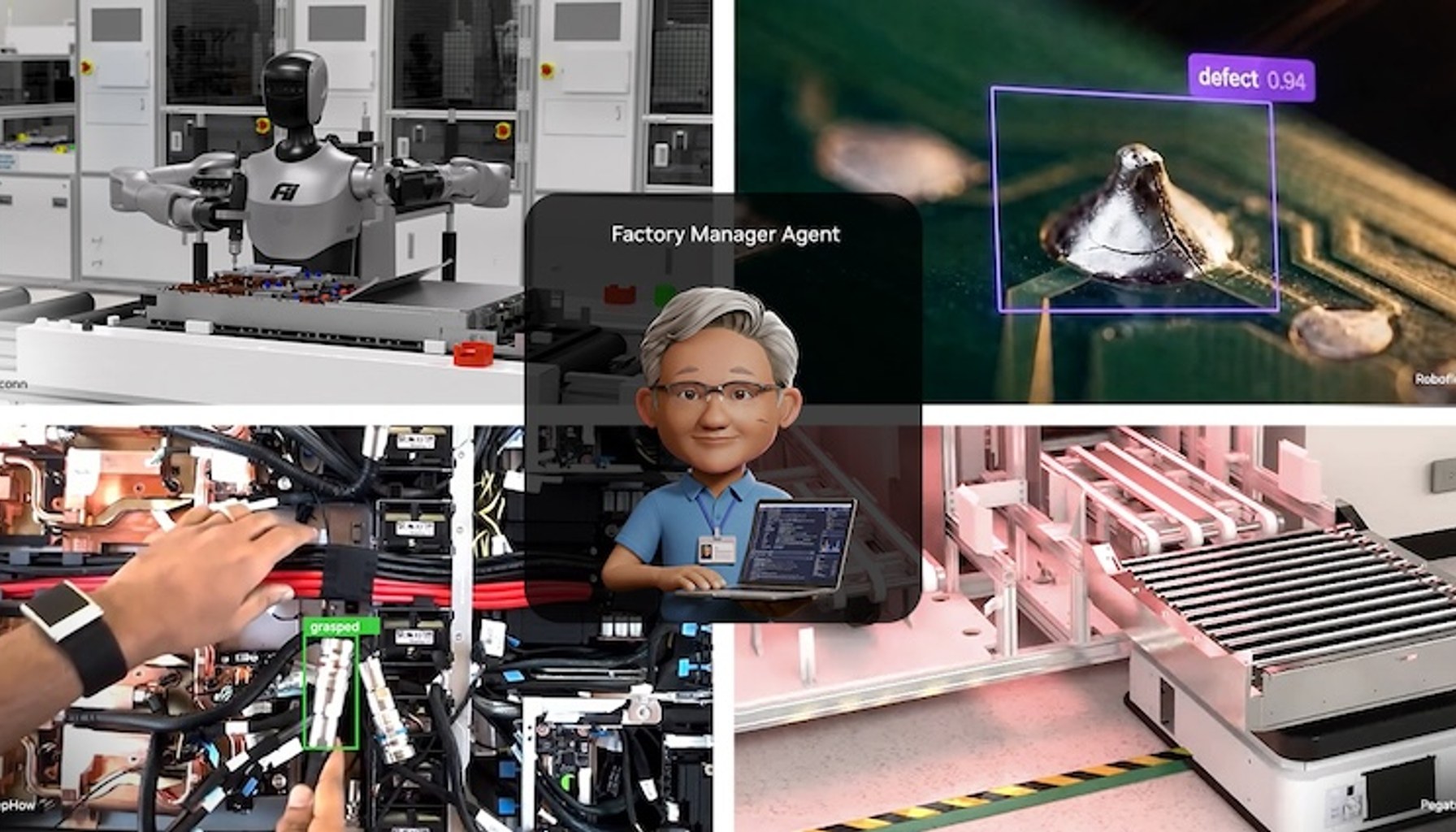
Nvidia just rolled out an AI blueprint to run factories in real time.
The Nvidia Factory Operations Blueprint, or FOX, is billed as a reference design for building an autonomous factory manager agent that can monitor, coordinate, and optimize plant operations from a single, centralized AI layer. Unveiled at GTC Taipei during Computex 2026, the blueprint aims to give manufacturers a scalable way to orchestrate what used to be a patchwork of MES, ERP, PLCs, and shop floor sensors. In practical terms, FOX is less a finished system and more a defined architecture for collecting data, running decision logic, and pushing actions back to equipment and workflows across a plant.
Deployment data shows the promise of real time visibility across diverse equipment and lines, with the blueprint designed to ingest feeds from multiple sources, analyze bottlenecks, and coordinate scheduling, maintenance, quality checks, and material flow in one pane. The case study reports that the approach can reduce Idle time and improve asset utilization by aligning operations with changing conditions on the floor, from rumbling bottlenecks in one line to idle forklifts at inbound docks. In other words, FOX seeks to turn disparate data streams into coherent, plant-wide action without waiting for a bespoke integration project each time a line changes.
The blueprint foregrounds integration requirements as a make-or-break factor. To work as advertised, FOX would need robust data pipelines, reliable edge compute or near-edge processing, and secure interfaces with existing systems. Plant managers will want to know which sensors and devices are already compatible, what latency the system can tolerate for critical decisions, and how the AI agent handles exceptions that fall outside training data. The case study underscores that the value of such a centralized AI controller hinges on data quality and interoperability; without clean, timely signals from machines, the supposed orchestration collapses into stale dashboards rather than actionable commands.
From the shop floor to the balance sheet, the operational thesis is ROI driven rather than romance with bells and whistles. The blueprint’s value proposition rests on cycle times and throughput improvements through better sequencing, predictive maintenance prompts, and faster material routing. For many facilities, those gains translate into fewer line stoppages, steadier production cadence, and more consistent output after a changeover. Yet the program is not a plug and play miracle. Deployment data shows that the path to measurable gains requires careful scoping, phased pilots, and alignment with change management on the floor. The case study reports that early implementations typically start with a single value stream or process zone before expanding to encompass broader plant operations.
Two to four practitioner insights emerge clearly. First, latency and data quality are non negotiable; even the smartest AI will falter if it cannot see the right signals in a timely fashion or if noise overwhelms the decision loop. Second, integration is as much about governance as it is about software; ERP, MES, and PLC interfaces demand secure, standards-based connectors and clear ownership of data provenance. Third, automation is an augmentation play, not a replacement play; FOX is designed to empower operators, maintenance techs, and quality inspectors with faster situational awareness and coordinated guidance, while skilled trades still install, tune, and service the hardware and line-side equipment. Fourth, readiness to scale depends on a staged path, with strong executive sponsorship, documented success metrics, and a plan for handling edge cases where the AI must override or defer actions until human review.
In the end, FOX represents a disciplined, architecture-first approach to autonomous manufacturing. It promises real time orchestration across plant ecosystems, but the journey from blueprint to real value hinges on data discipline, careful integration, and a clear plan for how automation strengthens human judgment rather than supplanting it. If manufacturers step through those gates, they may see not a single silver bullet but a pragmatic path to higher utilization, clearer scheduling, and a more predictable production rhythm.
- Nvidia launches AI factory manager blueprint for autonomous manufacturingRobotics & Automation News / Independent source / Published JUN 11, 2026 / Accessed JUN 12, 2026