Open source 2000 hour dataset aims to speed robot learning
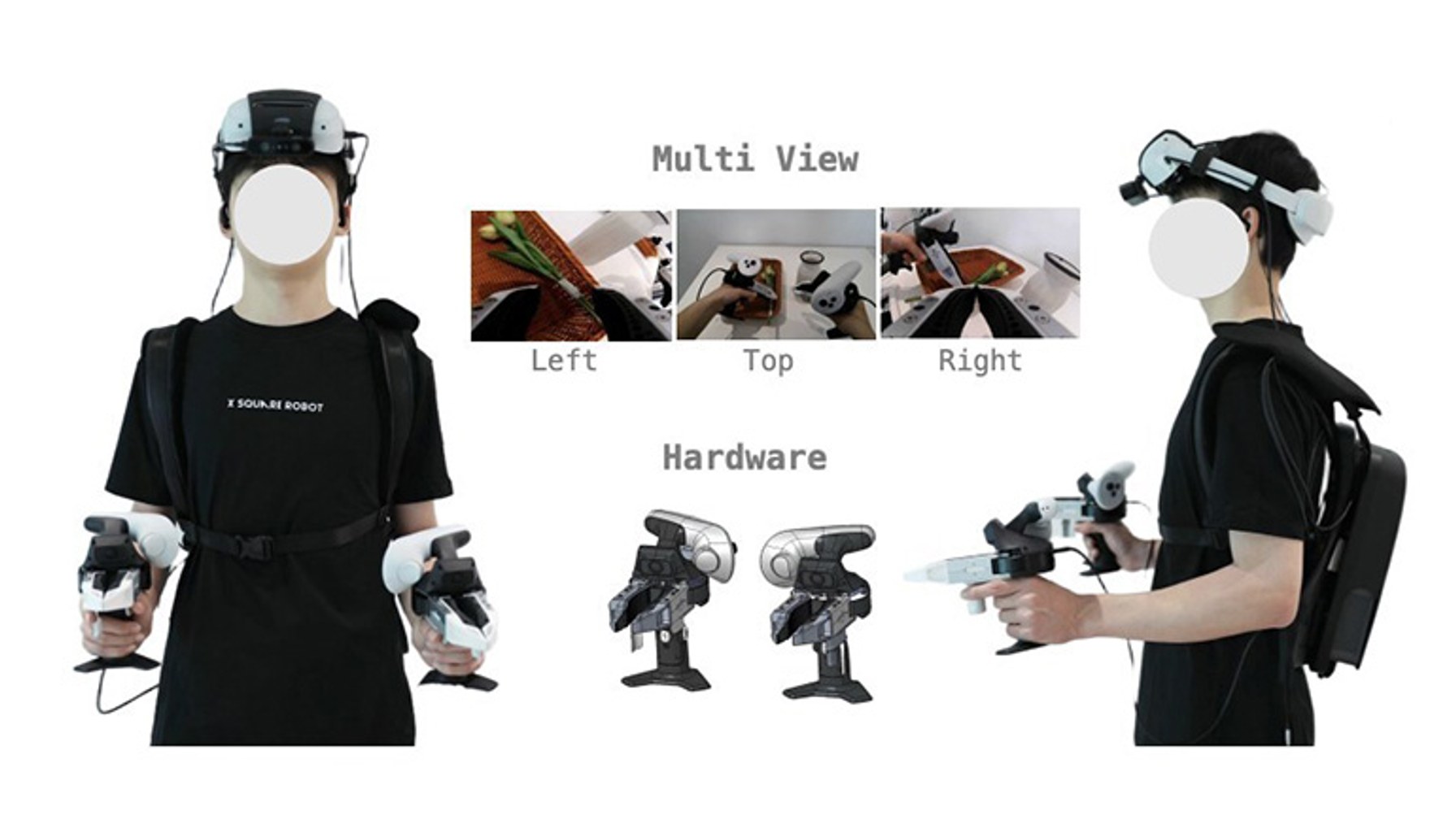
A 2000-hour open dataset is fast-tracking dexterous robot learning.
X Square Robot unveiled XRZero-G0, a hardware and software framework paired with a public data repository designed to standardize how researchers collect and use robot-free data for manipulation tasks. The company says the combination can slash real-robot training data needs by up to 20× under experimental conditions, a claim that points to a more practical path around the data bottlenecks that have long slowed embodied AI research. The release includes the G0-Dataset, a multimodal trove that researchers can access to train perception and control policies without constant on-robot data collection. In theory, human-demonstrated tasks can be vetted for quality and then transferred to unseen robotic platforms, bridging the gap between human intuition and machine action.
XRZero-G0 is built around a wearable, attention-grabbing kit. A head mounted camera and dual wrist cameras deliver both global scene context and fine-grained hand-object interaction data. The system relies on a PICO 4 VR headset with inside-out spatial tracking to capture a user’s natural movements while a pair of specialized grippers decouples human mobility from the robot’s actual kinematics. One gripper is H-shaped and press-actuated, the other G-shaped and finger-driven, giving researchers a broader palette of dexterous manipulation than single-kinematics rigs allow. The hardware stack feeds millimeter-accurate 6-DoF pose estimates and is paired with edge-side spatiotemporal parsing to synchronize visual, language, and trajectory data in near real time.
The XRZero-G0 framework emphasizes “robot-free” data collection as a path to scalable, high-quality demonstrations. Documentation indicates the approach formalizes trainability by standardizing how a human-guided task is captured, labeled, and then re-contextualized on different embodiments. In practice, that means researchers can build cross-embodiment policies that can be evaluated on entirely new robots without re-collecting a full new dataset from scratch. The company says this is key to moving from lab-specific demos to broadly reusable skill representations for dexterous manipulation.
Industry observers will look for how the data quality scales with throughput. Testing shows that the ergonomic, wearable VR interface and the multi-view camera arrangement can sustain high collection throughput without locking researchers into rigid workstation setups. The company reports that the XRZero-G0 workflow is designed to minimize the calibration friction that often slows data collection, a meaningful win for teams with limited robotics hardware budgets or access to expensive robotic arms.
Practitioner insights to watch as the program matures include four angles. First, data quality versus quantity: XRZero-G0 promises big gains in data efficiency, but the usefulness of a 2000-hour repository hinges on the fidelity of task demonstrations and how well the multimodal cues align with robot control. Second, cross-embodiment transfer will be powerful if gripper geometries and actuation styles among target robots are sufficiently aligned; otherwise, researchers may spend effort on retuning policies rather than reusing demonstrations. Third, the dual-gripper design expands the range of demonstrable actions, but also adds calibration and synchronization complexity, and success depends on robust sensor fusion and predictable human-robot interaction. Fourth, relying on edge-side processing for spatiotemporal alignment reduces latency, yet introduces hardware-software integration challenges that teams must manage as they scale beyond single prototypes.
For now, XRZero-G0 represents a concrete step toward making high-quality robot-free data a routine input for manipulation research, rather than a rare resource tied to a single lab. If the dataset and framework hold up across tasks and platforms, it could alter how startups and incumbents prototype dexterous robots, shifting the incentive from brute real-world data gathering to smarter data collection, rigorous standardization, and rapid cross-platform policy transfer.
- Inside XRZero-G0, a new 2,000-hour open dataset for robotics researchThe Robot Report / Independent source / Published JUN 11, 2026 / Accessed JUN 12, 2026