Orbbec AI Vision Boosts Factory Perception
Orbbec just gave robots real eyes with edge AI that actually understand depth.
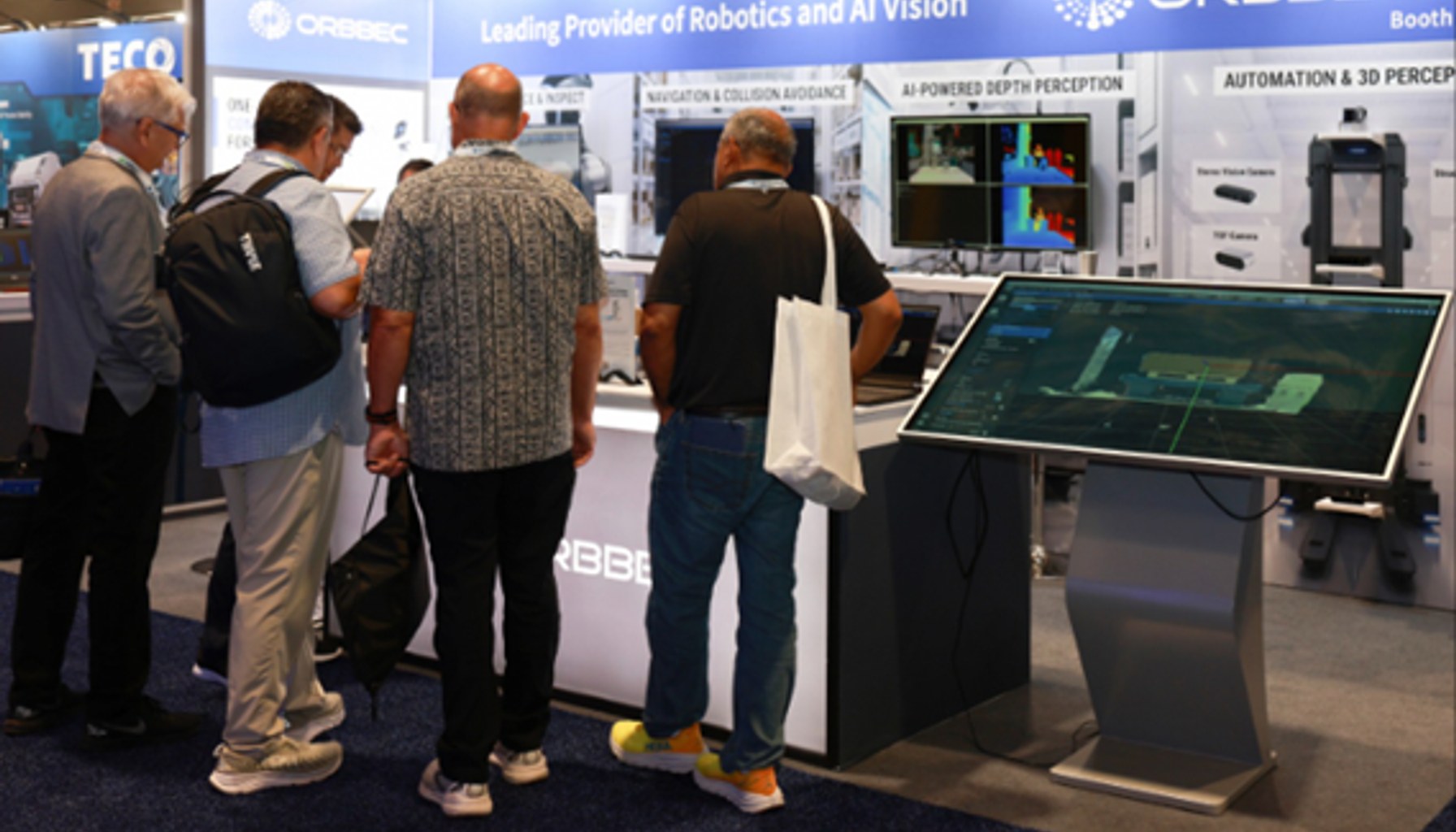
In Chicago this week, Orbbec rolled out its latest industrial 3D vision hardware and AI systems aimed at closing the perception gaps that haunt automated factories. The Shenzhen company pitched its upgraded 3D cameras as production grade, built for challenging environments where traditional vision often stumbles. The centerpiece is LingBot-Depth for the Gemini 330 Series, which the company positions as a path to deeper spatial intelligence at the edge. Orbbec frames the move as more than a slick demo: it ties hardware precision directly to smarter perception through AI.
A key hook is the LingBot-Depth for Gemini 330, a module designed to squeeze more useful depth data from scenes that routinely defeat 3D sensing. Orbbec has paired this with Robbyant, the in-house vision language action (VLA) effort from Ant Group. The two firms say the LingBot Enhanced Depth Filter feeds high-quality depth data into Robbyant’s models, enabling richer scene understanding and better manipulation by robots operating in real factories. The Robbyant team has stated that feeding large models with precise depth data directly improves robots’ manipulation capabilities and overall success rates. In other words, better eyes, better hands.
Under the hood, the approach is straightforward in engineering terms: you take high-precision depth input from Orbbec’s Gemini 330 hardware and run it through a flexible AI stack that can infer actions directly from the scene. Orbbec highlighted flexible dual-mode inference as part of the push, a setup designed to accommodate different latency and compute constraints across the factory floor. While the exact deployment configuration was not laid out in detail, the emphasis is on edge-centric computation that keeps perception latency low while maintaining the sophistication of large AI models.
For practitioners, the event underscored two persistent realities. First, perception bottlenecks in industry remain tangibly stubborn. The LingBot Depth Filter is pitched specifically to address transparent objects, low-texture or repetitive-patterned surfaces such as white walls and fences, and highly reflective materials. Testing shows that incorporating high-quality depth data into large models can significantly enhance manipulation performance, which in practice translates to fewer missed grasps, more reliable pick and place, and fewer line stoppages caused by sensor confusion. Second, the real-world value hinges on data quality and calibration discipline. The approach relies on chip-level, high-precision depth data from Gemini 330 as the standard input, and engineers will need to ensure consistent data routing and alignment between depth sensors and AI inference pipelines to avoid drift in dynamic manufacturing environments.
The partnership also signals a broader industry trend toward tighter coupling of specialized hardware with purpose-built AI models. Orbbec positions its sensors as production-grade, ready for factory floors, while Robbyant contributes an off-the-shelf AI backbone designed to leverage depth-aware perception for practical manipulation tasks. The result is a more coherent chain from sensing to action, with fewer handoffs between disparate systems and less ad hoc tuning required when scenarios change.
Looking ahead, observers will be watching how this combo scales across robot platforms and tasks. The practical tests will hinge on how robust the depth filters are to new surfaces and lighting conditions, how easily factories can integrate the Gemini 330 with existing controllers, and whether the emphasis on edge inference can consistently meet latency budgets in high-mix environments. If the two teams can maintain data quality and model stability at scale, this could become a repeatable path for elevating automated handling without resorting to expensive, bespoke perception stacks.
- Orbbec shows AI-powered vision systems at Automate 2026The Robot Report / Independent source / Published JUN 26, 2026 / Accessed JUN 26, 2026