Robots learn to guess with uncertainty
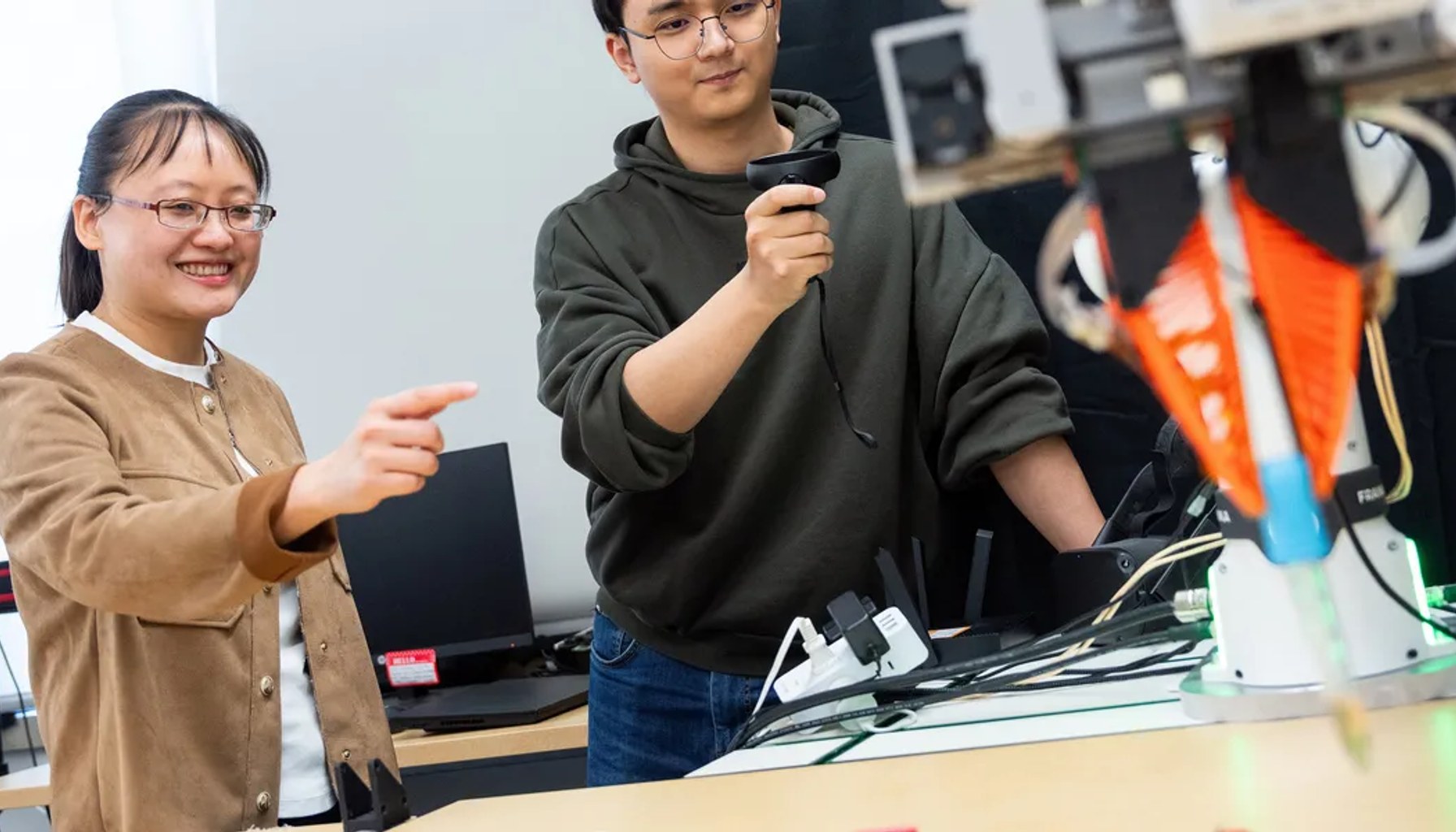
Yen-Ling Kuo, an assistant professor of computer science at the University of Virginia, has been recognized for turning a familiar idea in robotics, planning with a confidence measure, into a practical design philosophy. Last year, the IEEE Robotics and Automation Society awarded her the inaugural Outstanding Women in Robotics and Automation Early Career Contribution Award, part of the WiRA Paper Awards that celebrate female researchers shaping the industry. The honor spotlights a specific line of work: Diff-DAgger, a method described in her paper "Diff-DAgger: Uncertainty Estimation with Diffusion Policy for Robotic Manipulation." The goal is simple to state, and harder to pull off in real robots: teach manipulators not just what to do, but when they are not sure enough to proceed.
In practical terms, Diff-DAgger relies on diffusion-based policies to generate a spectrum of plausible actions for a given manipulation task. Instead of a single command, the robot considers multiple candidate moves and then assigns a measure of uncertainty to each option. That uncertainty estimate becomes a built in safety valve. If confidence is high, the robot executes; if not, it can slow down, request additional data, or defer to a human operator. According to the researchers, this approach helps robots avoid overconfident mistakes in cluttered or partially observed scenes, where a single deterministic plan can fail in unpredictable ways. Testing shows the framework improves robustness in situations where grasp quality, contact dynamics, or occlusions complicate decision making.
The significance is both conceptual and practical. The concept is that perception action loops in manipulation become probabilistic by design, enabling tighter integration between sensing, planning, and control. The practical impact is a pathway toward safer, more reliable autonomous manipulators in labs and early stage deployments. The award underscored not only the technical novelty but also the potential for real world impact, systems that can measure their own limits and adapt accordingly.
This work sits at the lab edge of deployment, where researchers weigh the economics of real time inference against the benefits of safer decisions. Diff-DAgger's diffusion-based uncertainty estimation is computationally intensive, which translates into a tradeoff: higher assurance may come at the cost of longer planning or higher hardware requirements. That tension is a familiar one for engineers seeking to push manipulation from controlled demonstrations into everyday environments. The model's strength is in identifying when a robot should take a cautious path, an insight that resonates with operators who worry about failed grasps or mispecified placements in assembly lines and warehousing tasks.
As a domain specialist watching the field, two practical implications stand out. First, uncertainty aware control can reshape how robots are integrated into human robot teams. By signaling when a move is tentative, the system can prompt human oversight or switch to a conservative fallback mode, reducing costly errors. Second, real time feasibility remains a constraint. Diffusion style policies are powerful, but engineers will need to optimize sampling speed, leverage specialized accelerators, or simplify the diffusion horizon for time sensitive tasks. The path from lab insight to pilot testing will hinge on streaming data from real world scenes, robust perception under varied lighting and clutter, and streamlined interfaces for human in the loop intervention.
Kuo's recognition crystallizes a broader trend: adding a disciplined uncertainty layer to manipulation, once considered the domain of the plain vanilla planner, is increasingly essential for trustworthy autonomy. The next milestones will be demonstrations that scale the approach to more complex tasks, including multi step rearrangements, delicate grasps, and dynamic objects, without sacrificing the practical realities of computation and latency.
- Award-Winning Researcher Trains Robots to Make Educated GuessesIEEE Spectrum Robotics / Independent source / Published JUN 12, 2026 / Accessed JUN 12, 2026