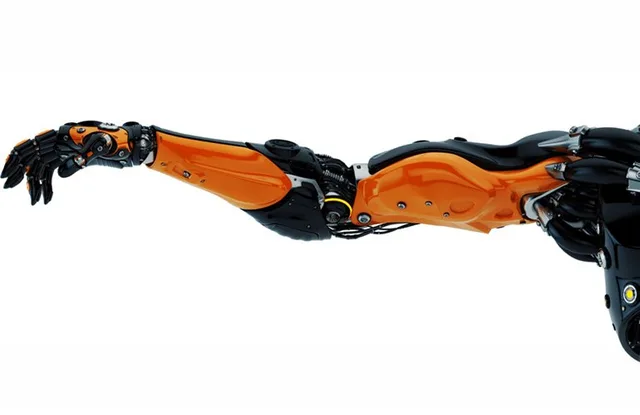
The company combines gearing, actuation, and position feedback, then says designs may range from standard parts to custom assemblies.
Timken Precision Drives is presenting its motion portfolio as a toolbox for humanoid developers, not as one universal joint solution. The Robot Report says the company matches components to each mechanism’s torque, speed, stiffness, weight, positioning, and space needs.
That matters because a humanoid’s load-bearing leg joint faces a different problem than a compact wrist or end effector. Timken says its engineers first study the motion, load, size limits, duty cycle, and service-life target before selecting an approach.
The portfolio brings together Cone Drive, SPINEA, CGI Motion, and Timken Encoders, according to The Robot Report. Cone Drive supplies strain-wave gearing for compact designs needing high torque density and positioning without backlash. SPINEA offers cycloidal reducers and integrated servo actuators for applications where stiffness, torque transfer, and load handling matter.
CGI Motion adds precision planetary and micro gearing for small or unusual mechanisms. Timken Encoders supplies magnetic position feedback, including absolute and incremental versions. Position feedback tells the control system where a joint is, helping it command movement accurately.
Timken says a customer might use a standard component, modify an existing design, or combine several technologies into a custom solution. That lets developers consider the gearbox, motor, bearings, and feedback together instead of treating each part separately.
This is a company-described engineering offering, not proof of a complete humanoid or scaled deployment. The Robot Report does not identify a named robot customer or provide measured system results, pricing, or production volumes.
Timken Precision Drives plans to show the portfolio at Humanoids Summit Silicon Valley on December 1 and 2 in San Mateo, California. For developers, the next useful question is which joint designs have moved beyond engineering discussions into tested hardware.