XChat Debuts for X Users with Ads Gone
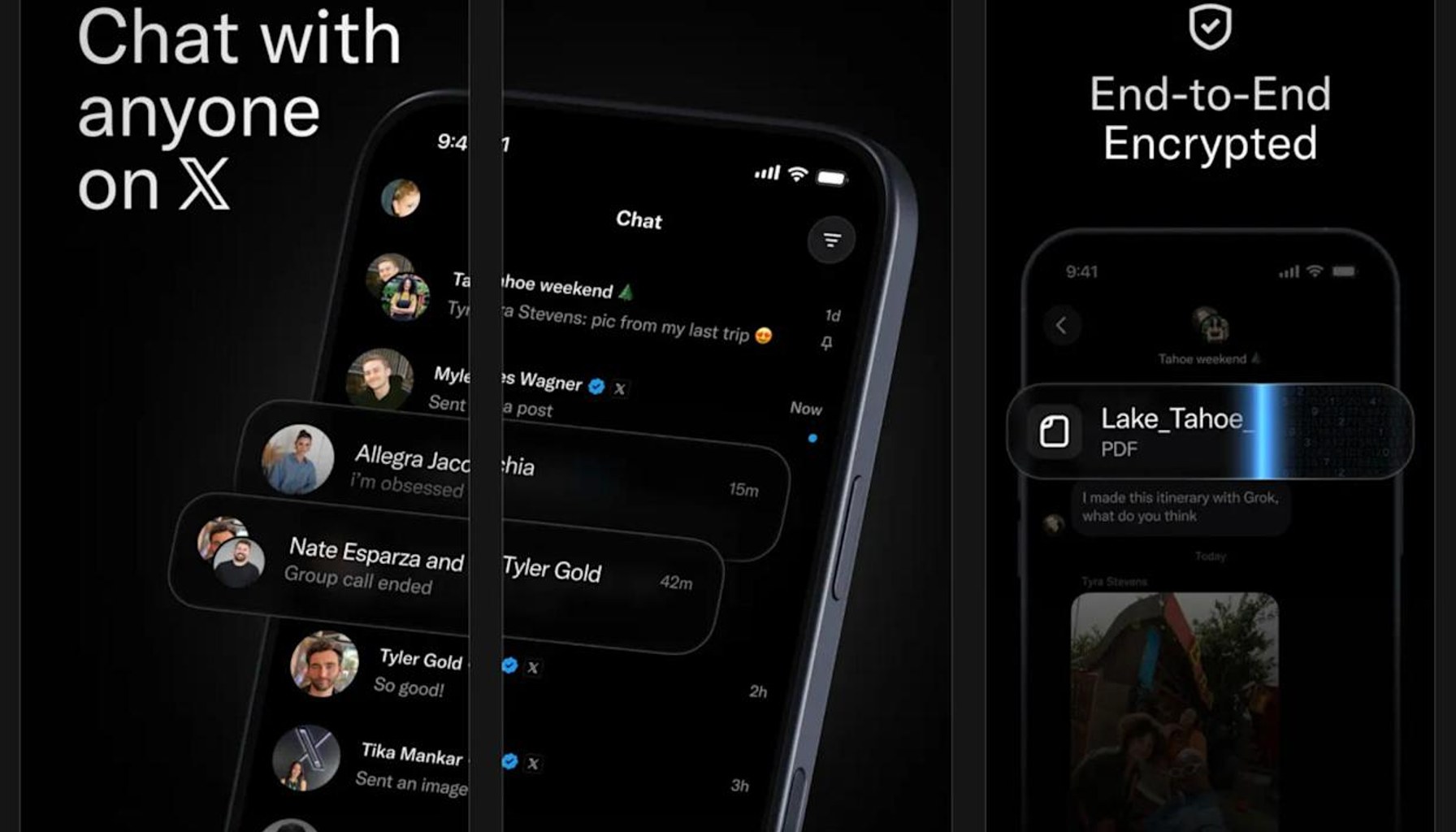
X's new chat app vows privacy, no ads, no tracking.
XChat is poised to become the company’s next experiment in decoupling messaging from the main social feed. The standalone app—now listed on the App Store with an expected April 17 launch—positions itself as an encrypted, ad-free chat experience for X users, separate from any upgraded direct-messaging overhaul that previously dominated the company’s public messaging chatter. In other words: this is not your grandfather’s X DM feature; it’s a dedicated cross-device chat app built to stand on its own, with a hard emphasis on privacy claims and user control.
What the app promises reads like a privacy-audience appeal letter wrapped in a consumer-gear pitch. According to the App Store listing, XChat is end-to-end encrypted, allows you to edit and delete messages for all participants in a thread, and includes options to block screenshots and enable disappearing messages that vanish within five minutes. There’s also a notable capacity feature: group chats can swell to as many as 481 members. And unlike many big-name chat services, X says XChat will not serve ads and will not track users. Pre-orders are live for iPhone and iPad, with the expectation that the app will automatically download and install on release.
The move matters for several reasons. First, it underscores a shift in how X is approaching frictionless adoption. Rather than trying to retrofit a new messaging architecture into a sprawling social network, X appears to be testing a decoupled, standalone product that could function as a privacy-forward chat layer—potentially appealing to users wary of data collection, while offering a “no ads, no tracking” shield that’s increasingly rare in big tech ecosystems. Second, the app’s feature set—end-to-end encryption, message editing/deletion for all participants, ephemeral messaging, and screenshot-blocking—puts XChat in direct conversation with established privacy-first contenders like Signal, while still carrying the baggage of a platform that’s historically relied on engagement metrics over opt-in privacy.
From a consumer-education lens, two practical realities leap out. One, the iOS-first rollout (with pre-orders now available) means Android users will be left waiting, at least initially. This can influence early adoption rates and the app’s perceived universality, especially if users rely on cross-platform chat continuity for work or family coordination. Two, the business model remains opaque in pricing terms. The App Store listing highlights no ads and no tracking, but it does not disclose whether XChat will be a free download, a paid app, or a freemium product with paid advanced features. That ambiguity matters, because a privacy-forward pitch can be diluted if a hidden or upcoming subscription model undercuts the “no ads” promise.
Industry context suggests several watch-outs for users and rivals alike. The standalone app strategy could lower the barrier to adoption if it lands smoothly on devices and delivers on its encryption and control promises. But it also introduces new risk: cross-ecosystem friction, potential data-handling divergences between XChat and the main app, and the challenge of proving to skeptics that the “no tracking” claim is verifiable beyond marketing. Analysts and privacy advocates will want third-party audits or transparent transparency reports to corroborate XChat’s assurances as usage scales.
What to watch next: how widely X expands beyond iOS, whether Android and desktop clients land in parallel, and whether the app’s tools (especially disappearing messages and screenshot-blocking) withstand practical testing in real-world conversations—where users frequently need to adjust privacy settings mid-flow. If XChat delivers on performance and trust, it could become a litmus test for whether tech platforms can convincingly separate a privacy claim from a data-driven business model.
- X's messaging app, XChat, may be available soonengadget.com / Source role not classified / Published APR 11, 2026 / Accessed APR 13, 2026