A $5 dashboard ends three smart home apps
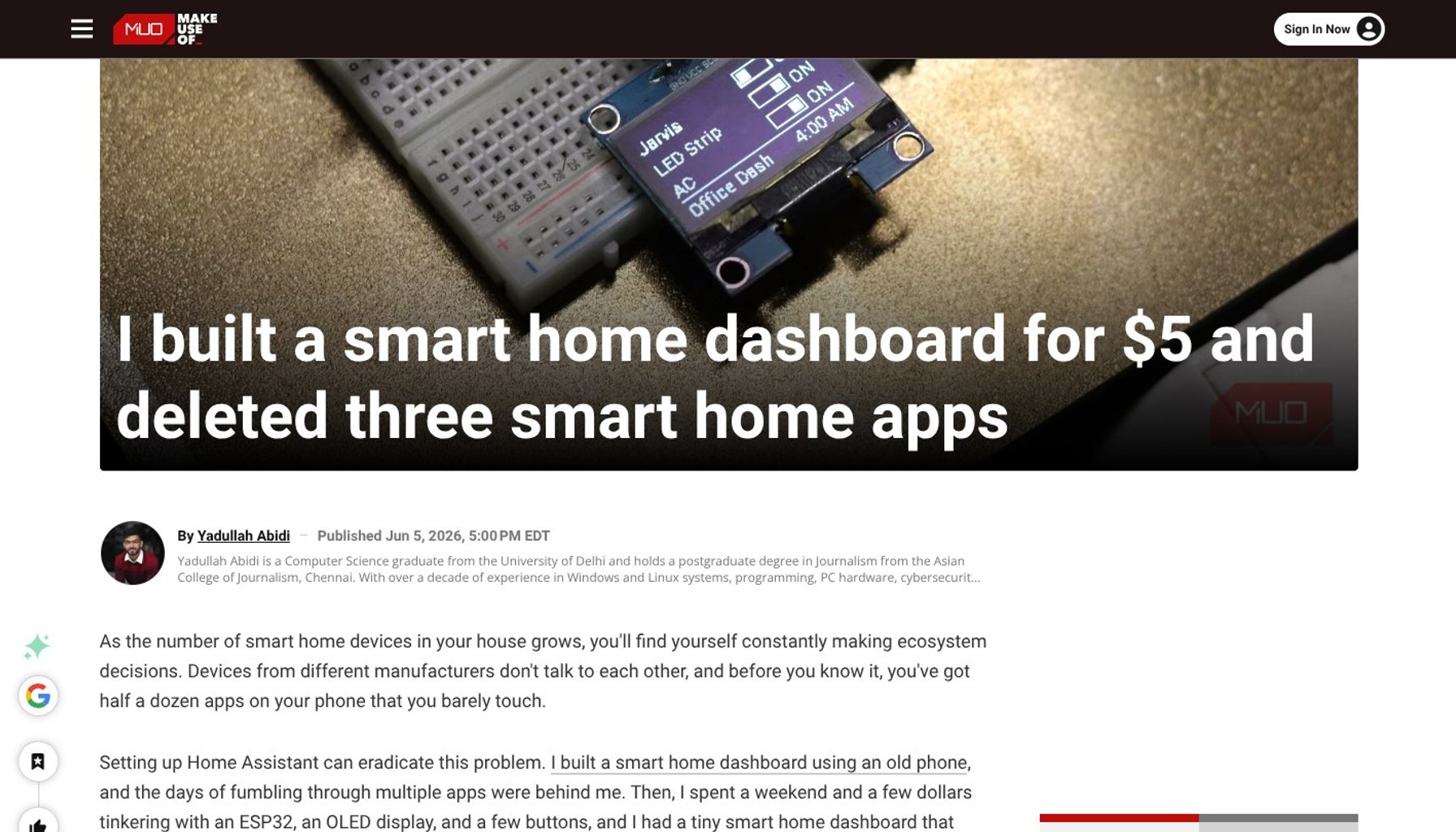
A DIY dashboard costing five dollars can trim the number of smart home apps you manage. As the number of devices in a house grows, people often navigate a web of ecosystems and apps that rarely cooperate. The MakeUseOf piece highlights a common pain point: devices from different manufacturers talk to no one, and before you know it you have half a dozen apps on your phone that you barely touch. The lesson is simple but powerful: centralizing control can dramatically cut clutter, shrink decision fatigue, and show how far you can stretch a tiny budget.
The author of the MakeUseOf article walked readers through a tight budget path to consolidation. Rather than buying into another vendor specific controller, they built a single dashboard that could speak across devices and trim away the extra app stack. The core idea is not to chase a new gadget, but to change how you interact with the devices you already own. By focusing on a unified interface, you create a single point of truth for status, scenes, and automations, which translates to fewer taps and faster responses when you want to adjust lighting, climate, or quick routines.
Total upfront cost cited in the story is five dollars. The project demonstrates what many households already suspect that the biggest hurdle in smart home adoption is not hardware cost but the ongoing cost of managing multiple apps and ecosystems. The piece does not spell out any ongoing subscription fees, so readers should note that the reported cost is the upfront budget for the dashboard itself, with no explicit mention of recurring charges. That absence matters, because many centralized or cloud backed solutions sneak in monthly or yearly fees that quietly compound.
But the catch is real and not merely about convenience. Centralizing control creates new dependencies and raises questions about privacy and lock in. When you funnel device data through a single dashboard, you increase visibility into how you live in your home and who can access that data. A DIY approach can mitigate some of that risk by keeping control locally, yet it can also lock you to the dashboard's particular architecture or community, making future migrations more cumbersome. The more services you bridge, the greater the surface area for bugs or compatibility breaks when devices update their APIs or when the dashboard software itself evolves.
From a practitioner standpoint, several concrete insights emerge. First is device compatibility as a gatekeeper: a DIY dashboard can only reach as far as the devices' openness allows. If a device lacks an accessible API or reliable cloud integration, it may slip out of reach, defeating the consolidation goal. Second, the tradeoff between simplicity and maintenance becomes acute. A single interface is compelling, but it requires ongoing tinkering as new devices arrive and firmware changes ripple through the system. Third, the economics tilt toward value in time saved rather than money saved on hardware. For households juggling multiple apps, a dashboard can reclaim hours and reduce cognitive load, but those gains hinge on a reasonable setup time and a willingness to troubleshoot. Fourth, security cannot be ignored. A well shielded, locally run dashboard can improve privacy, but introducing more networked access points increases the risk if security best practices are not followed or if updates lag.
Looking ahead, readers weighing a DIY consolidation should watch for two patterns. One is the evolving ecosystem of open standards and interoperability promises, which could make cross device control more reliable and less brittle. The other is the risk of vendor changes. The day a cloud component is deprecated or a device drops support, the dashboard's usefulness can crater. If you pursue this path, plan for resilience: document configurations, keep backups of automations, and periodically assess which devices truly benefit from central control versus those that are simply not worth the integration friction.
- I built a smart home dashboard for $5 and deleted three smart home appsMakeUseOf Smart Home / Independent source / Published JUN 05, 2026 / Accessed JUN 06, 2026